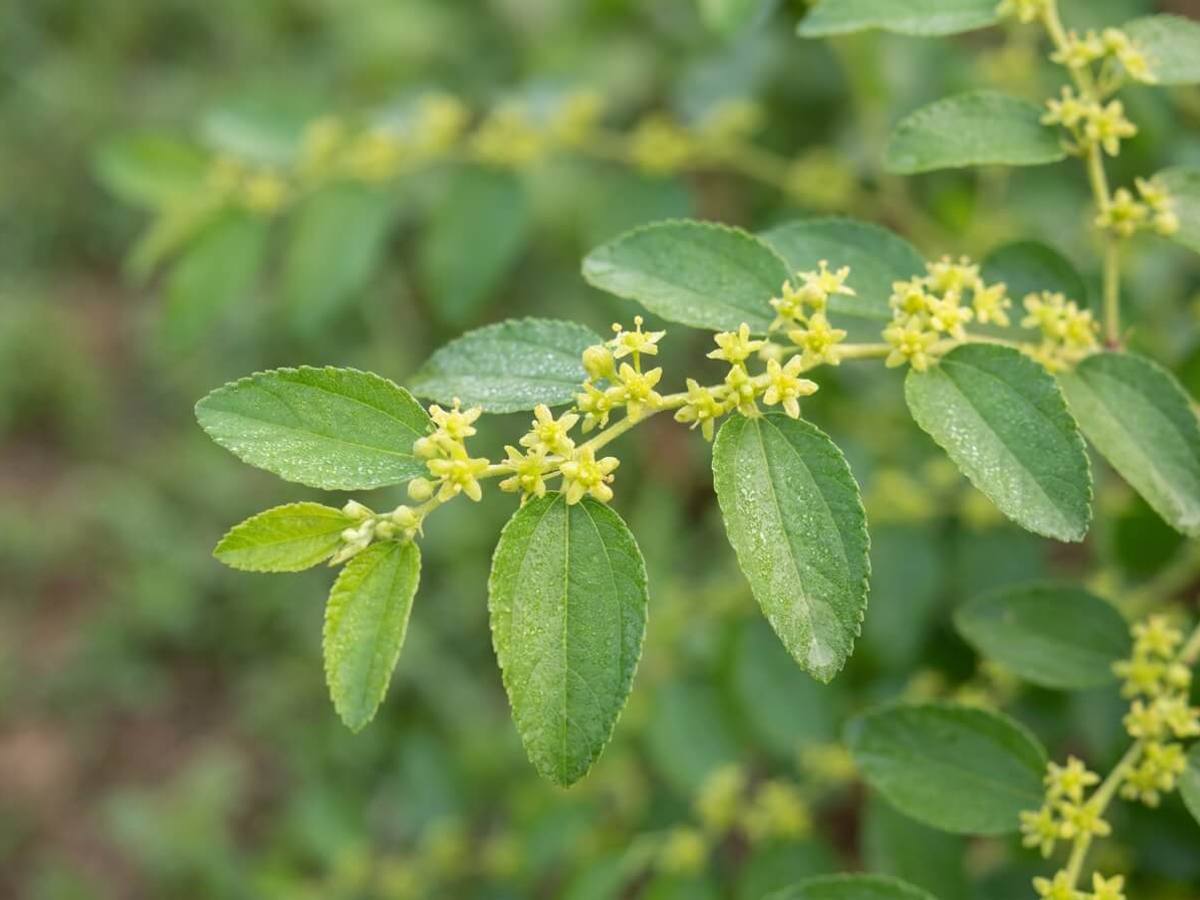
The jujube is a tough, elegant deciduous tree with glossy, ribbed leaves that catch the light like polished leather and turn clear butter-yellow in autumn. Grown for its sweet, apple-crisp fruits that wrinkle into something close to a date, it also earns its place as an ornamental, with zig-zagging shoots and handsome fissured bark. Most remarkably, it breaks dormancy later than almost any other fruit tree — often not until late May — which allows it to sail past late frosts untouched.
Growing conditions
Jujube demands full, unshaded sun and genuine summer heat. A south- or west-facing wall, a sun-trap courtyard or a gravelled orchard corner will always outperform an open, breezy site in a cool region. Shade produces leaf and little else — flowers may form but fruit will not ripen.
Soil matters far less than most fruit trees. Jujube thrives on poor, stony, sandy or chalky ground and copes with pH from about 5.5 to 8.5, happily including alkaline soils that defeat many fruits. The one non-negotiable is drainage: waterlogged winter soil will rot the roots, so improve heavy clay with grit or plant on a low mound.
The tree is hardy well below −20 °C once dormant, so cold winters are not the limiting factor — cool summers are. In northern Europe and the British Isles expect reliable growth but fruit only in the warmest, most sheltered southern gardens or under glass.
How to plant Ziziphus
Plant bare-root trees in late winter to early spring whilst fully dormant, or container-grown stock from March to May. Autumn planting is best avoided in cold, wet regions, as jujube establishes most strongly when the soil is warming.
Space standard trees 5–6 m apart; 3 m is enough for a compact row or an informal fruiting hedge.
Set the tree at exactly its former soil level and keep any graft union 8–10 cm clear of the ground to discourage rootstock suckering.
Fork the base of the hole and add grit rather than rich manure — lean soil encourages fruiting wood rather than sappy growth.
Water in thoroughly with 10–15 litres, then mulch with bark or gravel, leaving a gap around the trunk.
Propagate named cultivars by root cuttings or grafting onto Ziziphus jujuba var. spinosa; seed germinates after cold stratification but yields thorny, variable seedlings.
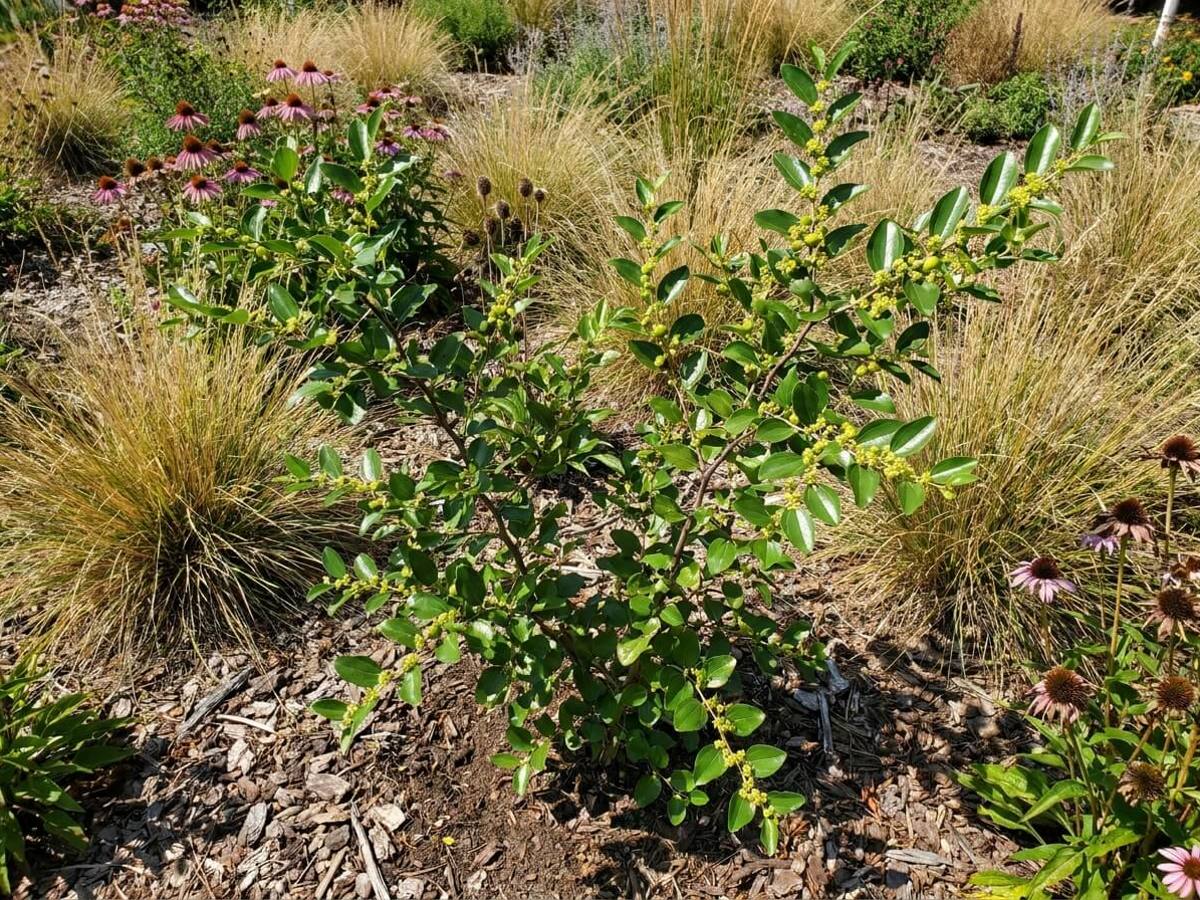
Ziziphus jujuba growing in a naturalistic garden border
Care through the seasons
Spring: Prune in late winter or early spring before growth begins, thinning to an open goblet and removing crossing or congested wood. Do not panic when the tree remains bare into late May — this is normal, not failure. A light scattering of potash-rich feed in April supports flowering; avoid heavy nitrogen.
Summer: Flowering runs through June and July, and bees work the tiny, intensely honey-scented blooms all day. Water deeply but infrequently whilst the fruits swell in July and August, as erratic watering causes splitting. Established trees are strongly drought-tolerant and resent constant damp.
Autumn: Harvest from late August through October, picking fruits green-crisp for apple-like eating or leaving them to turn mahogany-brown and wrinkled for drying. Remove any root suckers appearing within the drip line by pulling rather than cutting. Mulch young trees before the first hard frosts.
Winter: The tree drops both its leaves and its slender secondary fruiting shoots, so the bare framework looks sparser than expected — this is natural. Mature specimens need no protection; container-grown trees should have their pots wrapped in a cold spell.
Best varieties to grow
Choose for ripening season first, as early cultivars are far more dependable in cooler climates.
‘Li’ — Large, round, early-ripening fruit with a small stone; the best all-round choice for fresh eating and the most widely sold.
‘Lang’ — Pear-shaped fruits that are at their best fully browned and dried; a classic partner for ‘Li’ and a reliable pollination companion.
‘Honey Jar’ — Small, exceptionally sweet and juicy fruits with outstanding flavour, ripening early on a modest, manageable tree.
‘So’ — Grown as much for its curiously contorted, zig-zag branches as for its sweet fruit; a striking winter silhouette.
Pests, diseases and common problems
Fruit cracking and rot: Heavy rain during ripening splits the skins and invites brown rot. Mulch to even out soil moisture, thin congested branches for airflow and pick promptly once colouring begins.
Root suckers: Vigorous shoots emerge several metres from the trunk, especially after root disturbance. Pull them whilst soft rather than cutting, and avoid digging or rotavating beneath the canopy.
Wasps and birds: Both find ripening jujubes irresistible. Net small trees from late August, or harvest fruit at the crisp green-yellow stage and finish ripening indoors.
🌿 Nature & Garden Newsletter
Gardening tips, recipes & seasonal advice, twice a week.