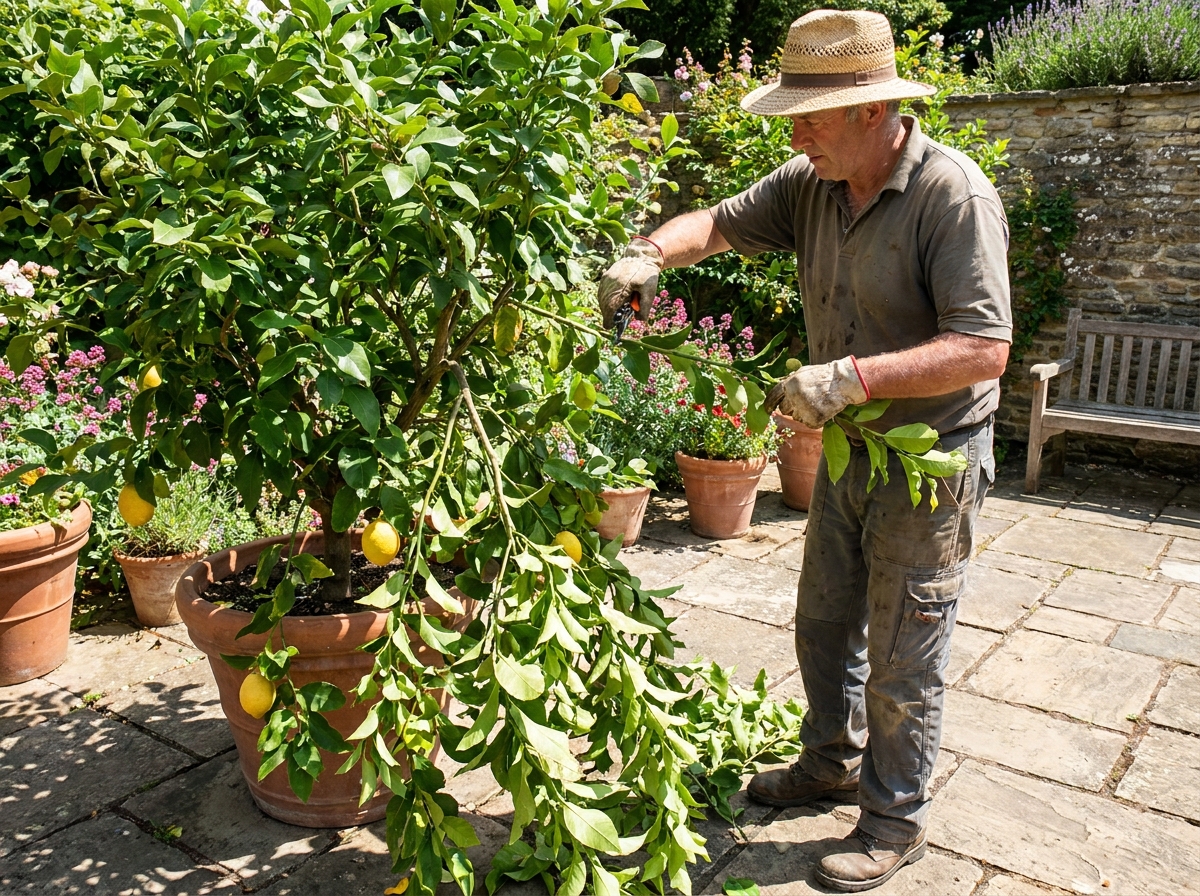
Summer’s the single best window to prune a potted lemon tree — and most gardeners squander it entirely. Prune now and you’ll redirect the tree’s energy toward fruit production before the season closes. Get it wrong and you’ll spend next winter staring at a tangled, unproductive plant wondering what happened. Here’s exactly what to do, cut by cut.
Citrus in containers don’t follow the same rules as garden trees. A lemon tree in a pot has a restricted root zone, which means energy’s always in shorter supply than you think.
Stems that shoot up long and leggy aren’t just cosmetically annoying — they’re pulling resources away from every flower bud and forming fruit on the tree.
Summer pruning works because the tree is in active growth. Wounds close faster in warm weather, typically within 10 to 14 days, compared to 4 to 6 weeks in autumn.
The sap is moving, the bark is supple, and recovery is almost immediate. And unlike spring pruning, you’re not interrupting the flush of flowering — by midsummer, the main flowering push is already behind you, so cutting now doesn’t cost you this season’s crop.
The thing is, leggy growth on a container lemon tree is almost always a sign of too much shade or inconsistent watering. Prune the shape, yes — but fix those conditions too or the same leggy growth returns within 8 weeks.
Nothing catastrophic. Immediately.
But that’s actually the issue — neglected lemon trees decline slowly enough that most people don’t connect the cause to the consequence.
Crossing branches rub against each other, creating small wounds. Those wounds become entry points for citrus canker and fungal disease, both of which are far harder to deal with than a simple pruning session. A dense, unpruned canopy also traps humidity around the interior stems — exactly the conditions that trigger red spider mite infestations, which are already surging this summer.
So, within two seasons of no pruning, a container lemon typically becomes top-heavy. Pots will tip over in wind. Root stress will increase, and fruit set drops sharply. You haven’t killed it — but you’ve pushed it into a cycle that’s hard to reverse without a brutal hard prune you could’ve avoided entirely. A proper mess.
Use sharp, clean secateurs. Not garden scissors, not blunt loppers.
Dirty blades spread disease between cuts, so wipe with diluted bleach or methylated spirits between each major cut.
Never pull off more than one-third of the total canopy in a single session. The root system is sized to support the canopy above it — cut too much and the roots begin to die back in compensation. Yes, it’s tempting to go further when you’re already in the zone with secateurs. Resist it. Seriously.
After pruning, water deeply — 20 minutes at the base — and apply a slow-release citrus fertiliser. The RHS recommends a balanced NPK feed with added magnesium for container citrus through the growing season.
Pruning solves shape. It doesn’t solve everything.
Watch for these after you’ve made your cuts:
A potted lemon that’s been properly pruned, fed, and watered smells extraordinary on a warm evening. That faint, sharp citrus scent from the oil glands in the leaves — you notice it most when you brush a stem with your hand.
That’s your reward for doing this properly.
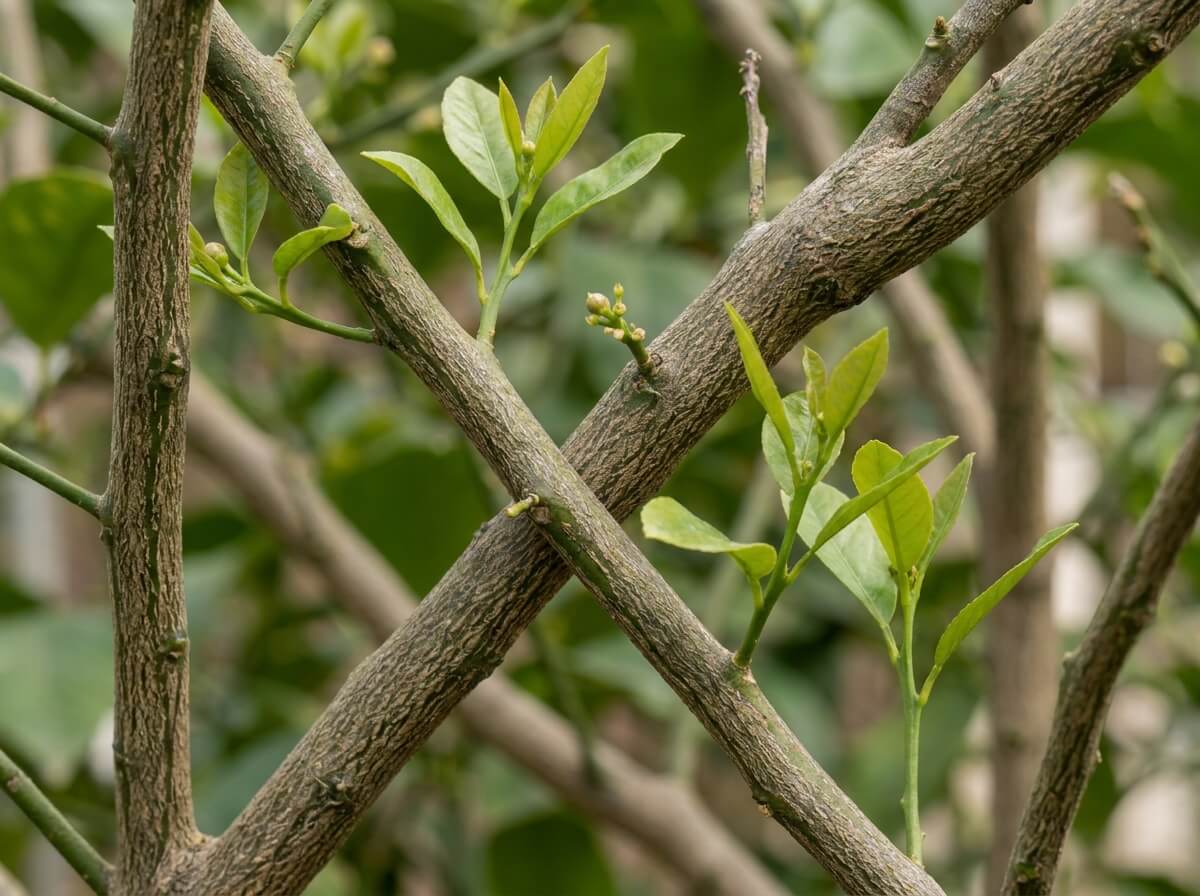
Smart tip: Always cut just above an outward-facing bud — it tells the tree to grow away from the centre, not into it.
Yes — avoid cutting stems that are actively carrying fruit or open flowers, but prune everything else normally. A light, careful summer prune won’t interrupt fruiting.
Once a year in summer for the main structural prune, plus light tidying in early spring to pull off any winter-damaged tips.
Pull them off immediately. Those are rootstock suckers shooting up from below the graft union — if left, they’ll outcompete the fruiting variety and take over the whole plant within a season.
This advice applies to your December and January. Prune your potted lemon tree in your summer months for the same results.