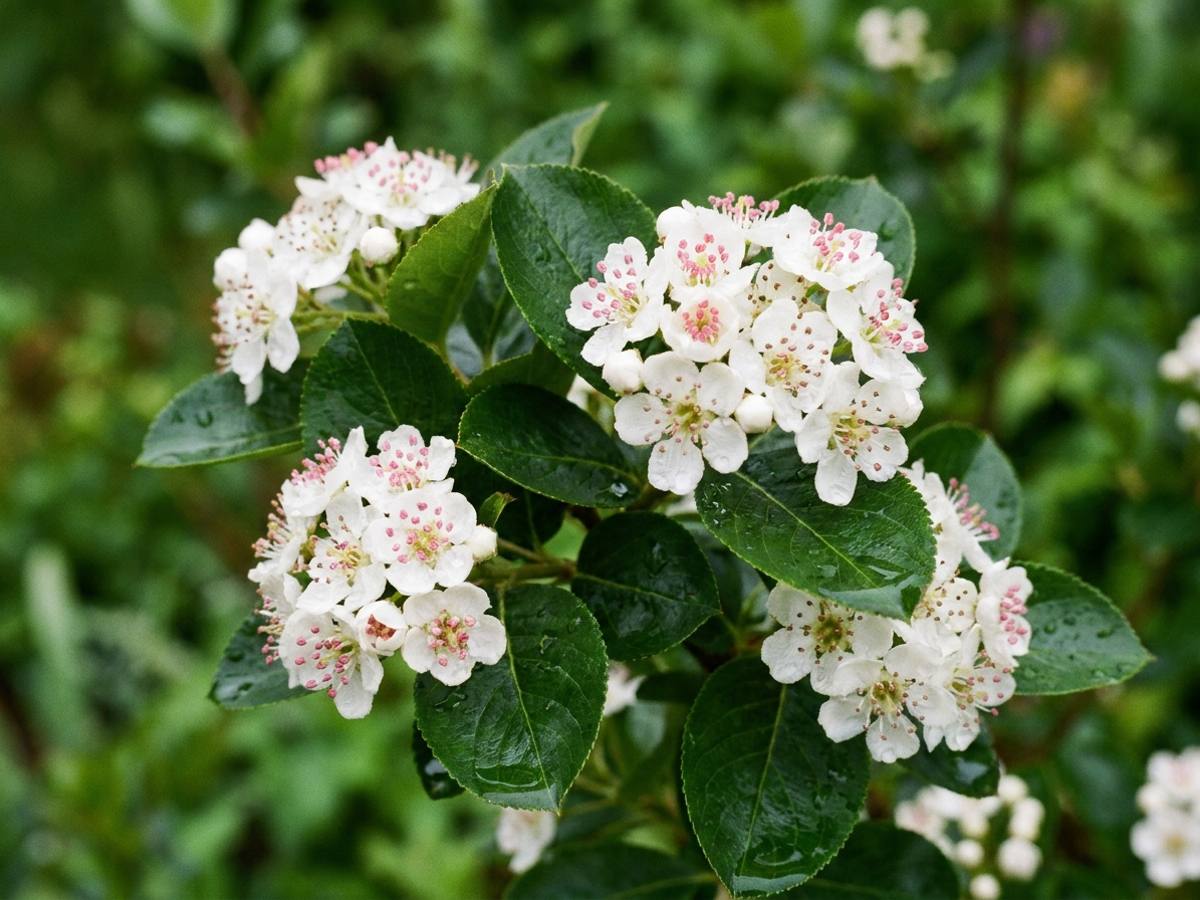
Black chokeberry (Aronia melanocarpa) is a deciduous North American shrub prized for its white spring flowers, glossy foliage and dark berries that persist well into winter. It offers year-round ornamental value and is particularly valued for naturalising in wildlife gardens and hedgerows. This hardy, low-maintenance plant is also increasingly grown for its edible berries, which are rich in antioxidants and used for juices and jams.
Growing conditions
Black chokeberry thrives in full sun to partial shade, achieving the best berry crops and autumn colour in brighter positions. It will tolerate dappled shade beneath trees, though growth may be slower and fruiting less prolific.
This shrub is remarkably adaptable to soil type and is one of the few ornamentals genuinely happy in clay or compacted ground. It prefers slightly moist, well-drained soil but tolerates drought once established; it is also unbothered by acidic, neutral or slightly alkaline pH.
Aronia melanocarpa is exceptionally hardy across the UK and northern Europe, unharmed by winter temperatures to −20 °C or lower. It requires little winter protection and establishes readily in exposed, windswept gardens where many shrubs would struggle.
How to plant Aronia
Plant bare-root specimens in autumn or early spring when dormant; container-grown plants can go in the ground at any time of year, avoiding frozen soil. Autumn planting allows roots to settle during winter, improving establishment before spring growth.
Space plants 1–1.5 m apart to allow mature spread; closer spacing creates denser screening
Plant at the same depth as it was growing in its pot or nursery bed; do not bury the crown
Work organic matter (compost or well-rotted manure) into the planting hole to improve drainage and fertility
Water thoroughly after planting and keep the soil consistently moist (not waterlogged) for the first growing season
Propagate from softwood cuttings in early summer or layer stems in spring; seed can be sown in autumn after cold stratification
Glossy foliage and dark berries give year-round interest
The chokeberry year at a glance
Black chokeberry asks very little, but what little it asks changes with the season. This table sets out the one job worth doing at each point of the year, and what the shrub is doing in return.
The chokeberry year at a glance
Season
Main job
What the plant is doing
Early spring
Balanced fertiliser or a light compost mulch; cut out winter-damaged stems
Buds swell and new growth begins; no formal pruning needed
Early summer to midsummer
Water newly planted shrubs in dry spells, 2–3 cm per week
Flowers pass smoothly into developing fruit; deadheading unnecessary
Early to mid-autumn
Light pruning of crossing or wayward stems only
Foliage turns deep red or burgundy and berries darken to black
Early winter to late winter
Nothing — no winter protection required
Persistent berries ripen blackest after the first frost and feed birds
Read across the year and the pattern is clear: a feed in spring, water for young plants in summer, a tidy-up in autumn, and hands off in winter.
Care through the seasons
Spring: In March, apply a balanced fertiliser or a light mulch of compost to encourage vigorous new growth. Watch for emerging leaves and remove any winter-damaged stems once new buds swell; the shrub rarely needs formal pruning at this stage.
Summer: Water newly planted shrubs during dry spells, aiming for 2–3 cm per week; established plants are drought-tolerant but appreciate moisture for better berrying. Deadheading is not necessary unless neatness is a priority, as the flowers transition smoothly into developing fruit.
Autumn: The foliage turns deep red or burgundy from September onwards, and berries darken to black as they ripen; leave them on the plant for autumn interest and winter food for birds. Light pruning to remove crossing stems or tidy wayward growth can be done now, but heavy cutting should be avoided.
Winter: Aronia is fully deciduous and requires no winter protection in the UK. The persistent berries are a major asset during bleak months, ripening to their blackest after the first frost and remaining ornamental until spring.
Best varieties to grow
Several cultivars offer specific ornamental or culinary advantages; the straight species is also excellent and often overlooked.
Aronia melanocarpa (species) — The classic form with abundant berries and reliable red autumn foliage; best for wildlife value and berry harvesting
‘Brilliant’ — Noted for exceptionally vivid red autumn colour and a more upright habit; berries are heavy and glossy black
‘Morton’ — A compact, spreading selection with dense berrying and particularly showy summer foliage; somewhat smaller than the species
‘Iroquois Beauty’ — North American selection with striking deep purple-black berries and reliable crimson autumn tones
Pests, diseases and common problems
Fireblight: In warm, wet springs, white flowers may suddenly wilt and blacken, affecting shoots and berries. Prune out affected stems to 15 cm below symptoms, disinfecting secateurs between cuts; improve air circulation by thinning crowded growth.
Powdery mildew: Leaves may develop a greyish-white coating in crowded or humid conditions, particularly on shaded plants. Improve drainage and spacing, and spray with sulphur fungicide or a bicarbonate solution early in the season if needed.
Sawfly larvae: Leaves may be skeletonised or rolled, with small caterpillar-like larvae visible in late spring or early summer. Pick off affected leaves by hand or apply neem oil; the damage is typically cosmetic and rarely warrants intervention in strong, healthy plants.
Poor berrying: Sparse or absent fruit is usually caused by heavy shade, poor drainage or lack of cross-pollination. Ensure the plant receives at least half a day of sun, plant two or more different cultivars if possible, and avoid over-fertilising with nitrogen.