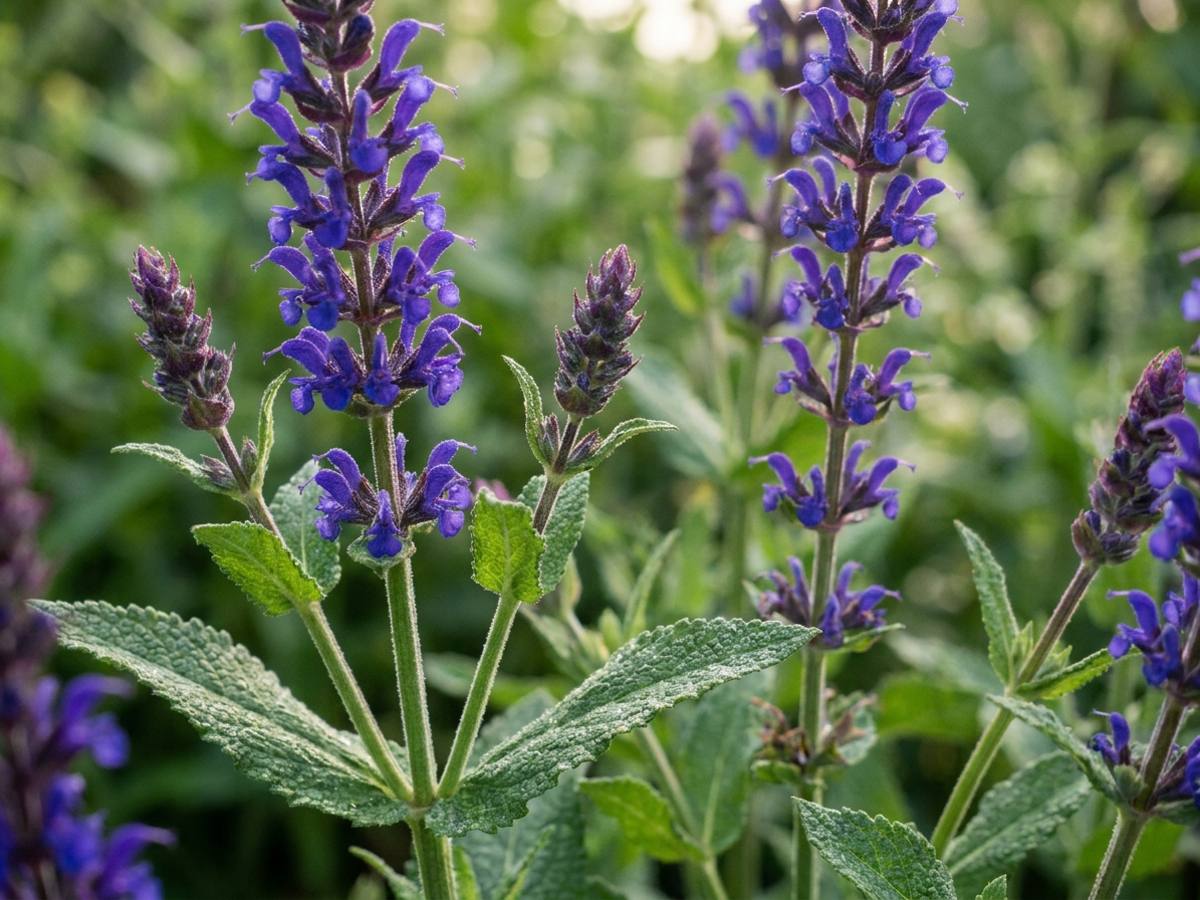
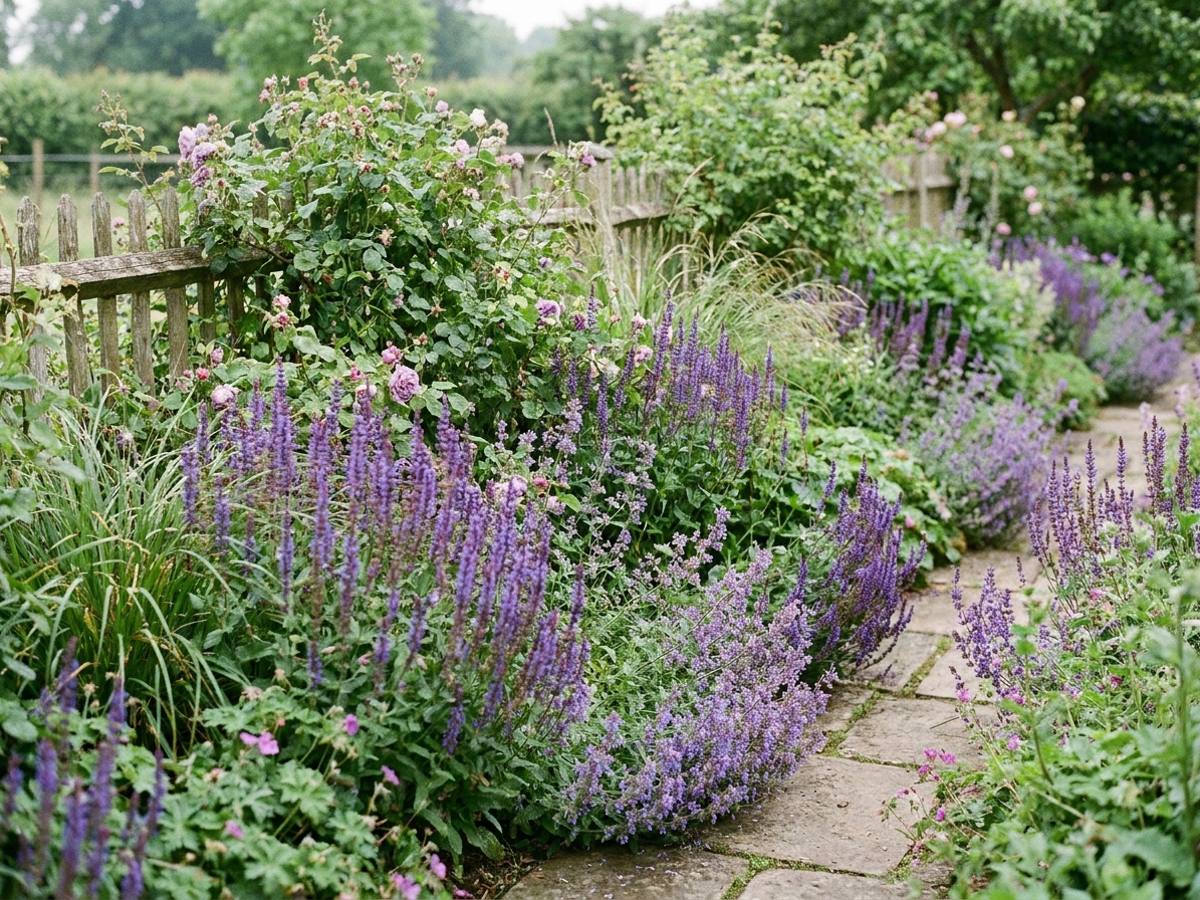
Salvia nemorosa, commonly known as meadow sage, is a reliable and cheerful perennial that brings spires of violet-blue to purple flowers to borders from late spring through summer. This cottage-garden favourite is prized for its long flowering season, compact habit, and exceptional ability to attract pollinators. Its distinctive two-toned blooms—with coloured calyces persisting long after petals drop—extend the display well into autumn.
Meadow sage thrives in full sun, where it produces the densest flower spikes and most vibrant colour. It will tolerate partial shade but may become leggy and flower less prolifically in shadier positions. Aim for at least six hours of direct sunlight daily for optimal performance.
This species is notably tolerant of poor soils and positively prefers well-drained conditions; it dislikes waterlogged ground and is an excellent choice for sandy, gravelly, or chalk-based soils. Avoid heavy clay unless you amend it with grit or horticultural sand. A neutral to slightly alkaline pH is ideal, though it adapts well to most garden soils.
Meadow sage is fully hardy throughout the UK and northern Europe, requiring no winter protection. It performs equally well in continental climates and drought-prone regions once established, making it exceptionally reliable across diverse growing zones.
Plant in spring (March to May) to allow young roots to establish before summer drought. Autumn planting (September to October) is also possible in milder regions but offers less time for root development before winter.
Almost everything meadow sage asks of you is a matter of timing, from getting it into the ground to the mid-season cut that buys a second flush. The table gathers each job and the season it belongs to.
| Task | When | What it involves |
|---|---|---|
| Planting (main season) | Early to late spring | Gives young roots time to establish before summer drought |
| Planting (alternative) | Early to mid-autumn | Possible in milder regions, but less time for root development before winter |
| Spring tidy and feed | Early to mid-spring | Cut winter-damaged stems to 10–15 cm, then feed with slow-release fertiliser or compost |
| Basal cuttings | Late spring | Take cuttings from the base of established plants for new stock |
| Cut back by half | Midsummer | Once the main flush fades, triggers a second flowering later in the season |
| Division of congested clumps | Early spring or mid-autumn | Rejuvenates old plants and creates new stock |
| Hard cut back | Mid to late autumn | Down to 5–10 cm, once growth has clearly slowed |
Deadheading runs alongside all of this, every two to three weeks through the flowering season.
Spring: In late March or early April, cut back winter-damaged stems to fresh growth, typically 10–15 cm from the ground. Feed with a balanced, slow-release fertiliser or a light dressing of compost to support new growth. Remove any dead or woody material from the centre of the plant to encourage vigorous shoots.
Summer: Deadhead spent flower spikes regularly (every 2–3 weeks) to encourage further blooms and maintain shape. Once the main flush fades in July, cut the entire plant back by half; this will trigger a second flowering in late summer or early autumn. Water only during prolonged drought; established plants are remarkably drought-tolerant and prefer drier conditions.
Autumn: Allow the final flush of flowers to set seed if desired for self-seeding or wildlife value, or continue deadheading for neatness. Cut back hard (to 5–10 cm) in October or November once growth has clearly slowed. Divide congested clumps in mid-autumn to rejuvenate old plants or create new stock.
Winter: Meadow sage dies back to ground level and remains dormant. No protection is necessary in the UK or cold-winter regions; the plant’s dormancy itself provides cold hardiness. Mulch is unnecessary and may promote rot; keep the area around the crown dry.
Many excellent selections of Salvia nemorosa are available, each with subtle differences in colour, height, and flowering time.
The named selections of Salvia nemorosa differ mainly in height and depth of flower colour, which decides where they sit in a border. Use the table to match a cultivar to the position you have in mind.
| Cultivar | Height | Flower colour | Standout quality |
|---|---|---|---|
| ‘Ostfriesland’ | 40 cm | Deep violet | Dwarf and exceptionally hardy; RHS Award of Garden Merit |
| ‘May Night’ | 50 cm | Dark purple | Compact, flowers from May onwards, strong pollinator appeal |
| ‘Amethyst’ | 70 cm | Violet-purple | Long season; suited to mid-border placement |
| ‘Caradonna’ | 60–75 cm | Deep purple | Striking dark stems; award-winning and robust |
All four share the same undemanding needs, so the choice comes down to height and how dark you want the spikes.