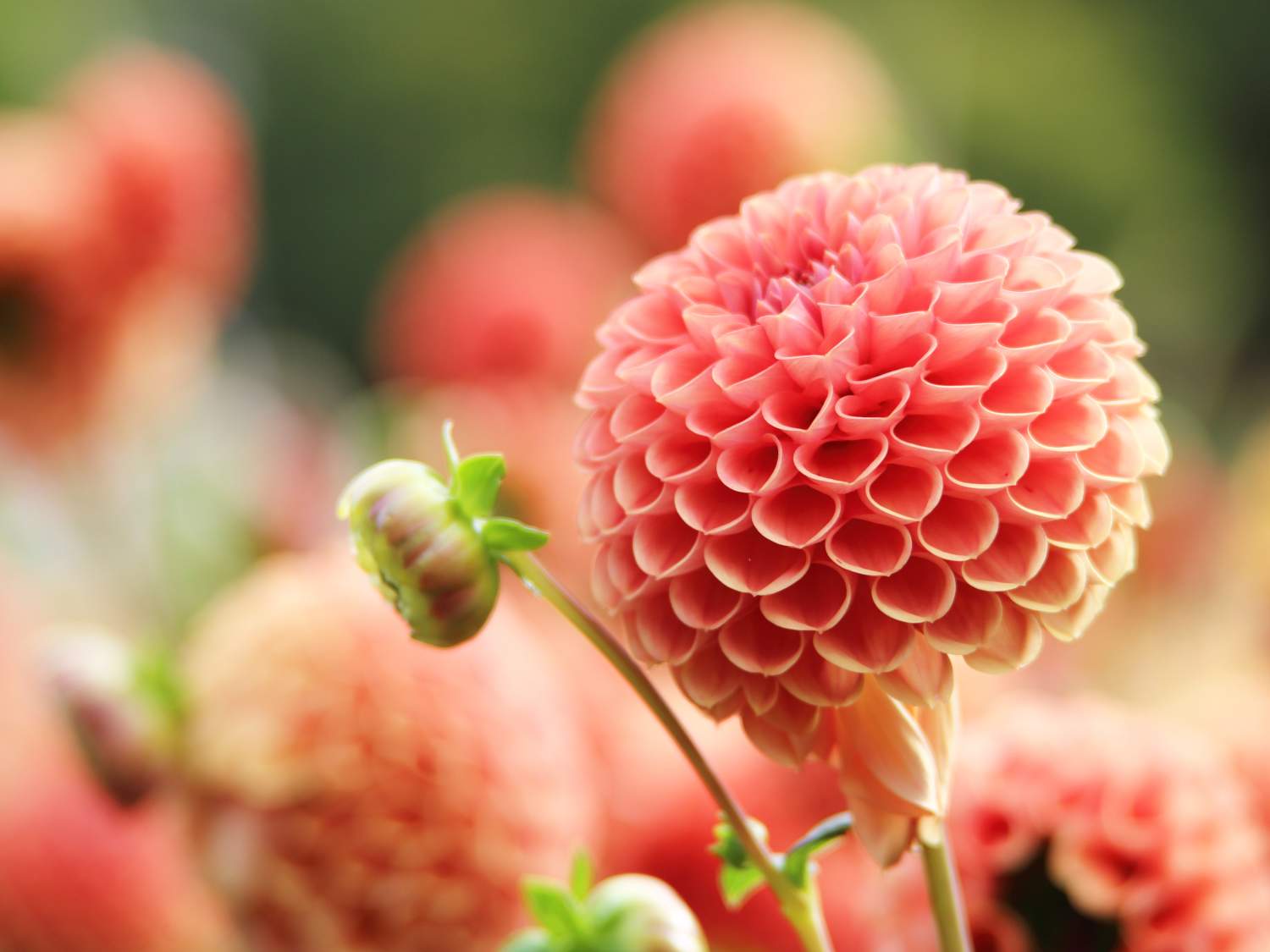
Few hardy perennials match the sheer generosity of Anthemis tinctoria, which smothers itself in daisy flowers of butter, cream and deep gold from early summer until the first frosts. Its ferny, aromatic foliage forms a neat mound that sets off the long-stemmed blooms beautifully, making it a mainstay of cottage gardens, gravel plantings and prairie-style borders. Once grown as a dye plant — hence the name dyer’s chamomile — it remains one of the most reliable nectar sources for hoverflies and solitary bees.
Growing conditions
Give golden marguerite the sunniest, most open position you can spare — a minimum of six hours of direct sun keeps stems stocky and flowering prolific. In shade or under the drip of shrubs it stretches, flops and flowers only half-heartedly. Open exposure also keeps air moving through the foliage, which greatly reduces mildew.
Sharp drainage matters more than fertility. This is a plant of dry banks, roadsides and stony ground, so it thrives in sandy, gravelly or chalky soils and resents heavy, wet clay. A neutral to alkaline pH suits it best, though it tolerates slight acidity; avoid rich, freshly manured beds, which produce soft growth that collapses in the first summer downpour.
Cold is rarely the problem — winter wet is. In damp maritime climates or on clay, plant on a raised ridge or in a gravel bed, and consider it a plant to renew every three years rather than a permanent fixture.
How to plant Anthemis
Plant in spring, from March to May, so the crown roots away and toughens up before its first winter. Autumn planting is possible on free-draining ground, but on heavy soils it invites crown rot.
Spacing: set plants 45–50 cm apart — close enough to knit into a haze of daisies, far enough for the air circulation that deters powdery mildew.
Depth: position the crown exactly level with the soil surface, never buried, as sunken crowns rot in wet spells.
Soil preparation: fork in grit or coarse sand on heavier ground rather than compost; skip fertiliser entirely on decent loam.
Watering in: soak thoroughly once at planting, then water only during genuine drought in the first summer — established plants are markedly drought-tolerant.
Propagation: take 8 cm basal cuttings from non-flowering shoots in late spring, or divide young clumps in April; seed sown under glass in March flowers the same summer.
Anthemis tinctoria growing in a naturalistic garden border
Three ways to raise new Anthemis plants, compared
Because golden marguerite is short-lived, raising replacements is part of growing it well. The three methods given above differ mainly in their timing and in how faithfully they reproduce a named cultivar.
Three ways to raise new Anthemis plants, compared
Method
When
How
What to expect
Basal cuttings
Late spring
8 cm cuttings from non-flowering shoots
Free replacements raised routinely each spring
Division
Mid-spring
Split young clumps only
Keeps a named cultivar’s colour and habit
Seed
Early spring, under glass
Sow under glass and grow on
Flowers the same summer, but colour varies
Whichever route you take, plan on renewing plants every few years rather than expecting a permanent clump.
Three ways to raise new Anthemis plants, compared
Because golden marguerite is short-lived, raising replacements is part of growing it well. The three methods given above differ mainly in their timing and in how faithfully they reproduce a named cultivar.
Whichever route you take, plan on renewing plants every few years rather than expecting a permanent clump.
Care through the seasons
Spring: Cut away any winter-blackened stems as new shoots appear at the base, usually from March. Resist feeding; a light scatter of potash-rich fertiliser or wood ash is all that is ever needed, since nitrogen encourages floppy growth. Insert twiggy supports or a low ring around taller cultivars whilst growth is still short, so the stems grow up through it.
Summer: Deadheading is the single most rewarding task — shear off spent blooms every week or two and flowering continues for months. Water only in prolonged drought, as soggy roots do far more harm than dryness. After the main midsummer flush, cut the whole plant back by roughly one third to trigger fresh basal growth and a second wave of flowers.
Autumn: Leave a light framework of stems to protect the crown, or cut back to 10–15 cm in mild, dry gardens. Do not mulch over the crown with anything moisture-retentive; a collar of grit is far better. Autumn is a good moment to check that plants have not become woody and hollow-centred, the sign that replacements are due.
Winter: The plant dies back to a low tuft of evergreen-ish foliage and needs no protection from cold, only from standing water. In containers, tip pots onto their sides or move them under an overhang during long wet spells.
Best varieties to grow
Named cultivars are far superior to seed-raised plants for flower colour and habit.
‘E.C. Buxton’ — the connoisseur’s choice, with cool lemon-primrose petals that blend with anything; holds an RHS Award of Garden Merit.
‘Sauce Hollandaise’ — creamy ivory petals around a golden eye, superb with blue salvias and grasses.
‘Kelwayi’ — vigorous and unashamedly bright golden-yellow, excellent for cutting and for hot colour schemes.
‘Wargrave’ — soft buff-yellow flowers on well-branched, slightly shorter stems, around 60 cm.
Pests, diseases and common problems
Powdery mildew: a white dusty coating on leaves in hot, dry, still weather. Thin congested stems, avoid overhead watering, and cut affected growth right back — fresh regrowth is usually clean.
Aphids: colonies cluster on flower buds and shoot tips, distorting the blooms. Blast them off with water or squash by hand; open, sunny plantings quickly attract ladybirds and hoverfly larvae to finish the job.
Crown rot and short life: plants collapse or fail to reappear after a wet winter, or bloom feebly in their third or fourth year. Improve drainage with grit, keep mulch off the crown, and routinely raise replacements from basal cuttings each spring.