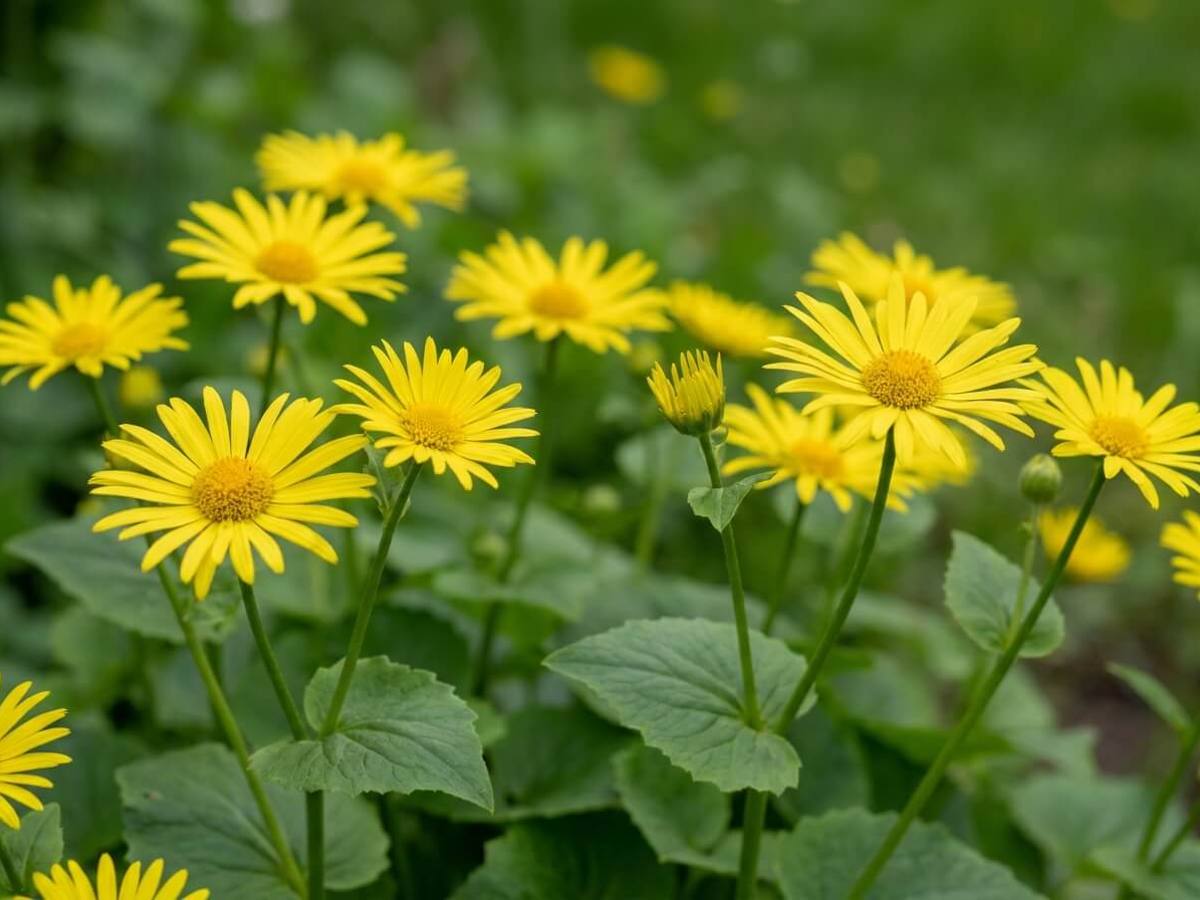
Helenium autumnale, commonly known as autumn sneezeweed or Helen’s flower, is a vibrant perennial that brings a burst of warm yellows, oranges, and russets to the late summer and autumn garden. These cheerful daisy-like blooms attract pollinators and provide essential nectar when many other flowers are fading. The distinctive raised central disc makes each flower instantly recognisable and adds texture to any border.
Growing conditions
Helenium autumnale thrives in full sun—at least six hours of direct sunlight daily. Plants grown in partial shade will become leggy and produce fewer flowers, so position yours in the brightest part of the border.
This plant prefers moist, well-drained soil and performs particularly well in loamy or clayey conditions. Although it tolerates a wide pH range, it flowers more prolifically in neutral to slightly acidic soil. Avoid waterlogged sites in winter, as this can cause root rot.
Helenium is fully hardy across the UK and northern Europe, thriving in USDA zones 3–8. It requires no winter protection and will regrow reliably each spring.
How to plant Helenium
Plant in spring (March to May) or early autumn (September to October) to establish strong roots before flowering or winter dormancy. Spring planting gives the best results in colder regions.
Space plants 45–60 cm apart to allow good air circulation and prevent overcrowding as they mature.
Set the crown (where shoots emerge from the root) at soil level—never bury it deeper, as this encourages rot.
Work in well-rotted compost or leaf mould to improve moisture retention without compromising drainage.
Water newly planted specimens generously and maintain consistent moisture for the first four weeks.
Divide established clumps in spring every three to four years to rejuvenate plants and create new specimens.
Helenium autumnale growing in a naturalistic garden border
Care through the seasons
Spring: Remove any dead growth from winter and cut back remaining stems to 10–15 cm above soil level. Apply a balanced feed (such as blood, fish and bone) as new shoots appear, and pinch out the growing tips of young plants in May to encourage bushier, more compact growth.
Autumn: Allow the last flowers to fade naturally to provide seed heads for wildlife and winter interest. Cut stems back to 10–15 cm in late November after the first hard frost. Divide congested clumps at this time or in early spring if you wish to propagate.
Winter: Helenium dies back completely and requires no protection. The thick rhizomes remain dormant underground and will reliably shoot again in spring.
Best varieties to grow
Modern cultivars offer a range of heights and colour combinations suited to different border schemes.
Helenium autumnale ‘Moerheim Beauty’ — A dwarf form reaching 75 cm with deep red-brown and orange flowers; an ideal choice for smaller gardens and container growing.
Helenium autumnale ‘Chelsey’ — Award-winning compact cultivar, 60 cm tall, bearing bright yellow flowers with russet-red centres; excellent for cutting.
Helenium autumnale ‘Goldrausch’ — Tall variety (120 cm) with golden-yellow petals and green-yellow disc florets, flowering from August to October.
Helenium autumnale ‘Wyndley’ — Bushy plant, 75 cm high, with bicolour petals in orange-red and yellow; award-winning cultivar with strong disease resistance.
Pests, diseases and common problems
Powdery mildew: A white, powdery coating on leaves indicates fungal infection, often in humid or overcrowded conditions. Improve air circulation by thinning stems, remove affected leaves, and apply a sulphur-based fungicide if necessary.
Slugs and snails: These pests damage young stems and foliage in spring. Hand-pick in the evening, use beer traps, or apply diatomaceous earth around the plant base.
Root rot from waterlogging: Yellowing leaves and soft stems suggest poor drainage or excessive watering. Improve drainage by amending soil with grit or coarse sand; reduce watering frequency in wet conditions.
Leggy, sparse growth: This results from insufficient light or overcrowding. Ensure plants receive at least six hours of direct sun daily, and divide congested clumps to improve air circulation.
🌿 Nature & Garden Newsletter
Gardening tips, recipes & seasonal advice, twice a week.