Growing Gaura lindheimeri: care, varieties and garden uses
0
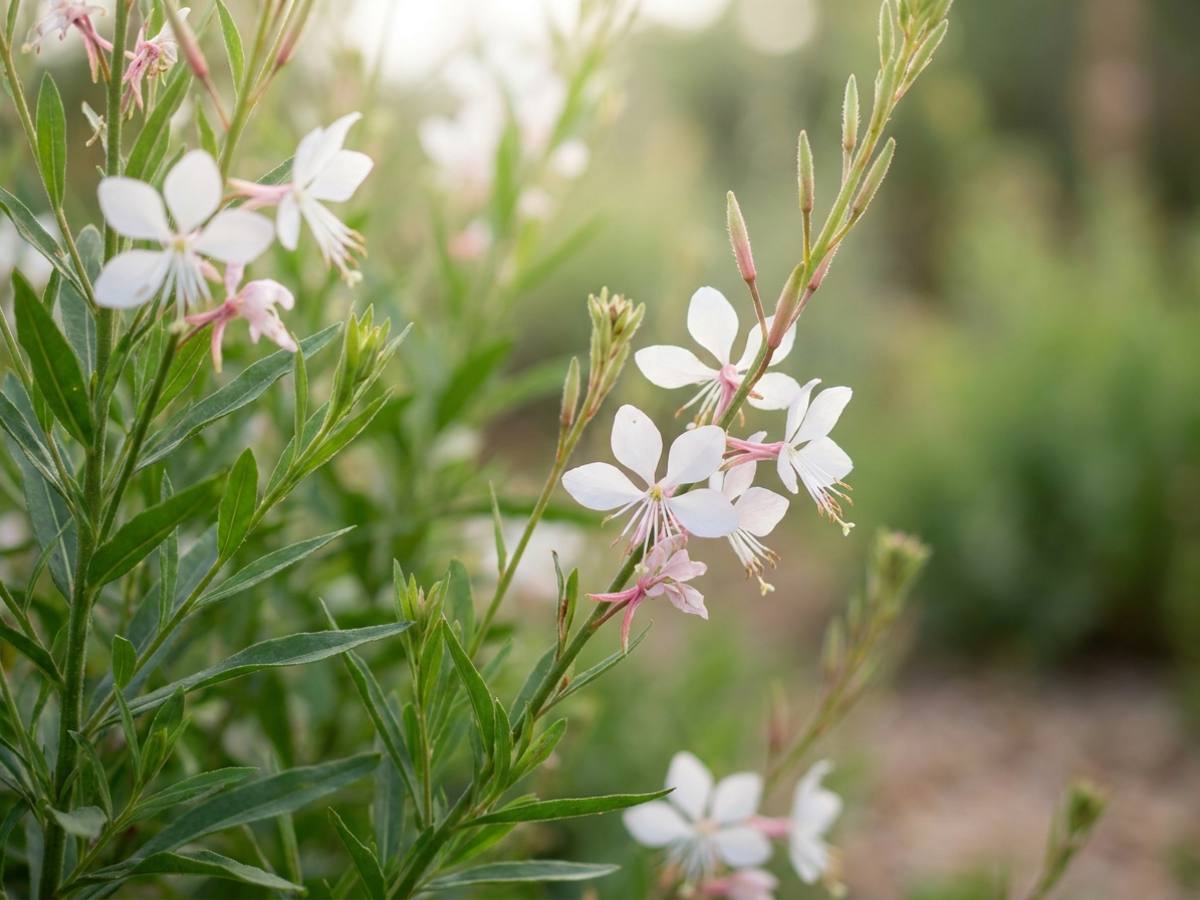
Few perennials float quite like Gaura lindheimeri, whose slender wands of pink or white blossom sway on the slightest breeze, giving rise to its charming common name of whirling butterflies. It brings airy, informal movement to gravel gardens, prairie-style borders and container displays, flowering tirelessly from early summer until the first frosts. Botanically it has been reclassified as Oenothera lindheimeri, though most nurseries still list it under its familiar older name.
Growing conditions
Gaura is a sun-worshipper from the prairies and open woodland edges of Texas and Louisiana, and it needs at least six hours of direct sunlight to flower well. In shade the stems stretch, flop and produce far fewer blooms. Choose an open, airy spot rather than a sheltered pocket, as the plant’s swaying habit is part of its charm.
Sharp drainage matters more than fertility. Light sandy, stony or chalky soils suit it perfectly, and it copes happily with a pH from mildly acidic to distinctly alkaline. Heavy, wet clay is the one situation it will not forgive — waterlogged winter soil rots the deep taproot and is the usual cause of failure.
In mild maritime climates such as southern England, Gaura is generally reliable but short-lived, lasting three to five years. In colder or wetter regions, grow it in raised beds, gravel gardens or large pots, or simply treat it as a long-flowering seasonal bedding plant.
How to plant Gaura
Plant in mid to late spring, once the soil has warmed and frosts have passed, so the taproot can establish before winter. Autumn planting is risky in cool climates because young plants sit cold and wet for months.
Spacing: Allow 45–60 cm between plants for full-sized cultivars, or 30 cm for dwarf types, so air circulates freely and the wands can weave together attractively.
Depth: Set the crown level with the surrounding soil — never below it, as buried crowns rot readily in damp weather.
Soil preparation: Fork in horticultural grit or coarse sand on heavier ground, and avoid rich manures which produce soft, floppy growth at the expense of flowers.
Watering in: Water thoroughly at planting, then keep just moist for the first six weeks; after that, reduce watering to encourage deep rooting.
Propagation: Take softwood or basal cuttings in late spring and early summer — Gaura resents division because of its taproot, and named cultivars will not come true from seed.
Gaura lindheimeri growing in a naturalistic garden border
Care through the seasons
Spring: Cut last year’s stems down to 10–15 cm above ground once new shoots appear at the base, usually in March or April. Gaura breaks dormancy late, so be patient before assuming a plant has died. A light scattering of general-purpose fertiliser is ample — over-feeding causes lax, sprawling growth.
Summer: Established plants are notably drought-tolerant and rarely need watering once settled in the ground; container-grown specimens will need a soak every few days in hot weather. Shear the whole plant back by a third in mid-July if it becomes untidy, and it will rebloom within a fortnight. Tall cultivars may benefit from discreet twiggy support, though their natural swaying is best left uncorseted.
Autumn: Flowering continues until the first hard frost, so resist tidying too early. Leave the top growth in place over winter rather than cutting back — the stems shield the crown and prevent water sitting on it. Apply a gritty mulch around, but not over, the crown in colder gardens.
Winter: The plant dies back to a woody base and is fully dormant. Protection is rarely needed where drainage is good; the enemy is winter wet, not cold, so a covering of grit is far more useful than fleece.
Best varieties to grow
Breeding has produced compact, self-supporting forms as well as the graceful, tall original species.
‘Whirling Butterflies’ — the classic white-flowered form at around 90 cm, with pinkish buds and outstanding butterfly-like poise; holds an RHS Award of Garden Merit.
‘Siskiyou Pink’ — deep rose-pink blooms and burgundy-flushed foliage on 75 cm stems, superb with silver-leaved companions.
‘Sparkle White’ — a seed-raised compact selection reaching just 40–45 cm, flowering in its first year and ideal for pots and edging.
‘Rosyjane’ — distinctive white petals edged in vivid pink, compact at 60 cm and reliably free-flowering.
Pests, diseases and common problems
Root and crown rot: Plants collapse suddenly, blacken at the base or simply fail to re-emerge in spring — almost always caused by wet winter soil. Improve drainage with grit, plant on a slight mound, and avoid mulching directly over the crown.
Powdery mildew: A greyish-white bloom on leaves in humid late-summer conditions, particularly on crowded plants. Space generously, water at the base rather than overhead, and remove the worst affected stems by shearing the plant back.
Aphids and leafhoppers: Clusters on soft new shoots cause distorted growth and sticky honeydew. Dislodge with a jet of water or an organic soap spray, and encourage ladybirds and hoverflies with nearby nectar plants.