Growing Baptisia australis: expert tips and planting advice
0
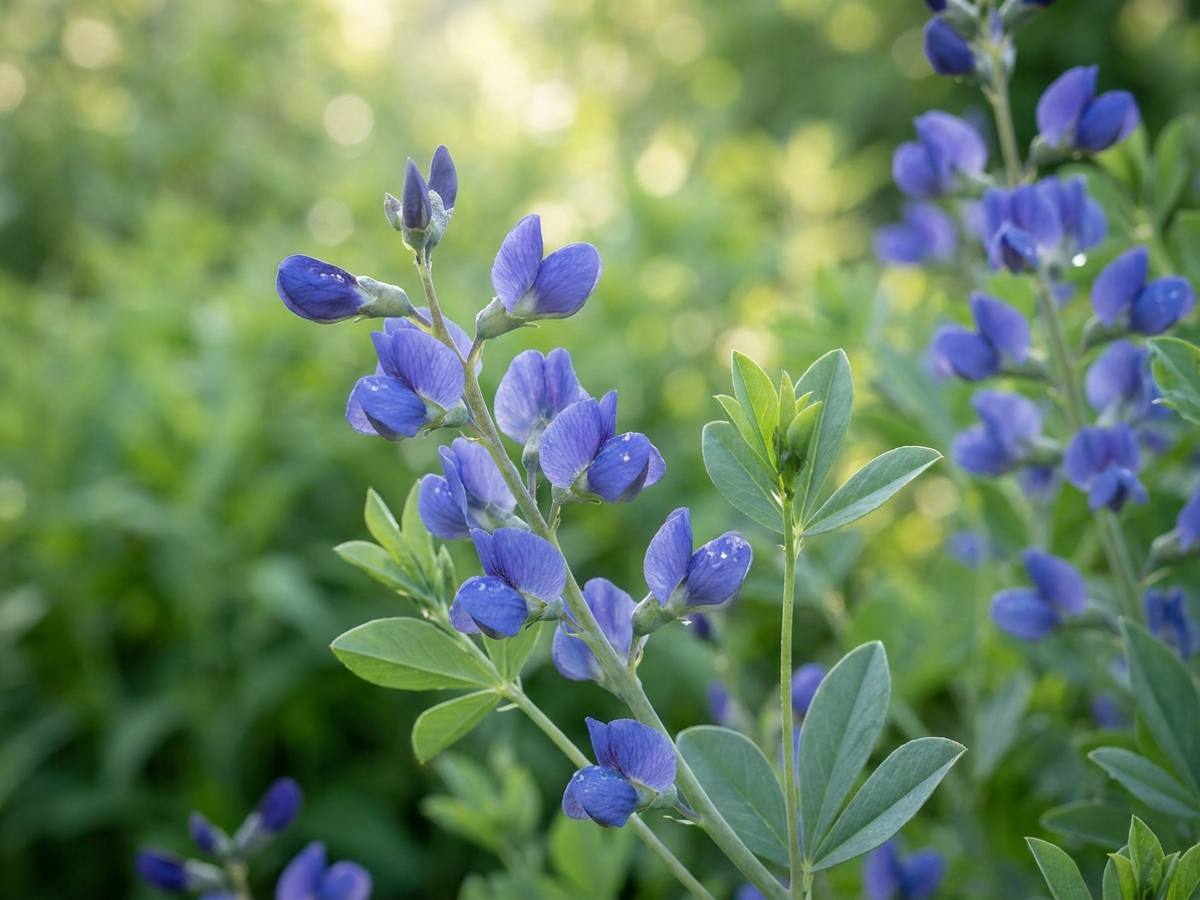
Baptisia australis, commonly called blue false indigo, is a striking herbaceous perennial prized for its tall spires of deep blue flowers that bloom in late spring and early summer. With its elegant, pea-like blooms and architectural foliage, it brings both height and drama to borders and cottage gardens. Once established, this North American native is wonderfully low-maintenance and drought-tolerant, making it ideal for gardeners seeking reliable, long-lived plants.
Growing conditions
Baptisia australis thrives in full sun, where it flowers most prolifically and develops its strongest structure. It will tolerate partial shade, though flowering may be reduced in shadier positions. Ensure the planting site receives at least six hours of direct sunlight daily for optimal performance.
This plant is remarkably unfussy about soil type and will grow in poor, clay-based, or sandy soils provided drainage is adequate. It prefers neutral to slightly acidic soil but tolerates chalk and even drought-stressed conditions once rooted. Avoid waterlogged ground, as this can lead to root rot during winter months.
Baptisia australis is fully hardy across the UK and northern Europe, requiring no winter protection. It is exceptionally cold-tolerant and performs equally well in northern gardens as in the south.
How to plant Baptisia
Plant in spring (March to May) or autumn (September to October) to allow the root system to establish before flowering season. Spring planting is often preferable in colder regions.
Space plants 60–90 cm apart, as they will spread substantially with age and need room for mature development
Plant with the crown level with the soil surface; avoid burying the central growing point
Incorporate grit or compost into poor soils to improve drainage, though amendment is not essential
Water thoroughly after planting and maintain consistent moisture for the first four weeks whilst roots establish
Divide established clumps in early spring every eight to ten years if desired, ensuring each division has several strong buds
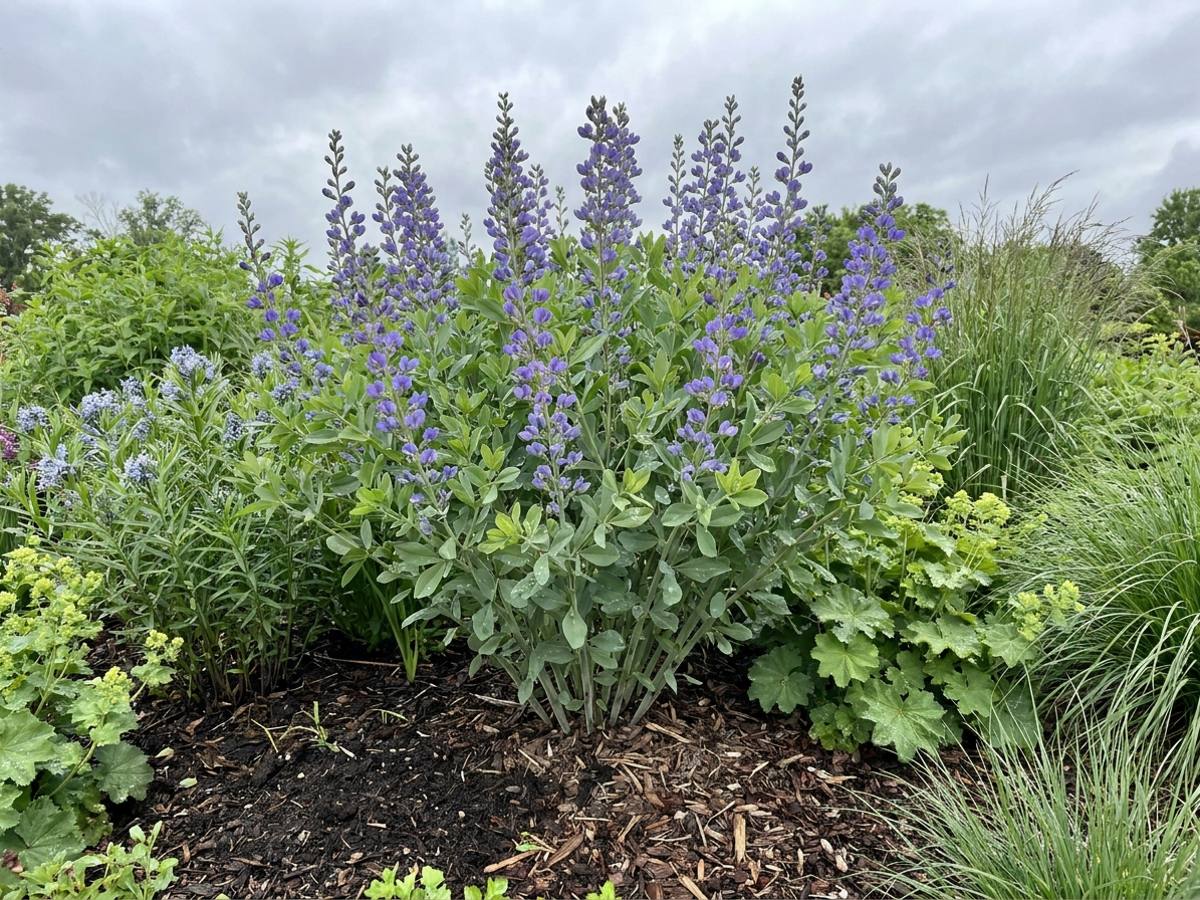
Baptisia australis growing in a naturalistic garden border
Care through the seasons
Spring: Cut back last year’s dead stems to ground level in early March before new growth emerges. Apply a balanced perennial feed or a light dressing of compost around the base in late March. Watch for the appearance of fresh, upright stems in April.
Summer: Deadhead spent flower spikes to encourage a modest second flush of blooms, though this is not essential. Once established, Baptisia is drought-tolerant and requires watering only during prolonged dry spells. Support tall varieties with discreet stakes if grown in exposed positions or wind-prone gardens.
Autumn: Allow stems to die back naturally from September onwards; the blackened seed pods are ornamental in their own right. Cut stems to the base in late November or early December after the first hard frost. Apply a 5–7 cm mulch of well-rotted compost around the plant in October if dividing is planned for spring.
Winter: Baptisia enters dormancy and requires no care or protection. The plant will emerge reliably from its deep root system in spring, even after severe winters.
Best varieties to grow
Several excellent cultivars are available, each offering subtle variations in colour and habit.
Baptisia australis — The species form with deep indigo-blue flowers on tall, upright spikes; the standard choice for most gardens
‘Purple Smoke’ — A hybrid with smoky purple-grey flowers tinged with blue, bringing unusual sophistication to late spring borders
‘Twilight Promenade’ — An outstanding bicolour with purple-blue petals and cream-yellow standards, award-winning for its unusual colouring
‘Patriot’ — A compact form reaching only 60 cm, ideal for smaller gardens and containers, with rich blue flowers
Pests, diseases and common problems
Slugs and snails: Young emerging shoots may be damaged in wet springs. Protect new growth with copper tape, crushed eggshell barriers, or organic slug pellets in April and May.
Powdery mildew: Rarely problematic but may occur in hot, humid seasons with poor air circulation. Improve spacing, thin overcrowded stems, and apply a sulphur-based fungicide if necessary.
Poor flowering: Insufficient light is the most common cause; ensure the plant receives at least six hours of direct sun daily. Excessive nitrogen in rich soils can also promote foliage over flowers—avoid over-feeding.
Root rot: Occurs only in waterlogged soils; prevent by ensuring well-drained planting sites and avoiding overwatering during winter dormancy.
🌿 Nature & Garden Newsletter
Gardening tips, recipes & seasonal advice, twice a week.