Growing Olearia macrodonta: care, uses and best varieties
·
0
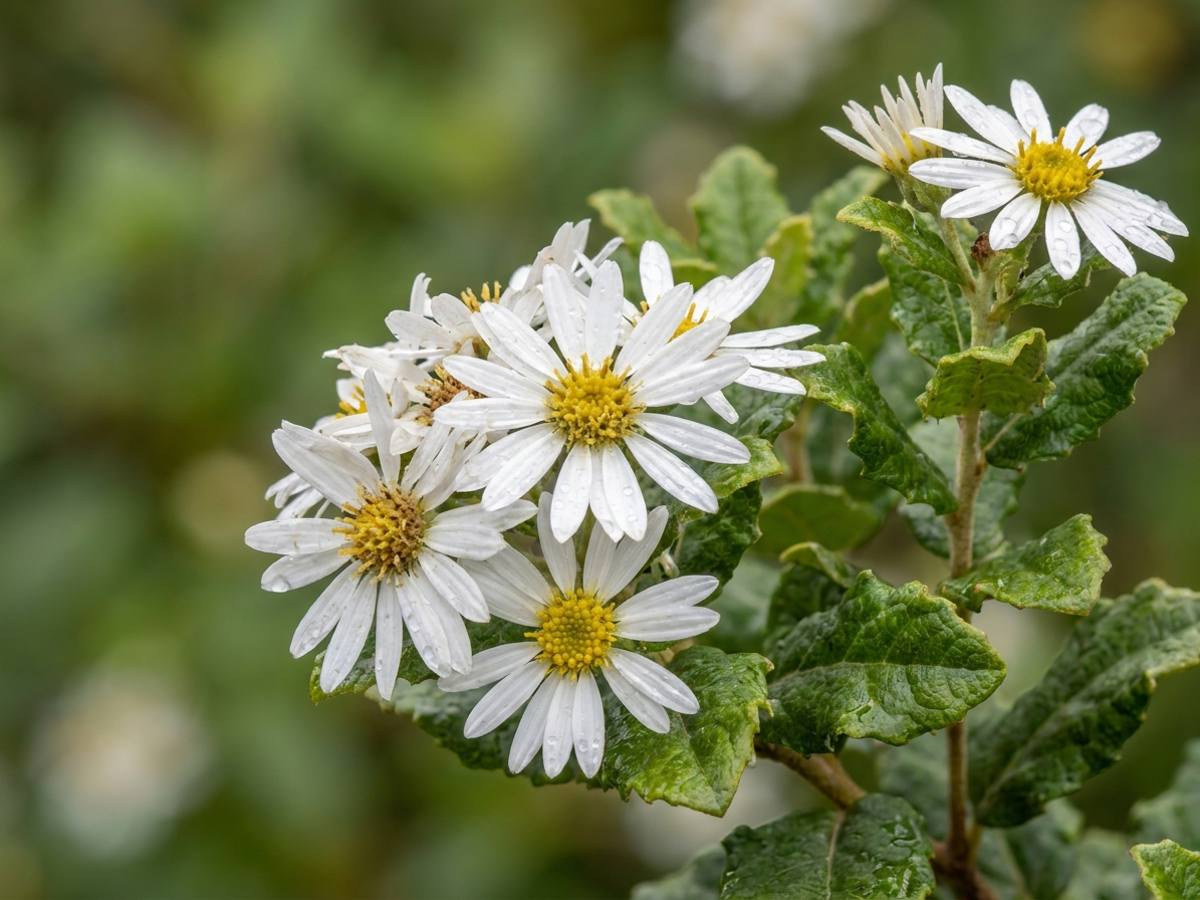
Olearia macrodonta is a robust evergreen shrub from New Zealand, grown for its handsome holly-like foliage of sage-green leaves with brilliant white, felted undersides. In early summer it smothers itself in broad clusters of small, musk-scented white daisies that hum with bees. Its greatest gift, however, is an exceptional tolerance of salt-laden gales, making it one of the finest hedging shrubs for exposed coastal gardens.
Growing conditions
Give Olearia macrodonta as much sun as you can. Full light produces dense, compact growth and the heaviest flowering, whilst plants in shade become gaunt and shy of blooming. It shrugs off wind and salt spray, so use it where few other evergreens will cope — on cliff-top boundaries, seafront hedges and windswept courtyards.
Drainage matters far more than fertility. A gritty, sandy or stony soil suits it perfectly, and it performs admirably on thin chalk and limestone. It dislikes heavy, wet clay, where roots sit cold and waterlogged in winter; if that is your soil, plant on a raised ridge or improve a generous area with grit before planting.
In the UK and Ireland it is reliably hardy in coastal and mild inland gardens, especially in the south and west. Inland gardens that regularly drop below −10 °C may see leaf scorch or dieback, so choose a sheltered spot with a warm wall or a sunny corner.
How to plant Olearia
Plant in mid-spring or early autumn, when the soil is warm and moist enough for quick root establishment. Spring planting is safer in colder districts, giving the shrub a full season to settle before its first winter.
Spacing: allow 1.5–2 m between shrubs in a border, or 60–75 cm apart for a dense, quick-knitting hedge.
Depth: set the top of the rootball level with the surrounding soil — never bury the stem base, which encourages rot.
Soil preparation: fork over a hole twice the width of the rootball and mix in horticultural grit or coarse sand on heavier ground; skip rich manures, which soften growth.
Watering in: soak thoroughly after planting, then water weekly through the first summer until established, tailing off in autumn.
Propagation: take 10 cm semi-ripe cuttings of side shoots in late summer, root them in a gritty compost in a cold frame, and pot on the following spring.
Olearia macrodonta growing in a naturalistic garden border
Care through the seasons
Spring: Check for any winter-damaged shoots and prune them back to healthy wood once the risk of hard frost has passed, usually April. Apply a mulch of gravel or leaf mould around the base, keeping it clear of the trunk. A light dressing of general-purpose fertiliser is enough — overfeeding produces sappy growth that is easily frosted.
Summer: Once the daisies fade in July, trim the shrub lightly to remove spent flower heads and shape the plant; this is also the moment to clip hedges. Established plants are notably drought tolerant, though young shrubs benefit from a deep soak every ten days in prolonged dry spells. Avoid frequent shallow watering, which encourages surface rooting.
Autumn: Stop pruning by the end of August so that new growth ripens before the cold. Firm in any newly planted shrubs loosened by autumn winds and check stakes on young specimens. This is a good time to plant, whilst the soil retains its summer warmth.
Winter: The foliage remains evergreen and silvery through the winter months. In cold inland gardens, screen young plants with hessian or fleece during severe spells and protect the root zone with a dry mulch.
Best varieties to grow
The species itself is the mainstay, but a few selections and close relatives are worth seeking out.
Olearia macrodonta — the straight species holds an RHS Award of Garden Merit for its reliability, scented flowers and superb wind resistance.
Olearia macrodonta ‘Major’ — a vigorous form with noticeably larger, more strongly toothed leaves and generous flower clusters, ideal for tall screening.
Olearia macrodonta ‘Minor’ — a more compact, smaller-leaved selection suited to modest gardens and lower hedges of around 1.5 m.
Olearia × haastii — not a cultivar but the hardiest common daisy bush, with small neat leaves; a sensible substitute for colder inland gardens.
Pests, diseases and common problems
Winter dieback and leaf scorch: browned, crisped foliage and dead shoot tips follow hard frost or freezing winds. Prune out damage in mid-spring rather than winter, and mulch the roots for insulation.
Root rot (Phytophthora): yellowing leaves, sudden wilting and dark, dead roots point to waterlogging. There is no cure, so prevention is everything — plant on a mound in free-draining soil and never mulch against the stem.
Scale insects and aphids: sticky honeydew, sooty mould and distorted new shoots betray sap-sucking pests. Dislodge them with a strong jet of water, encourage ladybirds and lacewings, and treat persistent infestations with an organic soap spray.
🌿 Nature & Garden Newsletter
Gardening tips, recipes & seasonal advice, twice a week.