Heliopsis helianthoides: varieties, planting and garden uses
0
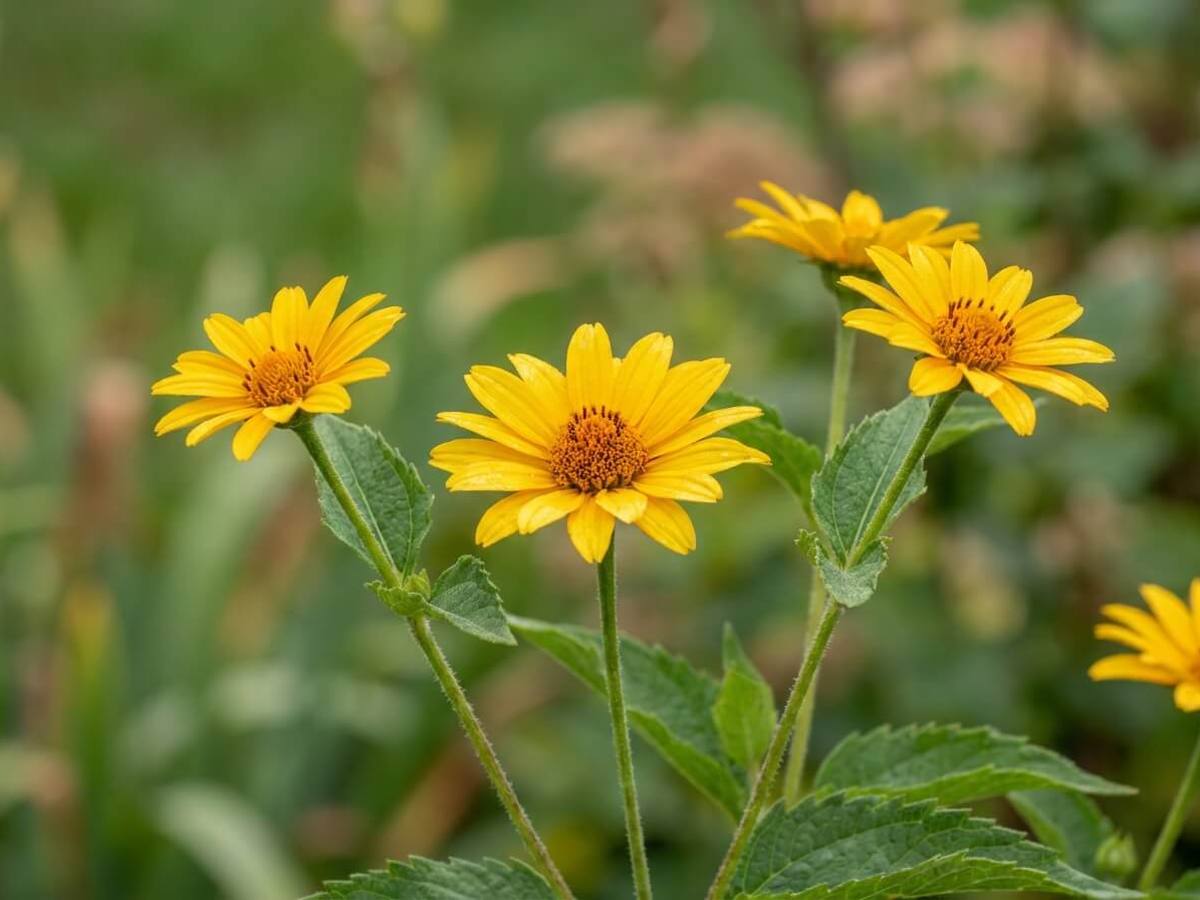
With its bold, sun-yellow daisies borne on strong, self-supporting stems, Heliopsis helianthoides brings the cheerful look of a sunflower to the herbaceous border without any of the flopping or staking. This North American prairie native flowers relentlessly from midsummer into early autumn, drawing bees and butterflies in numbers. Its great distinction is toughness: it shrugs off heat, drought and poor soil in a way few large-flowered perennials manage.
Growing conditions
Give Heliopsis the sunniest spot you have — a minimum of six hours of direct sun produces the sturdiest stems and the heaviest flush of flowers. In light shade it still blooms, but growth becomes lax and leaning, and you may need discreet support. Wind is rarely a problem, as the stems are notably rigid for their height.
Soil demands are refreshingly modest. It performs on heavy clay, thin chalk and sandy loams alike, provided winter waterlogging is not prolonged, and accepts a pH anywhere from mildly acidic to distinctly alkaline. Very rich, heavily manured ground is the one thing to avoid: it encourages soft, floppy growth and fewer flowers.
Hardiness is exceptional, with established clumps surviving deep prairie-style cold. In hot, dry Mediterranean-type gardens, site it where it receives some afternoon shade and a mulch to keep the roots cool.
How to plant Heliopsis
Plant in spring, from March to May, so roots establish while the soil is warming and moisture is reliable. Autumn planting also succeeds in mild areas, but spring gives young plants the best first season.
Space plants 45–60 cm apart — close enough to knit into a block, open enough for air to circulate and discourage powdery mildew.
Set the crown level with the surrounding soil; burying it deeper invites rot in wet winters.
Fork over the planting area and loosen compacted subsoil, but resist adding rich manure — a thin layer of garden compost is ample.
Water in thoroughly at planting, then soak weekly for the first six to eight weeks until new growth is obvious.
Propagate by dividing established clumps every three or four years in early spring, or sow seed of the species at 15–20 °C in spring; named cultivars must be divided or grown from basal cuttings to stay true.
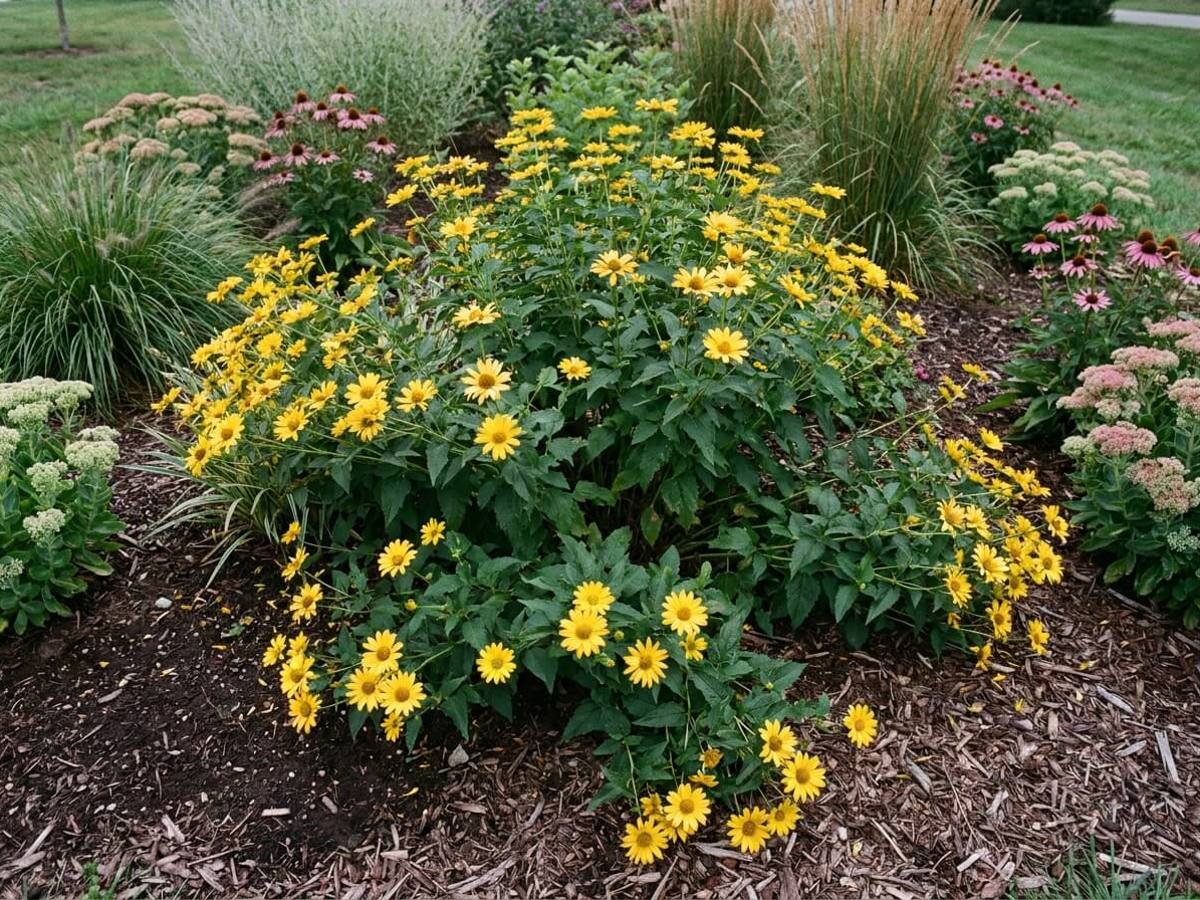
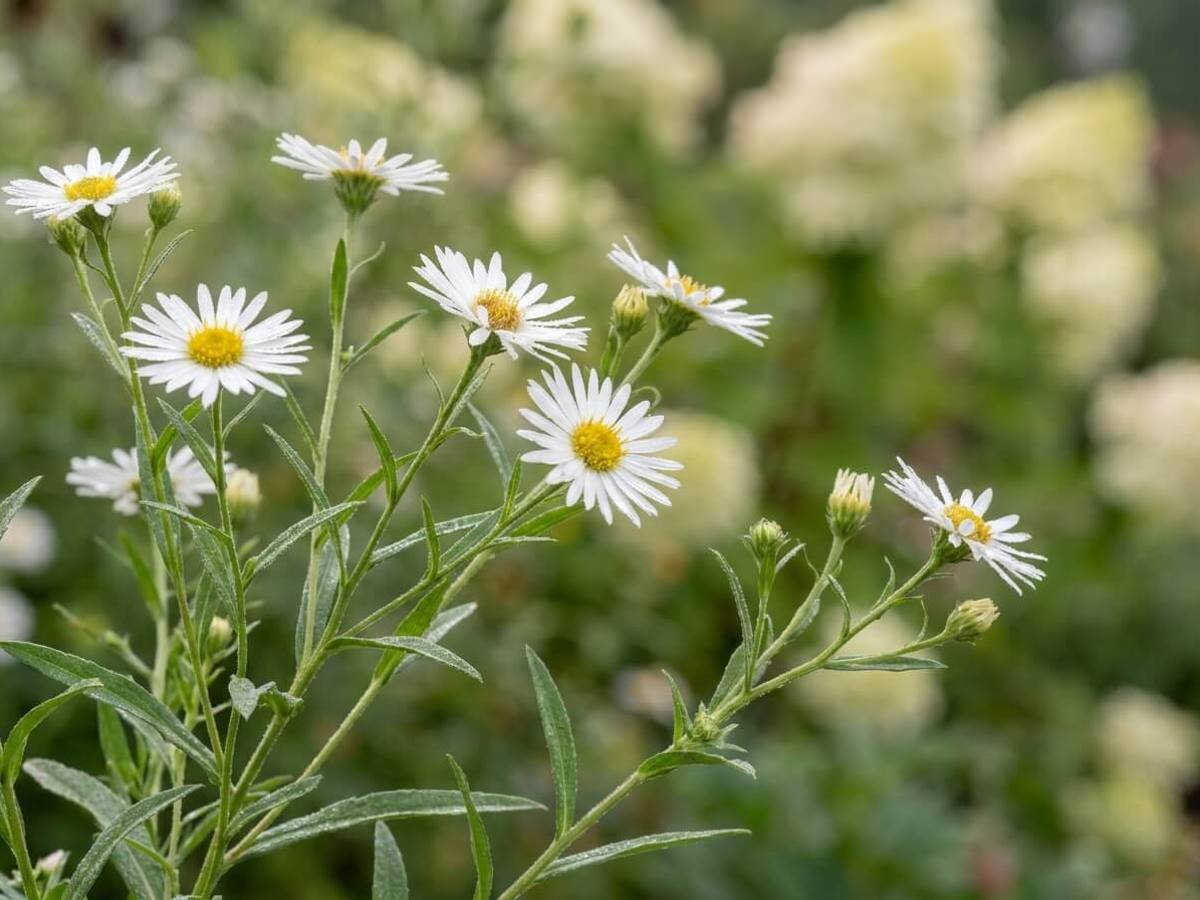
Heliopsis helianthoides growing in a naturalistic garden border
Care through the seasons
Spring: New shoots push through from late March into April, often bronze-tinted on dark-leaved cultivars. Apply a light dressing of general-purpose fertiliser or a 3 cm mulch of compost around, not over, the crown. Pinching the shoots back by a third when they reach 30 cm makes bushier, shorter, more self-supporting plants.
Summer: Water deeply during prolonged dry spells, especially in the first two years, though mature clumps are impressively drought-tolerant. Deadhead regularly to keep the display going into early autumn and to limit self-seeding of the species. Cutting the whole plant back by a third after the first main flush encourages a strong second wave of blooms.
Autumn: Leave some seedheads standing for goldfinches and other small birds, then cut stems down to 10 cm once frost has blackened the foliage. Early autumn, from September, is a good moment to lift and divide overgrown clumps in mild regions. A mulch of leaf mould over the crown helps young plants through their first winter.
Winter: The plant dies back completely to a dormant crown and needs no protection in temperate gardens. Only in very wet, heavy soils is a gritty mulch worth adding to improve drainage around the roots.
Best varieties to grow
Breeders have concentrated on darker foliage, doubled flowers and more compact habits, all of which suit modern borders.
‘Summer Sun’ (‘Sommersonne’) — the classic, with large semi-double golden-yellow flowers on 90–120 cm stems; long-flowering and very reliable.
‘Loraine Sunshine’ — striking cream-and-green variegated leaves beneath simple yellow daisies, at a modest 60–75 cm.
‘Bleeding Hearts’ — burnt-orange buds opening to deep coppery-red blooms that fade to gold, set against near-black stems.
‘Burning Hearts’ — dark bronze-purple foliage with red-eyed orange-yellow flowers; compact at around 90 cm and excellent for cutting.
‘Prairie Sunset’ — tall and vigorous to 150 cm, with purple-flushed stems and yellow flowers carrying a warm orange halo.
Pests, diseases and common problems
Powdery mildew: White dusty patches on upper leaves in late summer, worst on crowded, dry-rooted plants. Improve air flow by thinning stems, water at the base rather than overhead, and remove affected foliage rather than composting it.
Aphids: Dense colonies cluster on soft shoot tips and flower buds, causing distortion and sticky honeydew. Dislodge with a jet of water, encourage ladybirds and hoverflies by leaving some growth undisturbed, and use organic soft soap only if numbers explode.
Red spider mite: Fine pale mottling and faint webbing on leaf undersides during hot, dry summers. Mist plants in the evening, keep the soil evenly moist with mulch, and cut back badly affected stems to force clean regrowth.
Flopping stems: Usually caused by too much shade or over-rich soil rather than weak varieties. Move plants into full sun, skip the nitrogen feed, and pinch out growing tips in mid-spring.
🌿 Nature & Garden Newsletter
Gardening tips, recipes & seasonal advice, twice a week.