Diervilla sessilifolia: expert tips and planting advice
0
Diervilla sessilifolia, the southern bush honeysuckle, is a tough, low-mounding shrub that carries clusters of sulphur-yellow, tubular flowers right through the heat of summer, when most shrubs have long since finished. Its arching stems and bronze-flushed new growth make it a handsome ground-covering plant for banks, car park edges and awkward dry corners. Best of all, it flowers on the current season’s wood, so even a hard spring prune costs you nothing in blossom.
Growing conditions
Southern bush honeysuckle is at its most floriferous and most compact in full sun, where the foliage also colours best in autumn. It will grow perfectly happily in partial shade and even survives beneath the canopy of established trees, though flowering thins and the habit becomes looser and more arching.
Soil matters far less than drainage. This is a shrub of rocky Appalachian slopes and roadside banks, so it thrives on thin, poor, gritty ground where fussier shrubs sulk. It prefers acid to neutral soil but copes with mildly alkaline conditions; what it genuinely dislikes is winter waterlogging and heavy, airless clay that never dries out.
Hardiness is exceptional — it shrugs off temperatures well below −20 °C — and it is also notably tolerant of drought, wind, salt spray and the juglone produced by black walnut roots. In mild maritime gardens, give it the sunniest, sharpest-drained spot you have to keep growth tight.
How to plant Diervilla
Plant container-grown stock from early autumn to late spring, avoiding periods when the ground is frozen or sodden. Autumn planting lets the root system establish before the first summer’s dry spells.
Spacing: set plants 90–120 cm apart for a solid groundcover mass in three to four years; space at 150 cm if you want individual specimens to keep their shape.
Depth: plant so the top of the rootball sits flush with the surrounding soil — burying the crown encourages rot in wet winters.
Soil preparation: fork over compacted ground and add grit rather than rich manure; over-feeding produces soft, floppy stems and fewer flowers.
Watering in: soak thoroughly at planting, then water weekly through the first summer until new shoots appear; after that it is largely self-sufficient.
Propagation: lift rooted suckers with a spade in early spring, or take softwood cuttings in June — they root readily in a shaded frame within four to six weeks.
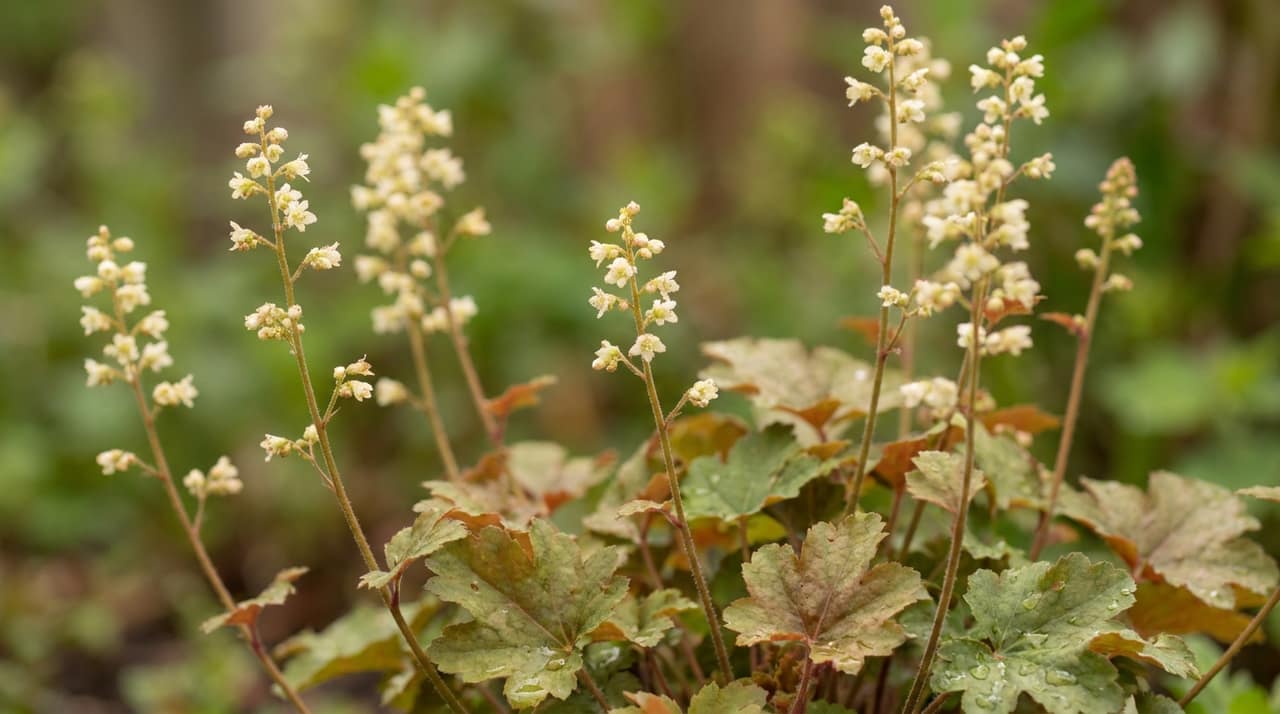
Diervilla sessilifolia growing in a naturalistic garden border
Care through the seasons
Spring: Cut the whole plant back hard in late winter or early spring, to 15–30 cm above ground if you want a dense, uniform mound. Flowers are borne on new wood, so nothing is lost. A light mulch of leaf mould or composted bark helps conserve moisture, but skip high-nitrogen feeds.
Summer: Water only during prolonged drought in the first two seasons; established plants rarely need it. Deadheading is unnecessary — flowering continues in flushes from June onwards regardless. Slice through wandering suckers with a spade in July if the colony is straying beyond its allotted space.
Autumn: Leave the stems standing to enjoy the red, purple and orange autumn tints, which are strongest on plants in full sun. Early autumn is the ideal time to divide congested clumps or lift rooted suckers for new plants. A thin mulch around young shrubs protects the shallow root run in their first winters.
Winter: Fully dormant and completely hardy across Britain and northern Europe, requiring no protection whatsoever. The bare, arching stems have a quiet russet colour worth keeping until the spring prune.
Best varieties to grow
A handful of selections improve on the species for foliage interest without losing its toughness.
‘Butterfly’ — a free-flowering, compact form with brighter, more abundant yellow blooms and neat mid-green leaves; the most widely grown selection.
‘Cool Splash’ — boldly variegated with irregular creamy-white leaf margins that light up shade; occasionally reverts, so remove all-green shoots promptly.
‘Honeybee’ — chartreuse to golden-yellow foliage that deepens through summer, best with some midday shade to avoid scorch.
Diervilla × splendens — the natural hybrid with D. lonicera, offering coppery-purple new growth and an even lower, more spreading habit.
Pests, diseases and common problems
Powdery mildew: a white bloom on leaves in dry shade or crowded plantings. Improve air movement by thinning stems, mulch to retain root moisture, and remove affected leaves rather than reaching for sprays.
Aphids: colonies cluster on soft shoot tips in late spring, distorting new growth. Blast them off with a jet of water or leave them for hoverfly and ladybird larvae, which usually clear them within a fortnight.
Root rot and dieback: yellowing leaves and collapsing stems on heavy, wet ground. Plant on a slight mound or raised bed, avoid irrigating established plants, and cut dead wood back to healthy tissue in early spring.
🌿 Nature & Garden Newsletter
Gardening tips, recipes & seasonal advice, twice a week.