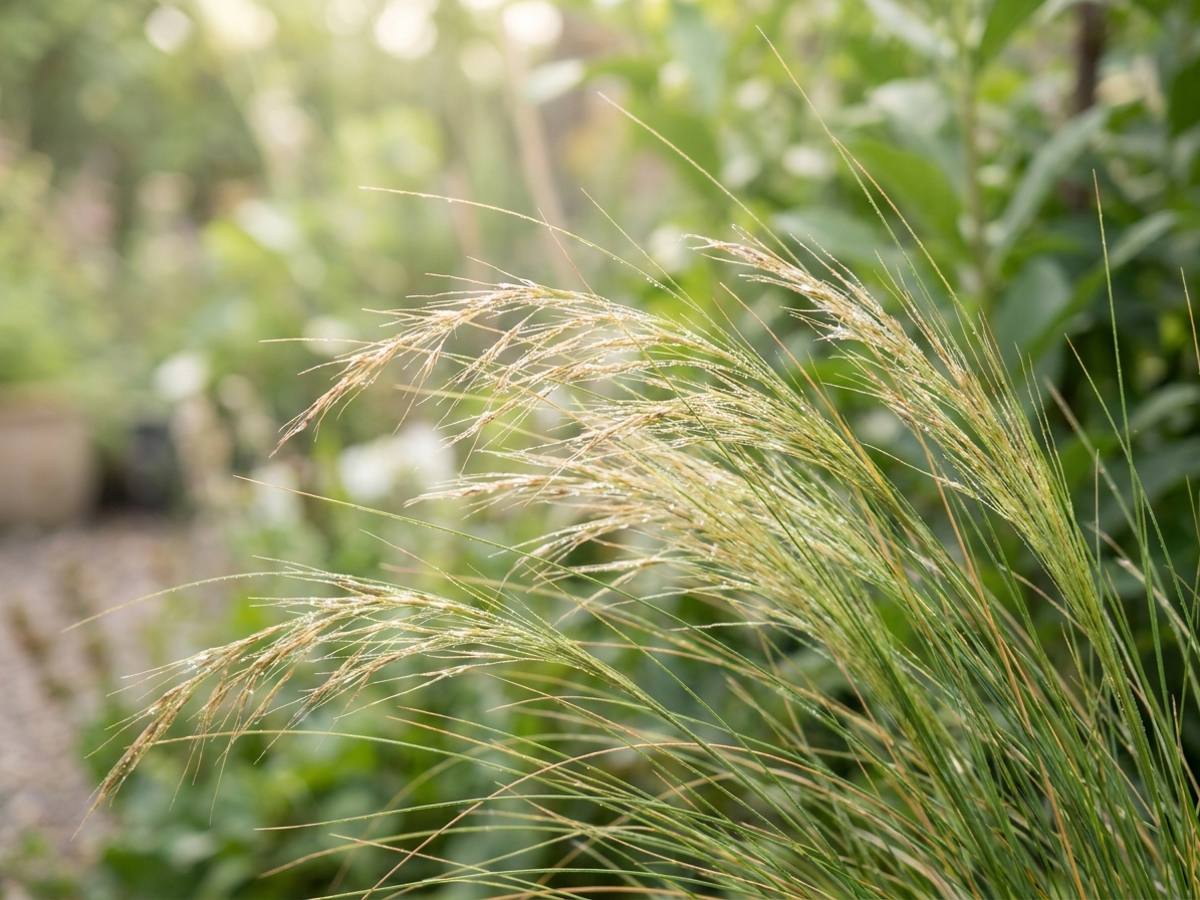
Stipa tenuissima, commonly known as Mexican feather grass or fine-leaved needle grass, is a delicate ornamental grass prised for its ethereal, hair-fine foliage and feathery flower panicles that dance in the slightest breeze. Its wispy, blonde plumes create a soft, romantic quality in borders and naturalistic planting schemes, making it a favourite among contemporary gardeners. This grass is exceptionally drought-tolerant once established, requiring minimal maintenance in the right conditions.
Growing conditions
Stipa tenuissima thrives in full sun, requiring at least six to eight hours of direct sunlight daily to develop its best colour and form. Plants grown in partial shade become leggy and lack the dense, compact habit that makes this grass so attractive. Position it where morning sun dries dew quickly, reducing fungal issues.
This grass strongly prefers well-drained soil and will not tolerate waterlogging. It performs best in poor to moderately fertile, gritty or sandy soils; in rich, heavy clay the plants tend to flop and suffer from rot. Soil pH is not critical, though it tolerates slightly alkaline conditions.
Stipa tenuissima is fully hardy to −10 °C and suitable for most of the British Isles, though it performs best in southern and central regions with drier summers. In wetter northern climates, plant it on slopes or raised beds to ensure winter drainage. Avoid boggy ground or areas prone to standing water.
How to plant Stipa
Plant in late spring (May to June) once soil has warmed and all frost risk has passed. Spring planting allows plants to establish strong roots before their first winter.
Space plants 30–45 cm apart to allow air circulation and prevent overcrowding as they mature.
Plant with the crown level with the soil surface; avoid burying the base as this invites rot.
Prepare the planting area by incorporating coarse grit or sand to improve drainage, especially in clay soils.
Water in gently but thoroughly after planting, then only during dry spells in the first growing season.
Divide congested clumps in late spring; pull apart carefully and replant with spacings as above.
Care through the seasons
Spring: In mid-April, cut back dead foliage from the previous year using a stiff brush or line trimmer held parallel to the ground, or simply comb out with your fingers. Do not cut into live growth. A light dressing of grit around the base improves drainage as growth resumes. No feeding is necessary unless soil is particularly poor.
Summer: Once established, Stipa tenuissima rarely needs watering except during prolonged drought. Water young plants during their first year if rain is scarce. Feathery flower heads appear from June onwards; leave them standing to enjoy the display and self-seed if desired. The grass requires no deadheading or tidying during the growing season.
Autumn: As foliage bleaches to pale blonde and gold from September onwards, the plant’s ornamental appeal increases. Resist the urge to tidy; this is when the grass looks its best. In late October or November, divide established clumps if rejuvenation is needed, then top-dress with grit to protect the crown over winter.
Winter:Stipa tenuissima is fully hardy and needs no winter protection in most British gardens. In very wet, exposed sites in the north, ensure drainage remains open; standing water is more damaging than cold. The dried foliage persists attractively through winter, providing structure and winter interest.
Best varieties to grow
The species itself is the most commonly grown form, but one or two cultivars offer slightly different characteristics.
Stipa tenuissima — The straight species, with ultra-fine, hair-like leaves and feathery blonde plumes; this is the classic form and the most widely available.
Stipa tenuissima ‘Pony Tails’ — A more compact cultivar, reaching only 30–40 cm, ideal for smaller borders or container growing.
Stipa tenuissima ‘Feen Orange’ — A newer selection with slightly warmer, more golden tones in the foliage; similar height and hardiness to the species.
Pests, diseases and common problems
Root rot and crown rot: Symptoms include yellowing, wilting, and collapse, often after wet winters. This occurs in poorly drained soil or where water pools around the crown. Improve drainage immediately by adding grit around the base; in clay soil, consider lifting and replanting on a slight mound or in a raised bed.
Rust: Rarely serious, but leaves may show orange or brown pustules in very humid summers. Ensure good air circulation by spacing plants adequately and avoiding overhead watering; remove and bin affected foliage rather than composting.
Slugs and snails: Young shoots may be grazed in spring, particularly in wet years. No chemical control is necessary; encourage natural predators, or hand-pick early in the morning. A copper barrier around individual plants deters grazing.
Legginess or flopping: This indicates insufficient sunlight or overly rich soil. Move the plant to a sunnier spot or reduce nitrogen in the diet; in shadier positions, the plant will never thrive properly.