Chinese Evergreen: varieties, care guide and indoor planting
0
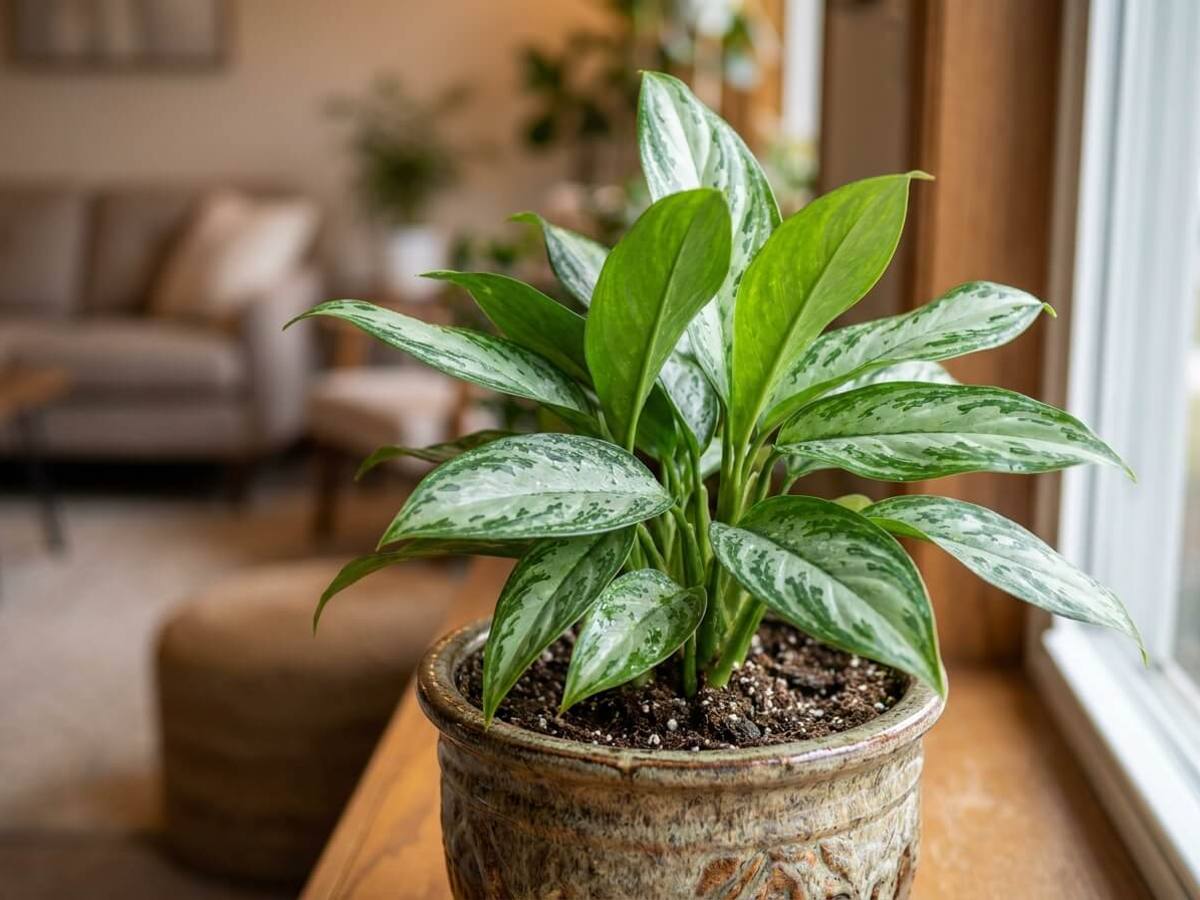
Few houseplants deliver as much pattern and polish for so little effort as Aglaonema commutatum, the Chinese evergreen. Its broad, leathery leaves are brushed and marbled with silver, cream or grey-green, held on short fleshy stems that slowly build into a dense, upright clump. Best of all, it keeps that colouring in light levels where most variegated plants would sulk and fade.
Growing conditions
Give Chinese evergreen bright but filtered light — an east-facing window, or a metre or two back from a south- or west-facing one. It will tolerate genuinely low light, including north-facing rooms and offices lit mainly by fluorescent tubes. Direct midday sun scorches the leaves, leaving bleached, papery patches.
Use a loose, open potting medium: a good peat-free houseplant compost lightened with one-third perlite, coarse bark or coir. The plant is prone to root rot in heavy, soggy mixes, so drainage matters more than richness. A slightly acidic pH of 5.5–6.5 suits it best.
Outdoors it is only viable in frost-free subtropical and tropical gardens, where it makes excellent evergreen ground cover in shade. Everywhere else, treat it as a permanent indoor plant and keep it away from doorways, air-conditioning vents and unheated conservatories in winter.
How to plant Aglaonema
Pot or repot in late spring or early summer, when warmth and lengthening days push the plant into active growth and new roots establish quickly. Avoid repotting between November and February, when growth has all but stopped.
Allow 45–60 cm between plants if grouping several in a trough or bed, so air can circulate between the broad leaves and discourage leaf spot.
Set the crown at the same depth it sat before — burying the fleshy stem base invites rot.
Choose a pot only 2–3 cm wider than the old one; Aglaonema flowers and grows best when slightly snug, and oversized pots stay wet too long.
Water in thoroughly with tepid water until it runs from the drainage holes, then let the surface dry before watering again.
Propagate by dividing congested clumps at repotting time, keeping three or more leaves and a good root portion on each division.
Aglaonema commutatum displayed as a houseplant in a home interior
Care through the seasons
Spring: As growth restarts, begin feeding every four weeks with a balanced liquid houseplant fertiliser at half the recommended strength. Wipe the leaves with a damp cloth to clear winter dust and restore their sheen. This is the ideal moment to divide, repot or take cuttings.
Summer: Water when the top 2–3 cm of compost feels dry, allowing the plant to take up what it needs and draining away any surplus from the saucer. Mist occasionally or stand the pot on a tray of damp pebbles if indoor air is dry. Remove the insignificant white or greenish spathes if you prefer the plant to put its energy into foliage.
Autumn: Taper feeding off from late September and reduce watering as light levels fall. Cut away any lower leaves that have yellowed naturally, slicing cleanly at the stem. Move plants a little closer to a window to compensate for weaker autumn light.
Winter: Growth pauses; water sparingly, perhaps once a fortnight, and never let the compost stay cold and wet. Keep the room above 15 °C and away from draughts and radiators.
Best varieties to grow
Most of the classic silver-patterned Chinese evergreens sold as houseplants are cultivars of this species.
‘Silver Queen’ — the best known of all, with leaves almost entirely silver-white and only narrow green margins and veining.
‘Silver King’ — similar silvering but broader, more upright leaves and a sturdier, taller habit.
‘Maria’ — compact and deep green with subtle grey-green feathering, and the most tolerant of genuinely dim corners.
‘Pseudobracteatum’ — strikingly marked with creamy-yellow and pale green along the midrib, sometimes sold as ‘White Rajah’.
Pests, diseases and common problems
Mealybugs: White, cottony clusters tuck into leaf axils and under leaves, leaving sticky honeydew. Dab them off with a cotton bud dipped in surgical spirit, then spray weekly with an organic soap-based insecticide until clear.
Red spider mite: Fine webbing and a dull, speckled bronzing of the leaves, worst in dry centrally heated rooms. Raise humidity, rinse the foliage under a tepid shower, and repeat at weekly intervals to break the breeding cycle.
Root rot and bacterial leaf spot: Mushy stem bases, or dark water-soaked spots with yellow haloes, both caused by excess moisture. Water less, improve drainage with extra perlite, remove affected leaves promptly and avoid wetting the foliage in the evening.
🌿 Nature & Garden Newsletter
Gardening tips, recipes & seasonal advice, twice a week.