Satin Pothos: care guide for tropical foliage houseplants
0
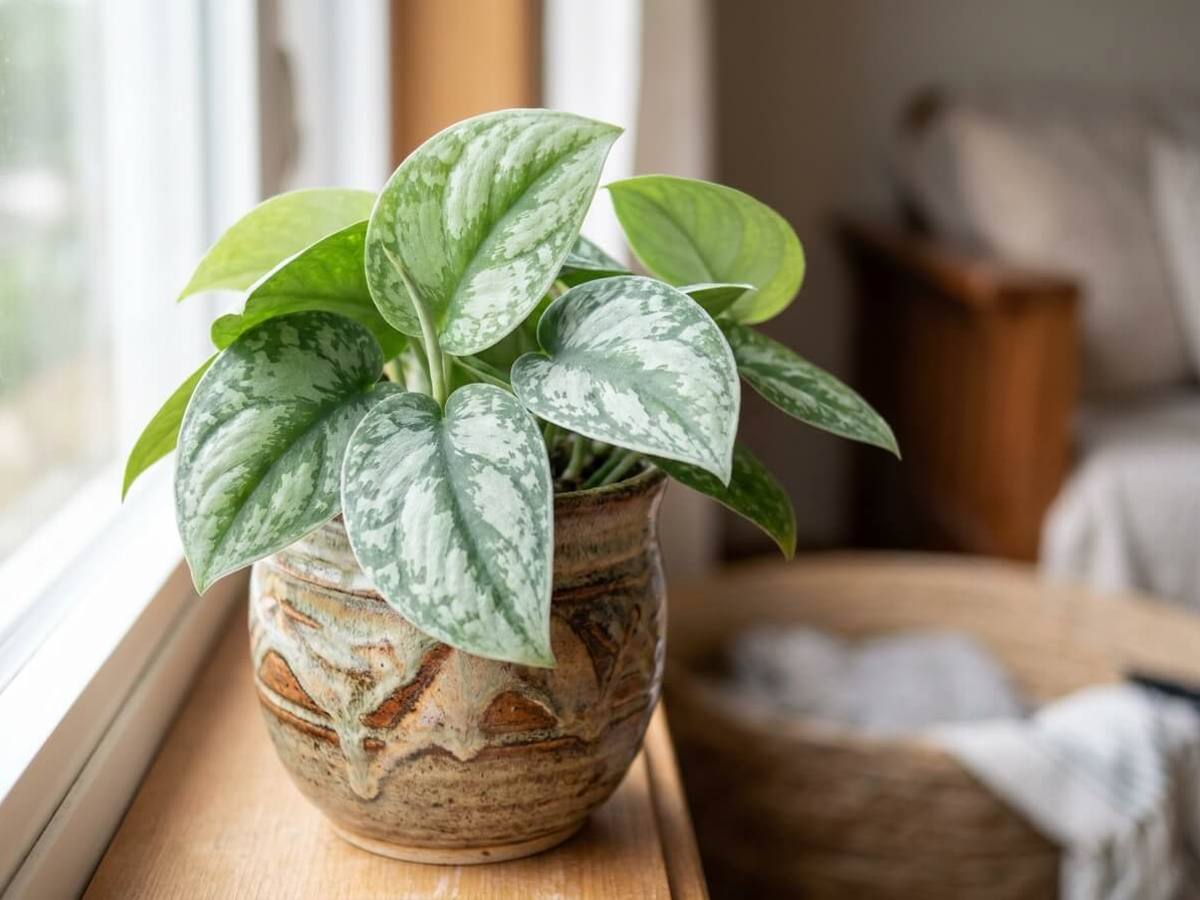
With its heart-shaped leaves dusted in shimmering silver, Scindapsus pictus is one of the most quietly glamorous of all trailing houseplants. It earns its place cascading from a shelf, trained up a moss pole or softening the edge of a plant-filled bathroom, and it is far more forgiving of neglect than its satiny finish suggests. Unusually, that metallic sheen is not a pigment at all but a trick of the light.
Growing conditions
Bright but filtered light produces the boldest silver splashes. An east-facing windowsill, or a position a metre or two back from a south- or west-facing window, suits it perfectly. Direct midday sun scorches the leaves to papery brown, whilst deep shade causes the variegation to fade and the stems to stretch.
Use an open, airy compost rather than standard multipurpose. A mix of two parts peat-free houseplant compost, one part orchid bark and one part perlite gives the drainage those fleshy roots demand. A slightly acidic pH of 5.5 to 6.5 is ideal, and a drainage hole is non-negotiable.
This is a tropical lowland species from Southeast Asia and India, so it will not survive a frost. Outdoors it is only reliable in USDA zones 10b–12; in temperate gardens treat it strictly as an indoor plant, though it may summer happily in a sheltered, shaded spot once nights stay above 15 °C.
How to plant Scindapsus
Pot up or repot in spring or early summer, when warmth and lengthening days allow the roots to re-establish quickly. Avoid disturbing the rootball between November and February, when growth has stalled.
Plant three to five rooted cuttings per 13 cm pot, spaced evenly around the rim, for a full rather than straggly display.
Set the crown at the same depth it sat previously — burying stems invites rot.
Choose a pot only 2–3 cm wider than the old one; excess wet compost around the roots is the commonest cause of failure.
Water in thoroughly with tepid water, let the pot drain fully, then wait until the top third of the compost is dry before watering again.
Propagate from stem cuttings with at least one node and one leaf; root them in water or damp sphagnum moss at 20–25 °C and expect roots within two to four weeks.
Scindapsus pictus displayed as a houseplant in a home interior
Care through the seasons
Spring: New shoots appear as light levels rise, which is the signal to resume feeding with a balanced liquid houseplant fertiliser at half strength every three to four weeks. Pinch the growing tips of any long, bare stems to encourage branching. Repot if roots are circling the base of the pot.
Summer: Water when the top 3–4 cm of compost feels dry, which may mean weekly in warm rooms. Mist or group plants together if humidity falls below about 40 per cent, and keep the foliage away from the drying blast of air conditioning. Train climbing stems onto a damp moss pole — leaves can double in size once the aerial roots grip.
Autumn: Taper feeding off from late September and reduce watering as growth slows. This is a good moment to wipe dust from the leaves with a damp cloth, restoring both the silver sheen and the plant’s ability to photosynthesise through the duller months. Take any final cuttings before temperatures drop.
Winter: Growth pauses almost entirely; water sparingly, perhaps every two to three weeks, and never let the plant sit below 12 °C or in a draught from a door or letterbox.
Best varieties to grow
All are grown for leaf pattern rather than flowers, and they differ chiefly in the amount and distribution of silver.
Scindapsus pictus var. argyraeus — the classic form, with neat, smallish leaves evenly speckled in silver dots; the most widely sold and the most compact.
Scindapsus pictus ‘Exotica’ — larger, more elongated leaves with broad brushstroke-like silver blotches rather than fine spots.
Scindapsus pictus ‘Silvery Ann’ — heavily silvered, often with whole half-leaves in platinum; needs good light to hold the pattern.
Scindapsus pictus ‘Jade Satin’ — plain deep green with a satin gloss, excellent for darker corners where variegated forms would fade.
Pests, diseases and common problems
Spider mite: Fine webbing in the leaf axils and a dull, stippled yellow mottling, typical of dry winter air. Raise humidity, rinse the foliage in the shower and treat weekly with an organic fatty-acid soap spray.
Mealybug: White cottony clusters where the leaf stalk meets the stem. Dab each colony with a cotton bud dipped in surgical spirit, then follow with neem or soft soap every seven days for a month.
Root rot: Yellowing lower leaves, blackened stem bases and compost that stays wet for days. Unpot, cut away soft brown roots, repot into fresh gritty mix and water far less — this plant genuinely prefers to run dry.
🌿 Nature & Garden Newsletter
Gardening tips, recipes & seasonal advice, twice a week.