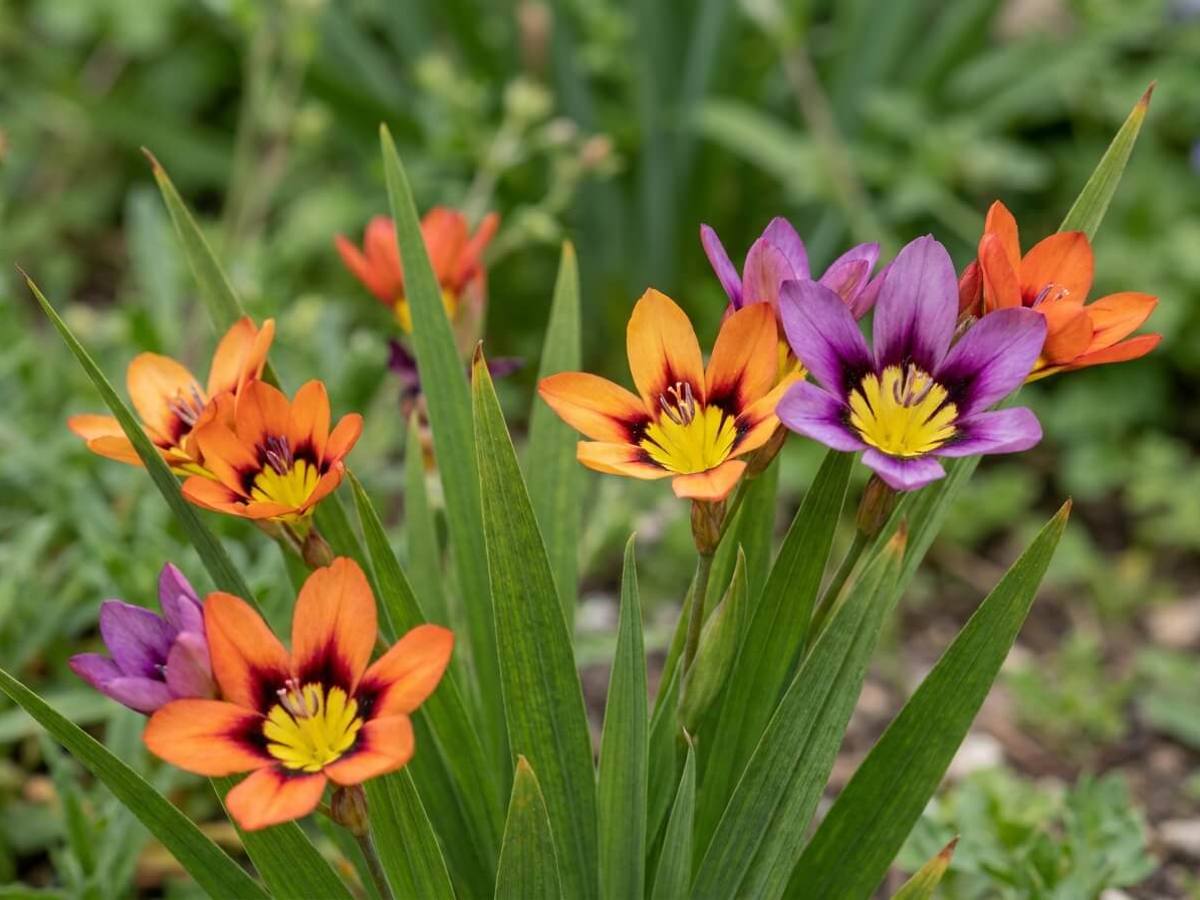
Few spring bulbs pack as much raw colour into so small a plant as Sparaxis tricolor, the harlequin flower. Each wiry stem carries a succession of flat, upward-facing blooms in scarlet, magenta, cream or orange, every one marked with a jet-black ring and a golden eye. It is a Cape bulb through and through: brilliant in late spring, then vanishing underground for a long, dry summer sleep.
Growing conditions
Sparaxis demands full, open sun. The flowers are heliotropic and will only open properly in bright light, closing on dull days and in the late afternoon. In shade the stems stretch, flop and flower sparsely, so avoid planting beneath shrubs or on north-facing aspects.
Drainage matters more than fertility. A light, sandy or gritty loam suits it perfectly, ideally with a pH between 6 and 7.5; heavy clay that stays wet in summer will rot the corms within a season. If your soil is sticky, raise the bed, work in generous coarse grit, or grow in deep pots of loam-based compost mixed half-and-half with sharp sand.
This is a winter-rainfall plant from the Western and Northern Cape, so it thrives in Mediterranean, coastal and dry-summer climates. In regions with cold, wet winters, treat the corms as you would gladioli: plant in spring and lift in autumn.
How to plant Sparaxis
Where winters stay above about −3 °C, plant corms in autumn (September to October) for a natural April–May display. In colder gardens, plant from late March once the soil has warmed, and expect flowers in early summer.
Space corms 5–8 cm apart and plant at least fifteen together — single corms look thin, and dense groups support one another’s slender stems.
Set each corm 6–8 cm deep with the pointed growth tip uppermost; the flattened, slightly concave side is the base.
Fork a handful of coarse grit into the base of the planting hole on any soil that puddles after rain, and avoid rich manure, which encourages soft growth.
Water once after planting to settle the soil, then leave well alone until shoots appear — soggy dormant corms are the commonest cause of failure.
Propagate by lifting dormant clumps in summer and separating the small offset cormels; grow these on in trays for a year or two before planting out, as they flower at two to three years old.
Sparaxis tricolor growing in a naturalistic garden border
Care through the seasons
Spring: Narrow, pleated fans of leaves push up and growth is rapid, so keep the soil just moist and feed fortnightly with a high-potash tomato feed from the moment buds show. Deadhead spent flowers to keep the display tidy, but leave a few seed heads if you want self-sown seedlings. Slug patrol is worthwhile while the shoots are soft.
Summer: Once flowering ends the foliage yellows and the plant enters dormancy — this is entirely normal and not a sign of ill health. Stop watering completely and allow the corms to bake; a dry, warm rest is what ripens them for the following season’s flowers. Lift and store corms in a dry, frost-free shed at this point if your summers are wet or your winters harsh.
Autumn: Clear away the withered leaves and, in mild gardens, replant or top-dress established clumps with a thin layer of grit. Autumn is also the time to split congested colonies, which lose vigour after three or four years. Resist the urge to mulch with heavy organic matter, which traps moisture around the corms.
Winter: In frost-free areas leaves emerge during winter and tolerate light frost; cover them with fleece or a dry bracken mulch if temperatures threaten to fall below −3 °C. Stored corms need nothing more than a cool, dry, airy place.
Best varieties to grow
Named clones are scarce, but a handful of selections and reliable mixtures are widely offered.
Sparaxis tricolor Harlequin Mixed — the standard garden strain, giving scarlet, cerise, cream and tangerine flowers all centred with the signature black-and-gold eye.
‘Moonlight’ — soft creamy white with a clear yellow throat, far more refined than the mixtures and lovely in a gravel garden.
‘Fire King’ — vivid scarlet-orange with a strongly defined dark zone, the boldest of the commonly sold selections.
Sparaxis elegans — a closely related species with salmon-orange or white flowers and a violet-black centre, a touch earlier and ideal for pots.
Pests, diseases and common problems
Corm rot: Soft, brown, foul-smelling corms caused by waterlogging during dormancy. Lift and discard affected stock, and replant into raised, grit-enriched soil or containers that can be kept dry in summer.
Slugs and snails: Ragged holes in young leaves and shredded flower buds in spring. Collect by torchlight after rain, use wildlife-safe ferric phosphate pellets, or ring clumps with sharp grit.
Aphids and mosaic virus: Colonies on flower stems weaken plants and spread viruses that show as pale streaking and distorted, poorly coloured blooms. Squash aphids early or spray with insecticidal soap; there is no cure for virus, so destroy affected corms rather than replanting them.