Growing California Fawn Lily: care, planting and varieties
0
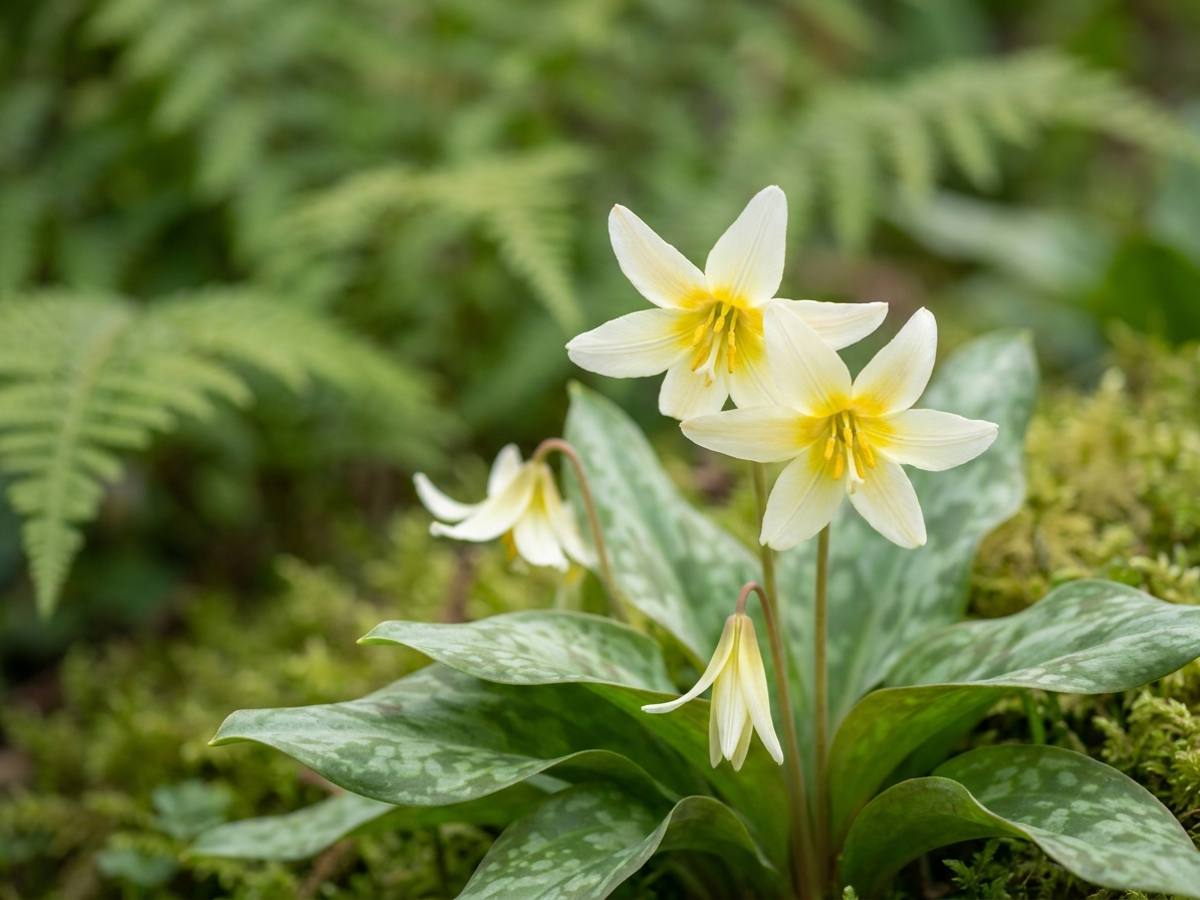
Erythronium californicum is one of the loveliest of the woodland bulbs, sending up nodding creamy-white flowers with reflexed petals and a ring of butter-yellow markings at the throat. Its mottled, marbled leaves appear before the blooms, carpeting shady borders in early spring with a quiet, subtle beauty. Uniquely among spring bulbs, it thrives in the dappled shade beneath deciduous trees and shrubs, where most tulips and daffodils sulk.
Growing conditions
Think of a woodland floor in early spring: bright light before the tree canopy closes, then cool shade for the rest of the year. That is precisely what Erythronium californicum wants. Dappled shade beneath deciduous trees, on the north or east side of a shrub border, or along a shaded path is ideal.
Soil matters more than almost anything else. Aim for a deep, leafy, humus-rich loam that stays cool and evenly moist in spring yet never becomes waterlogged in winter. A slightly acidic to neutral pH (around 5.5–7.0) suits it best, though it tolerates mildly alkaline conditions if plenty of leaf mould is worked in.
Native to the coastal ranges of northern California, this species copes with a dry summer dormancy and is fully hardy across the British Isles and much of northern Europe. In hot, dry regions it is best given the coolest, shadiest position available, ideally with a permanent mulch to buffer soil temperature.
How to plant Erythronium
Plant in late summer or early autumn, from August to October, whilst the bulbs are dormant but still plump. Erythronium bulbs are notoriously intolerant of drying out, so buy from a reputable supplier and get them into the ground the day they arrive.
Spacing: Set bulbs 10–15 cm apart in generous drifts of ten or more — single bulbs look lost, whilst groups build into a convincing woodland colony.
Depth: Plant deeply, with the pointed tip uppermost and the top of the bulb 10–15 cm below the surface; shallow planting leads to poor flowering.
Soil preparation: Fork in a generous barrowload of leaf mould or well-rotted garden compost per square metre, and add horticultural grit on heavy clay.
Watering in: Water thoroughly after planting to settle the soil around the bulbs, then mulch with 5 cm of leaf litter.
Propagation: Lift and divide congested clumps in early summer as the foliage yellows, replanting offsets immediately; seed is possible but takes four to six years to flower.
Erythronium californicum growing in a naturalistic garden border
Care through the seasons
Spring: Mottled leaves push through in late February or March, followed by the flowers a few weeks later. Keep the soil moist during this active growth period, and apply a light dressing of leaf mould or a balanced organic fertiliser as shoots emerge. Deadhead spent flowers unless you want seed, but never remove the leaves.
Summer: Foliage yellows and disappears entirely by early summer — this is normal dormancy, not death. Allow the leaves to die back naturally so the bulb can recharge, and mark the position with a label to avoid accidental digging. A dry summer rest is tolerated well, though a cool, lightly moist soil gives the strongest performance the following year.
Autumn: This is the season for planting new bulbs and for topping up the mulch. Spread 3–5 cm of leaf mould or composted bark over the planting area to mimic natural leaf fall and feed the soil. Avoid heavy cultivation nearby, as the shallow feeding roots resent disturbance.
Winter: The bulbs sit dormant underground and need no protection whatsoever in temperate gardens. Simply ensure the site does not sit under standing water during prolonged winter rain.
Best varieties to grow
The straight species is beautiful, but a handful of named selections and closely related hybrids are more widely available and more vigorous in cultivation.
Erythronium ‘White Beauty’ — the outstanding form, usually attributed to E. californicum, with creamy-white reflexed petals, a rusty-red central ring and superb vigour; holds an RHS Award of Garden Merit.
Erythronium ‘Pagoda’ — a robust hybrid with E. tuolumnense, bearing several sulphur-yellow flowers per stem on 35 cm stalks; AGM and the easiest of all to establish.
Erythronium ‘Jeannine’ — deeper, richer yellow than ‘Pagoda’ and slightly earlier, excellent for lighting up a dark corner.
Erythronium ‘Harvington Snowgoose’ — an elegant pure white selection with lightly marbled foliage, ideal for pairing with hellebores and pulmonarias.
Pests, diseases and common problems
Slugs and snails: The soft emerging leaves and flower buds are a favourite target, leaving ragged holes overnight. Use wildlife-safe ferric phosphate pellets, copper rings or nightly patrols during the first three weeks of growth.
Bulb rot: Bulbs turn soft and mushy and shoots fail to appear, usually after a wet winter in heavy soil. Improve drainage with grit and raised planting pockets, and never plant into a spot that puddles.
Failure to flower: Leaves appear but no blooms, most often because bulbs were planted too shallowly, allowed to dry out before planting, or are overcrowded. Replant at 12–15 cm deep with fresh, plump bulbs and divide congested clumps every four or five years.
🌿 Nature & Garden Newsletter
Gardening tips, recipes & seasonal advice, twice a week.