Dutchman’s Pipe: varieties, planting and garden uses
0
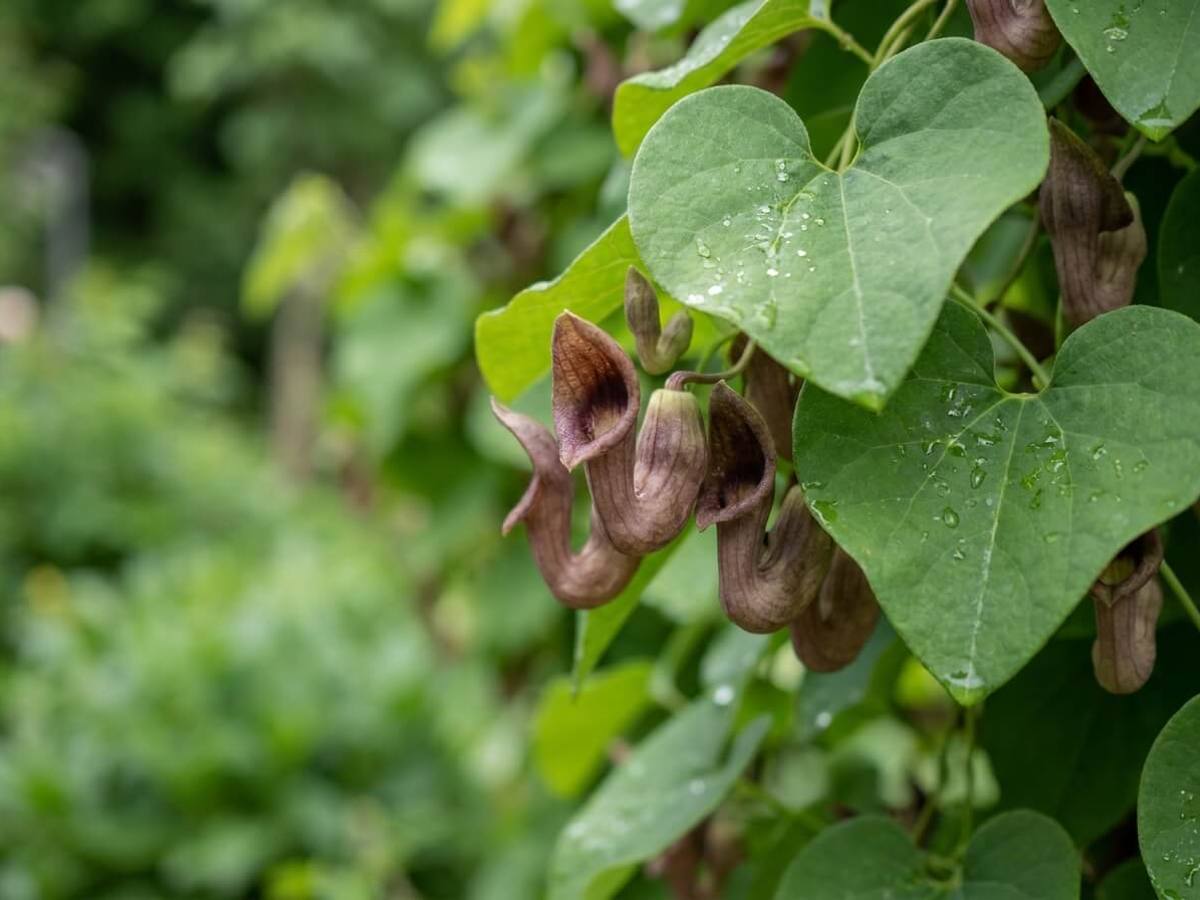
Aristolochia macrophylla is one of the most architectural of hardy climbers, smothering pergolas and porches in overlapping, heart-shaped leaves up to 30 cm across. Hidden beneath that canopy sit curious little flowers shaped like a Meerschaum pipe, mottled in maroon, green and yellow. Vigorous, deciduous and remarkably tough, it is the classic choice where dense summer shade is wanted in a hurry.
Growing conditions
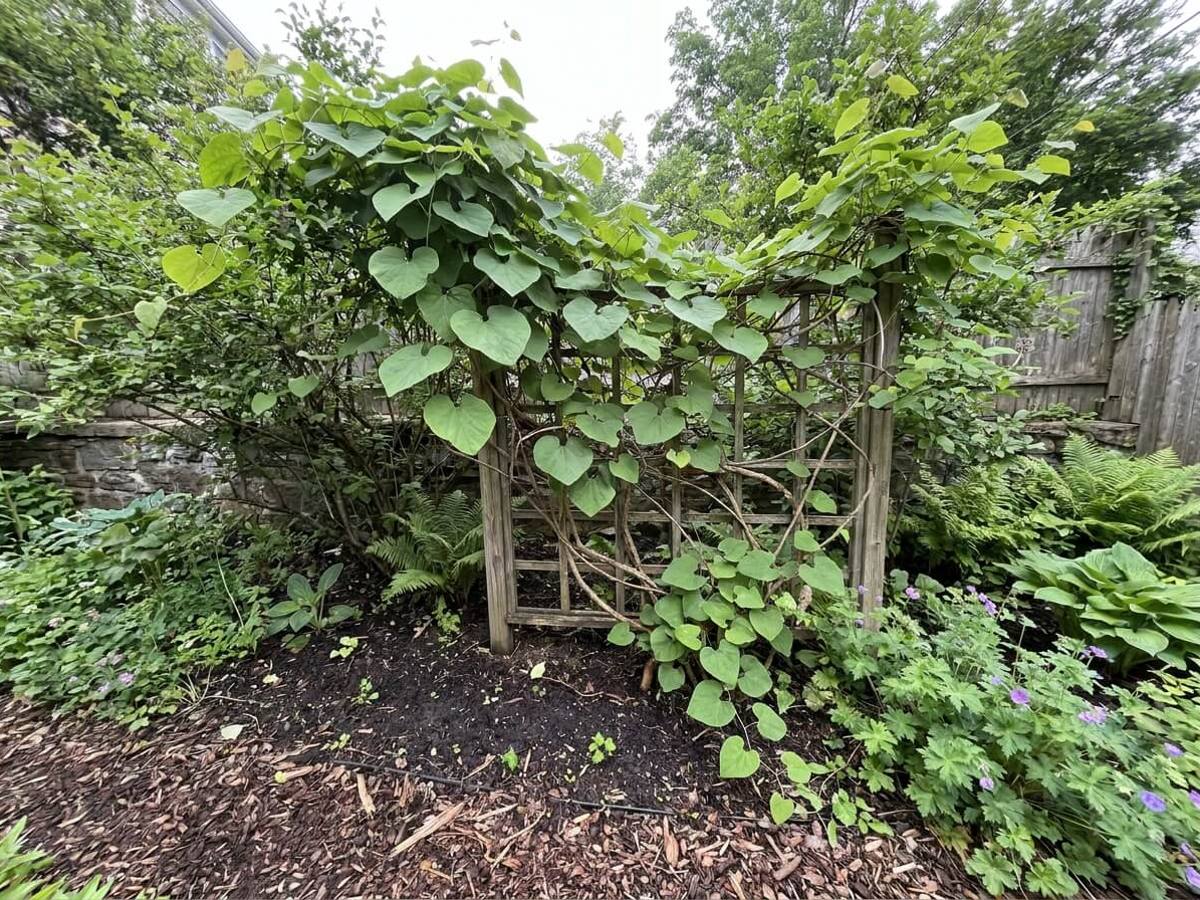
Dutchman’s pipe grows well in full sun or partial shade, and in hotter regions a site shaded from fierce midday sun keeps the foliage looking fresh. Shelter matters more than light: those enormous leaves tear and brown at the edges in exposed, windy positions. A courtyard, house wall or sheltered pergola suits it perfectly.
Give it a deep, fertile, moisture-retentive soil that never waterlogs. It is unfussy about pH and performs well on neutral to slightly acidic ground, tolerating mild alkalinity provided the soil is not thin and parched over chalk. Heavy clay is acceptable once improved with grit and organic matter.
Hardiness is excellent — established plants shrug off −25 °C, making this a reliable climber in cold inland gardens where many evergreens fail. In hot, dry summer climates, mulch generously and site it on the cooler side of a structure.
How to plant Aristolochia
Plant in autumn or early spring while the soil is workable and moisture is dependable, giving roots time to establish before the vine puts on its explosive summer growth. Container-grown plants can also go in during late spring if you can water reliably.
Space plants 2.5–3 m apart along a pergola or fence; one plant alone will cover a large arbour within a few seasons.
Set the rootball so the crown sits level with the surrounding soil, and plant 30–40 cm out from a wall base to escape the dry rain shadow.
Fork a bucketful of well-rotted manure or garden compost into the planting hole and the surrounding area — this climber is a hungry, thirsty feeder.
Water in with at least 10 litres, then mulch 5–7 cm deep with bark or compost, keeping it clear of the stems.
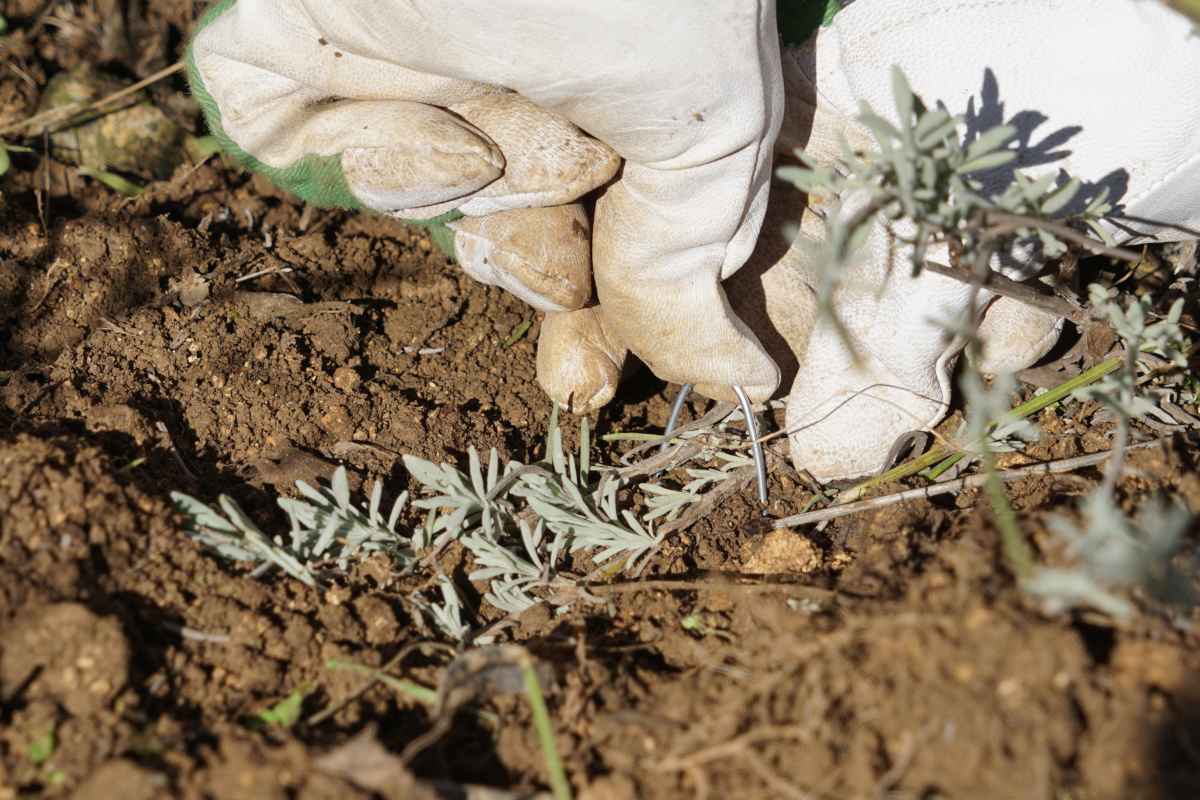
Propagate by layering a low shoot in spring, or take softwood cuttings in early summer with bottom heat; seed needs three months of cold, moist stratification.
Aristolochia macrophylla growing in a naturalistic garden border
Care through the seasons
Spring: Prune in late winter or very early spring before the buds swell, shortening wayward stems and thinning congested growth to keep the framework open. Apply a balanced general fertiliser and a fresh mulch as growth resumes. New shoots emerge late — often not until mid or late spring — so do not assume the plant has died.
Summer: Water deeply during dry spells, as the large leaves lose moisture fast and wilt dramatically when thirsty. Tie in or redirect the twining stems weekly while they are extending; they twist anticlockwise and need slim supports no thicker than about 5 cm. Look beneath the foliage in June for the pipe-shaped flowers, which are easily missed.
Autumn: The leaves turn a soft butter-yellow before falling, and sweeping them up prevents slugs sheltering at the base. This is the ideal moment to plant, to peg down layers, or to reinforce supports before winter gales. Top up the mulch once the ground is damp.
Winter: The bare, ropelike stems are fully hardy and need no protection in most gardens. Only first-year plants in very cold, exposed sites benefit from a thick mulch over the root zone.
Best varieties to grow
Named cultivars are virtually unknown, so gardeners usually choose between the species and its close relatives.
Aristolochia macrophylla — the standard form, unbeatable for fast, dense, large-leaved cover on a pergola or porch.
Aristolochia tomentosa — woolly Dutchman’s pipe, slightly smaller-leaved with downy stems and better tolerance of heat and drier soils.
Aristolochia manshuriensis — Manchurian pipevine, with even larger leaves said to smell faintly of camphor when crushed, and showier flowers.
Aristolochia fimbriata — a tender, low-growing relative with silver-veined leaves, grown as a container or conservatory curiosity rather than a climber.
Pests, diseases and common problems
Red spider mite: Fine pale stippling and a dull, bronzed look to the leaves in hot, dry weather, sometimes with webbing. Damp down the foliage regularly and keep the roots well watered; biological controls work well under glass.
Scale insects and mealybug: Brown limpet-like bumps or white woolly patches on stems, with sticky honeydew and sooty mould below. Scrub off small colonies and encourage predatory ladybirds and lacewings rather than spraying.
Leaf scorch and wind tatter: Brown, crisped leaf margins and torn blades on exposed sites. Move or screen the plant, mulch deeply and water in prolonged dry spells — the damage is cultural, not a disease.
🌿 Nature & Garden Newsletter
Gardening tips, recipes & seasonal advice, twice a week.