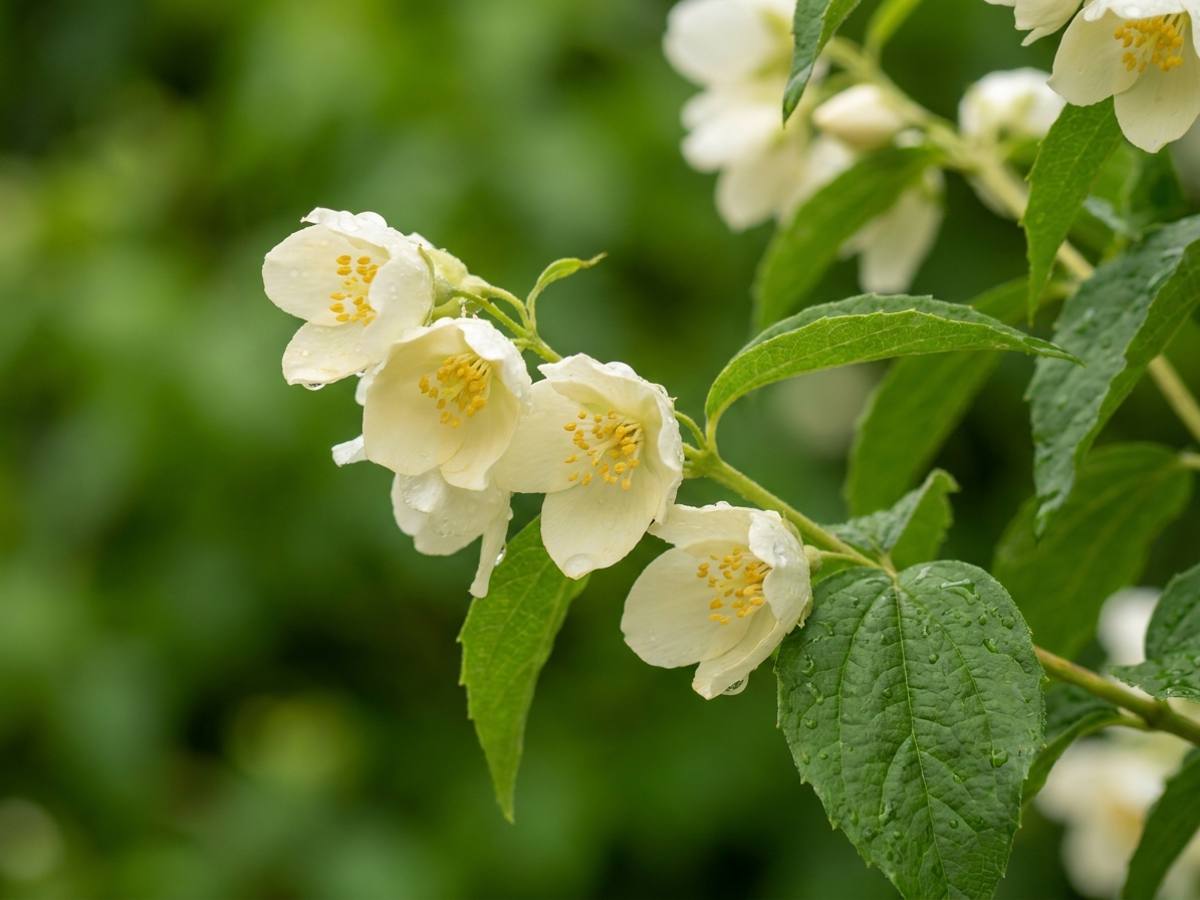
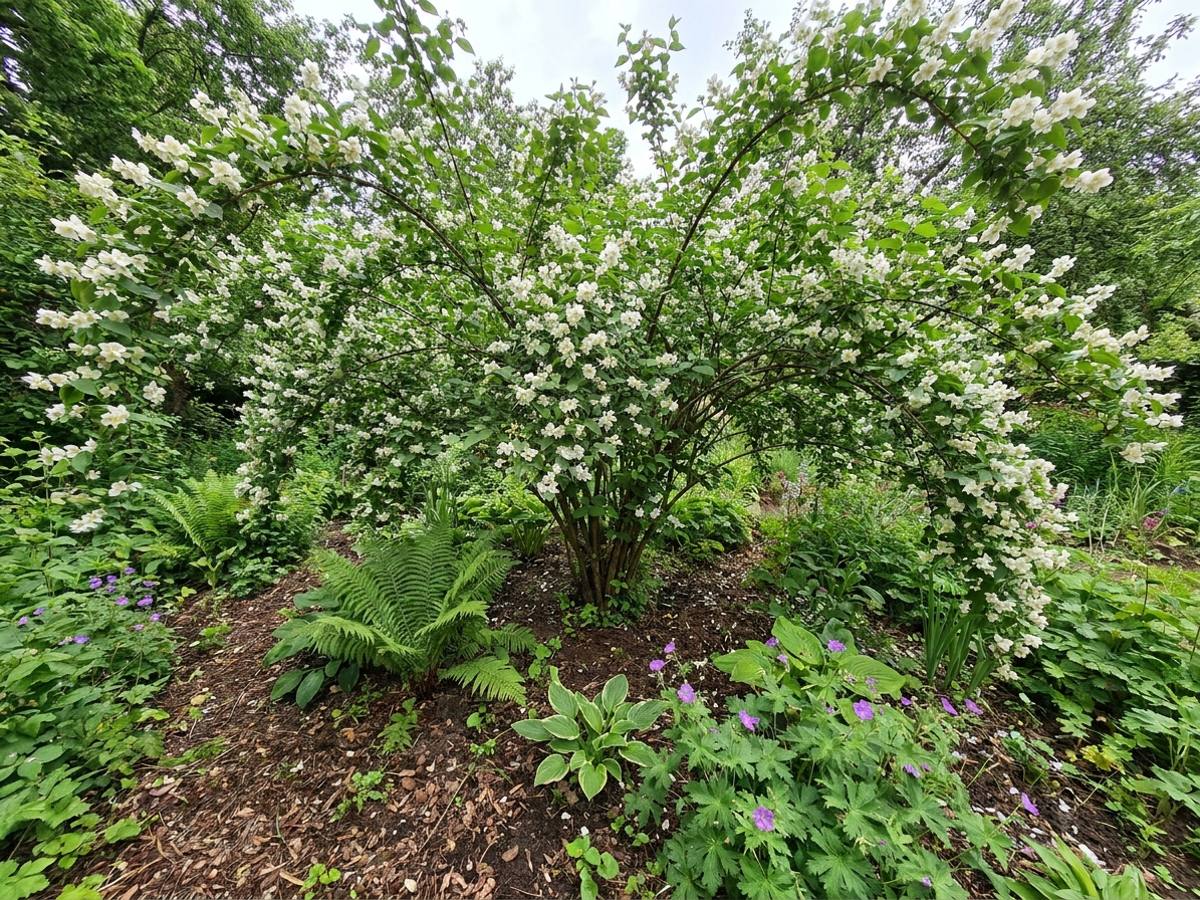
Few shrubs announce midsummer quite as emphatically as Philadelphus coronarius, whose creamy-white, cup-shaped blooms smother the arching branches for several weeks in early summer. The scent is the real prize — a rich, sweet perfume with distinct notes of orange blossom that carries surprising distances on warm evenings. Tough, forgiving and utterly undemanding, it is one of the classic cottage-garden shrubs and thrives on soils, including chalk, where fussier plants sulk.
Mock orange flowers most freely in full sun, where the wood ripens properly and buds form along the whole length of each stem. It will grow perfectly well in light or dappled shade, but expect fewer blooms and a looser, more drawn-out habit. Avoid deep shade beneath large trees, where flowering can fail almost entirely.
Soil is rarely a problem. Philadelphus coronarius accepts sand, loam, clay and shallow chalk, and copes with pH from mildly acidic to distinctly alkaline. The one thing it dislikes is waterlogging, so improve heavy, compacted ground with grit and garden compost before planting.
It is genuinely hardy across most of Britain, northern Europe and the cooler parts of North America, shrugging off −20 °C without damage. In hot, dry summer climates such as southern France or the American South, give it afternoon shade and a good mulch to prevent scorched leaf margins.
Autumn is the ideal planting season, from October to November, while the soil is still warm enough for roots to establish before winter. Early spring planting works equally well on cold or heavy sites, provided you water diligently through the first summer.
Almost everything that goes wrong with mock orange comes down to doing the right job at the wrong moment. This table sets out the four times of year that matter and what each one buys you.
| Season | Main job | What it gains you |
|---|---|---|
| Early spring | Feed with blood, fish and bone, then mulch with 5 cm of compost kept clear of the stems | Growth without sacrificing the buds already set on last year’s wood |
| Midsummer, as the last flowers fade | Shorten flowered stems to a strong new shoot and cut out one in four of the oldest stems at ground level | Next summer’s display, and a shrub that stays youthful |
| Mid to late autumn | Plant new shrubs, move badly sited ones, take hardwood cuttings and mulch with well-rotted manure | Roots established before winter and free young plants |
| Late winter | Only for congested, twiggy specimens: cut the whole plant back hard to 30 cm | One summer’s flowers lost, a rejuvenated shrub gained |
Nothing at all is needed in the depths of winter, even in exposed gardens.
Spring: Scatter a general-purpose fertiliser or a handful of blood, fish and bone around the base in March, then mulch with 5 cm of compost, keeping it clear of the stems. Resist the urge to tidy the shrub now — the flower buds are already forming on last year’s wood, and spring pruning removes the entire display. Check newly emerging shoot tips for early aphid colonies.
Summer: The single most important job of the year is pruning, carried out immediately after the last flowers fade, usually in late June or July. Cut back the stems that have just flowered to a strong new shoot lower down, and remove one in four of the oldest stems at ground level to keep the shrub youthful. Water establishing plants during prolonged drought; mature specimens are notably drought-tolerant.
Autumn: Little is needed beyond clearing fallen leaves if leaf spot or mildew has been troublesome. This is the best moment to plant new shrubs, to move badly sited ones, and to take hardwood cuttings. A mulch of well-rotted manure in November feeds the plant and protects surface roots on light soils.
Winter: The shrub is fully dormant and needs no protection whatsoever, even in exposed gardens. If a specimen has become a congested thicket of bare, twiggy stems, cut the whole plant back hard to 30 cm in late winter — you will lose one summer’s flowers but gain a rejuvenated shrub.
The species itself is superb, but a handful of selections and closely related hybrids offer smaller sizes or better foliage.