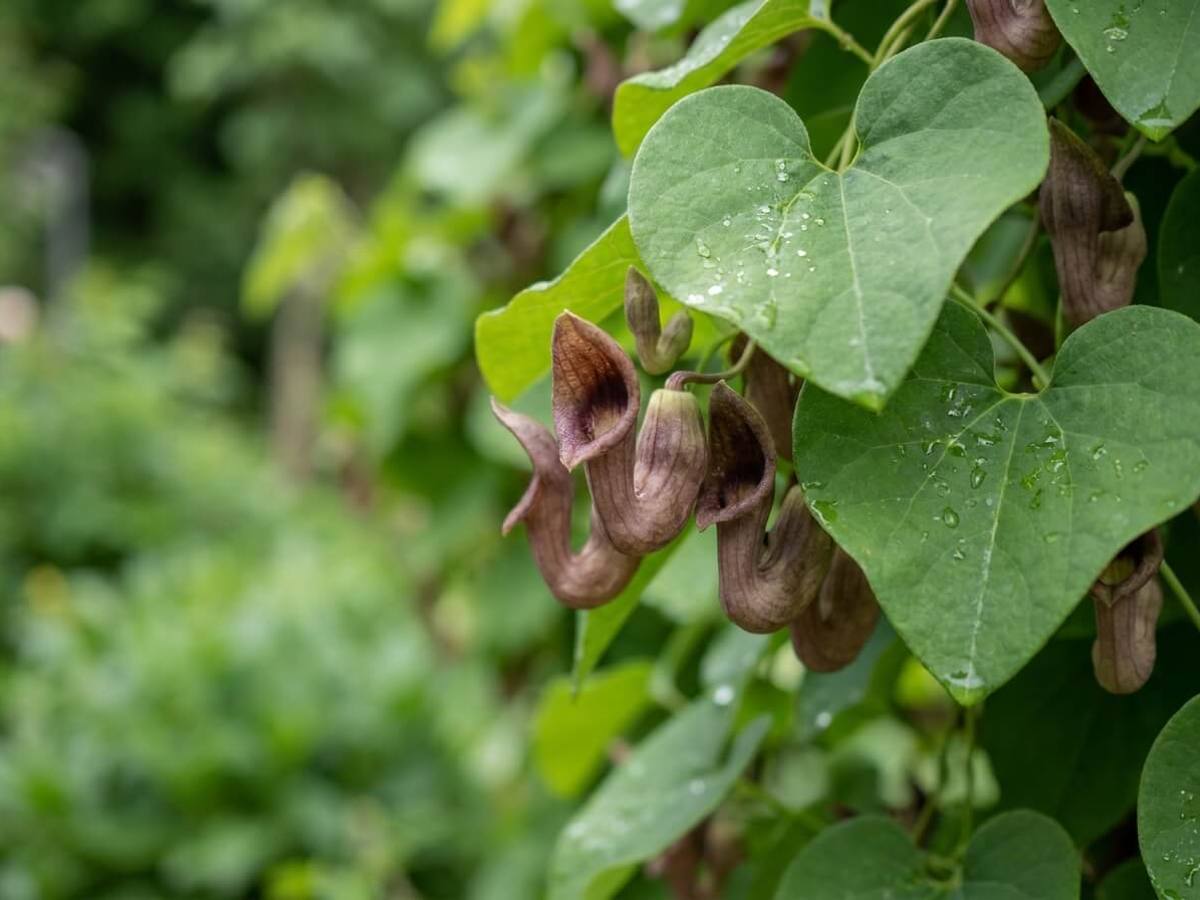
The chocolate vine is one of the most vigorous and intriguing climbers you can grow, twining rapidly over pergolas, arches and shady walls with elegant fingered leaves made up of five neat leaflets. In mid-spring it produces curious maroon-chocolate flowers that release a genuine scent of vanilla and spice on warm, still days. Given a partner plant, it may even set strange sausage-shaped purple fruits in a long, hot summer.
Akebia is remarkably adaptable, growing happily in full sun or dappled partial shade. For the best flowering and any chance of fruit, choose a spot that receives at least four or five hours of direct sun each day. A sheltered, south- or west-facing wall protects the early blooms from late frosts and helps the perfume carry.
Almost any reasonably fertile, free-draining soil suits it, including chalk, clay improved with grit, and sandy loam. It prefers a neutral to slightly acidic pH but tolerates alkaline conditions without fuss. Waterlogged ground is the one thing it genuinely dislikes, so improve heavy soils with leaf mould or composted bark before planting.
Once established, the chocolate vine is fully hardy across most of the UK and northern Europe, shrugging off temperatures down to around −15 °C. It is semi-evergreen in mild coastal gardens and deciduous in colder inland ones. In warmer regions of North America, check local guidance first — it is classified as invasive in parts of the eastern United States.
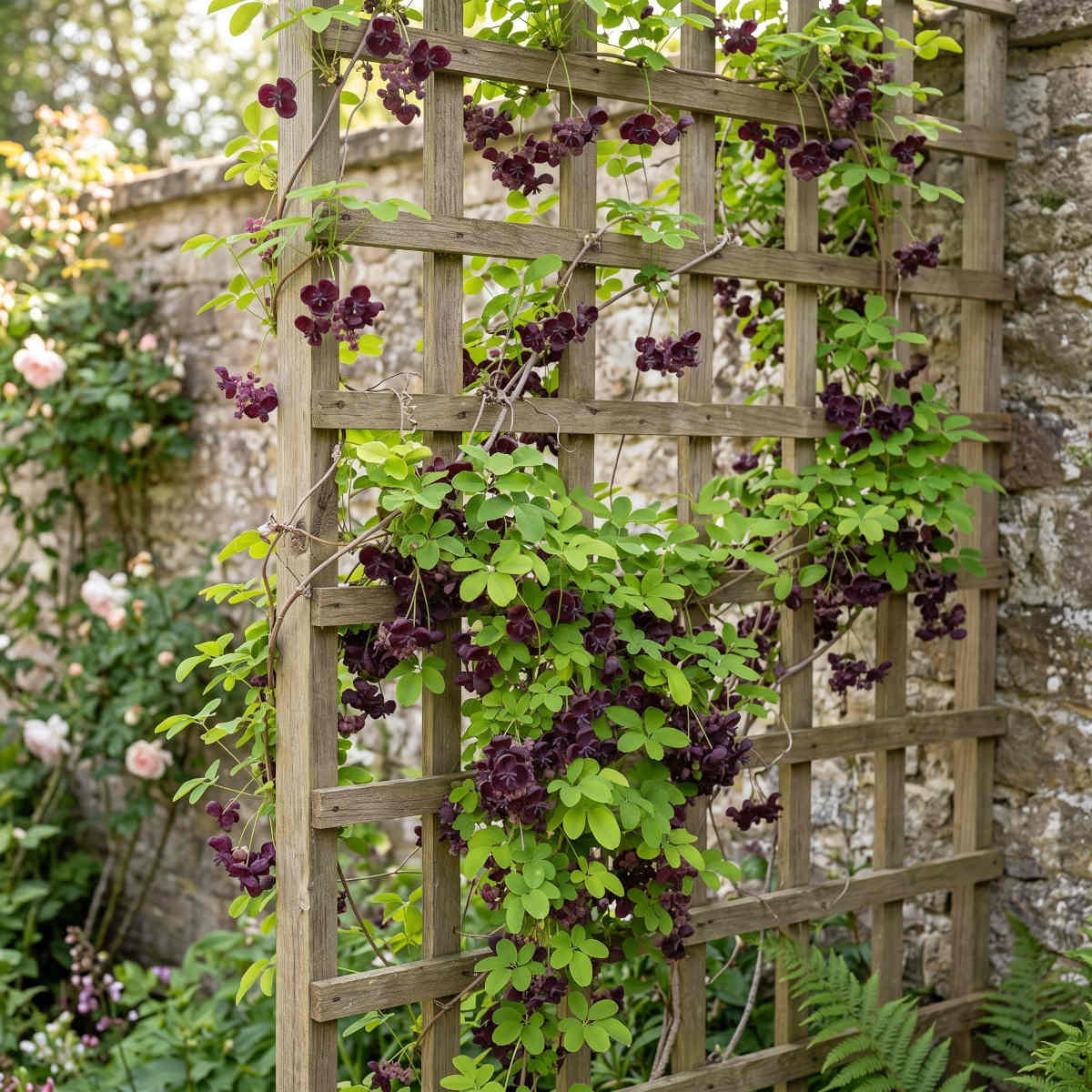
Akebia quinata climbing on a trellis, its twining stems naturally wrapping around the support.
Plant in autumn or early spring, when the soil is warm and moist and the roots can settle before the growing season begins. Container-grown plants can go in at any time, provided you water them faithfully through their first summer.
Akebia asks for very little, but the few jobs it does need are tied to a particular moment in the year. This table sets out the whole cycle at a glance, from feeding as the buds swell to the hard autumn cut.
| Season | Main job | Pruning | Feeding and watering |
|---|---|---|---|
| Early to mid-spring | Tie in soft new shoots and guide them where you want cover | None — flowers open on older wood | Organic fertiliser or well-rotted manure as buds swell |
| Late spring | Enjoy the scented blooms; leave them on for a chance of fruit | No deadheading needed | Keep young plants moist |
| Early to midsummer | Pull out suckers appearing away from the main plant | Shorten over-long shoots to keep growth in bounds | Water deeply once a week in dry spells for the first two or three years |
| Autumn | Layer stems or add a second, unrelated plant for cross-pollination | Main pruning window — cut back hard once fruits are gathered | Renew the mulch to protect surface roots |
| Winter | Leaf fall varies with the cold; both keeping and shedding leaves are normal | None | Thick mulch over the root zone for first-winter plants |
Stick to this rhythm and the vine stays where you put it instead of taking over the garden.
Spring: Apply a general-purpose organic fertiliser or a mulch of well-rotted manure in March as buds swell. Tie in wayward new shoots while they are still soft and pliable, guiding them where you want coverage. Enjoy the flowers in April and May — no deadheading is needed, and leaving them on gives you a chance of fruit.
Summer: Growth is astonishingly fast, often 3 m in a single season, so shorten over-long shoots in June and July to keep the plant within bounds. Water deeply once a week during dry spells for the first two or three years; established vines are notably drought tolerant. Watch for suckers appearing several metres from the main plant and pull them out promptly.
Autumn: This is the main pruning window if the vine has outgrown its space — cut back hard after any fruits have been gathered. Renew the mulch to protect surface roots and lock in moisture. Autumn is also the ideal time to layer stems or plant a second, unrelated specimen for cross-pollination.
Winter: Most plants hold at least some leaves through mild winters and shed them in hard ones; both are normal. No protection is required for established vines, though young plants benefit from a thick mulch over the root zone in their first winter.
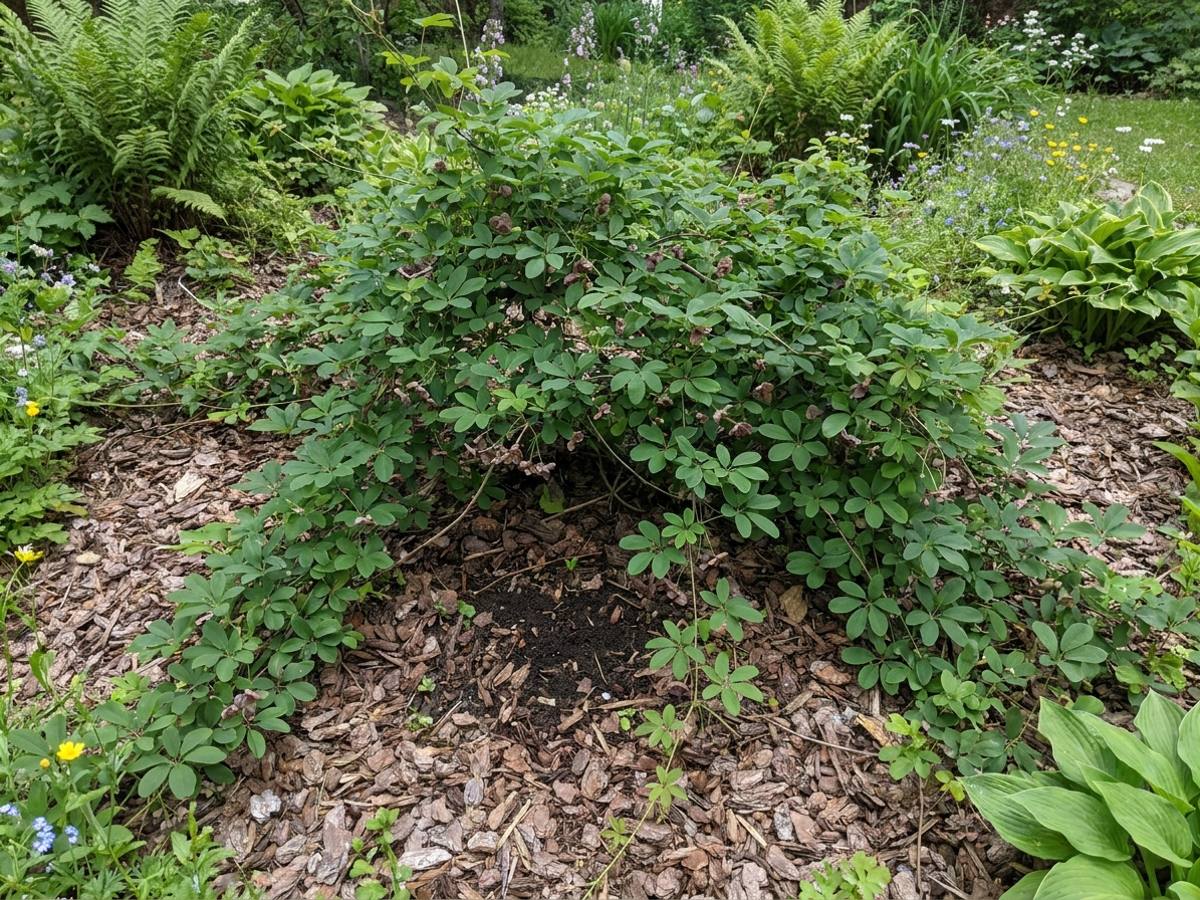
Without support to climb, Akebia quinata naturally trails along the ground, making an attractive ground cover.
Akebia asks for very little, but the few jobs it does need are tied to a particular moment in the year. This table sets out the whole cycle at a glance, from feeding as the buds swell to the hard autumn cut.
Stick to this rhythm and the vine stays where you put it instead of taking over the garden.
Only a handful of named forms are widely available, but they offer a genuine range of flower colour.