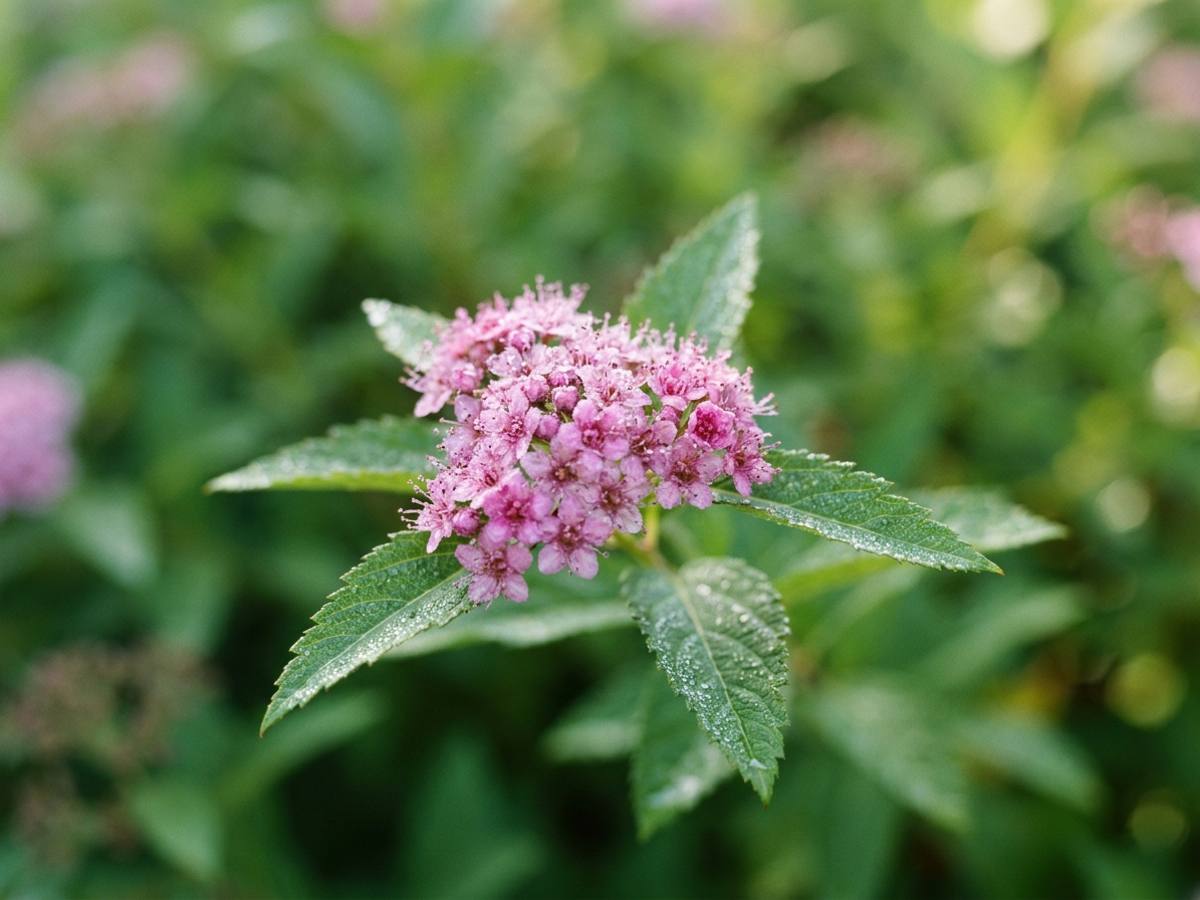
Compact, dependable and generous with flower, Spiraea japonica is one of the most widely planted deciduous shrubs in temperate gardens. It produces flat-topped clusters of tiny pink, carmine or white blooms from early summer well into autumn, set against foliage that often emerges bronze, gold or orange before settling to green. Its greatest asset is versatility — it thrives in low hedges, mixed borders and containers, and responds to hard pruning with fresh, brightly coloured growth.
Growing conditions
Japanese spiraea flowers most freely in full sun, ideally with six hours or more of direct light each day. It will grow perfectly well in partial shade, but expect fewer flower heads and paler, less dramatic foliage on the golden-leaved cultivars. Very deep shade produces thin, sprawling stems and disappointing colour.
This is an obliging shrub that copes with almost any reasonable garden soil, including heavy clay, chalk and sandy loams. It prefers a moisture-retentive but free-draining medium with a pH anywhere between mildly acidic and mildly alkaline. The only conditions it genuinely dislikes are permanently waterlogged ground and thin, parched soils that dry to dust in midsummer.
Hardiness is excellent — established plants shrug off temperatures down to around −25 °C without protection. In hot, dry continental summers, a position with light afternoon shade helps prevent leaf scorch on gold-foliaged varieties.
How to plant Spiraea
Autumn and early spring are the best planting windows, when the soil is warm and moist enough for roots to establish before extremes of heat or cold. Container-grown plants can go in at any time of year provided you can water reliably.
Spacing: allow 60–90 cm between compact cultivars and 1–1.2 m for larger types; for a low informal hedge, plant at 45–60 cm centres so the shrubs knit together within two seasons.
Depth: set the plant so the top of the rootball sits level with the surrounding soil — burying the crown encourages rot.
Soil preparation: fork over a planting area twice the width of the rootball and work in a couple of handfuls of well-rotted compost or leaf mould, especially on heavy clay.
Watering in: soak thoroughly after planting, then water weekly for the first growing season during dry spells; mulch with 5 cm of bark or compost, keeping it clear of the stems.
Propagation: take 10 cm softwood cuttings in June or semi-ripe cuttings in late summer — they root readily in gritty compost within four to six weeks. Established clumps can also be lifted and divided in autumn.
Spiraea japonica growing in a naturalistic garden border
Which Japanese spiraea should you choose?
The named cultivars differ mainly in flower colour, leaf colour and final size, so it is worth settling on one before you plant. This table sets the four described below side by side.
Which Japanese spiraea should you choose?
Cultivar
Flower colour
Foliage
Size and best use
‘Goldflame’
Rose-pink
Coppery-orange in spring, maturing to yellow-green
Grown above all for foliage contrast
‘Anthony Waterer’
Deep carmine-pink flat heads
Dark green, often flecked with cream
Around 1.2 m, the tallest of the four
‘Little Princess’
Soft pink
—
Neat 50–60 cm mound for edging and small gardens
‘Golden Princess’
Pink
Bright golden-yellow all summer
Stays under 80 cm
Remember that the gold-leaved selections keep their colour best in sun but scorch in fierce afternoon heat on dry soil.
Care through the seasons
Spring: Prune hard in late February or March, cutting the whole shrub back to 15–30 cm above ground to stimulate vigorous new stems and the brightest foliage colour. Follow with a balanced general fertiliser and a fresh mulch of compost. New growth appears quickly and is remarkably tolerant of late frosts.
Summer: Water deeply during prolonged drought, particularly for plants in containers or beneath established trees. Deadhead the faded flower clusters as soon as they brown — this frequently triggers a lighter second flush in late summer. Trim back any stems that flop outwards to keep the dome shape tidy.
Autumn: Foliage often turns russet, gold or copper before dropping, so leave the shrub uncut for the display. Autumn is the ideal moment to plant, move or divide spiraea while the soil retains warmth. Top up mulch after leaf fall to protect surface roots.
Winter: The shrub is fully dormant and completely leafless, requiring no protection whatsoever in temperate gardens. Container plants benefit from being moved against a sheltered wall to stop the rootball freezing solid.
Best varieties to grow
Choose according to whether you want flower colour, foliage drama or a very low, compact habit.
‘Goldflame’ — coppery-orange spring foliage maturing to yellow-green, with rose-pink flowers; the classic choice for foliage contrast.
‘Anthony Waterer’ — deep carmine-pink flat heads over dark green leaves, often flecked with cream; reaches around 1.2 m.
‘Little Princess’ — a neat 50–60 cm mound of soft pink flowers, ideal for edging and small gardens; holds an RHS Award of Garden Merit.
‘Golden Princess’ — bright golden-yellow leaves all summer with contrasting pink blooms, staying under 80 cm.
Pests, diseases and common problems
Aphids: colonies cluster on soft new shoot tips, causing distortion and sticky honeydew. Dislodge with a jet of water, encourage ladybirds and lacewings, or use an insecticidal soap spray in the evening.
Powdery mildew: a white dusty coating on leaves in humid, still conditions or when roots are dry. Improve air circulation by thinning congested stems, water at the base rather than overhead, and remove badly affected growth.
Leaf scorch and poor colour: golden cultivars bleach or brown at the margins in fierce afternoon sun on dry soil. Mulch generously to conserve moisture and consider relocating the shrub to a spot with light shade after midday.
🌿 Nature & Garden Newsletter
Gardening tips, recipes & seasonal advice, twice a week.