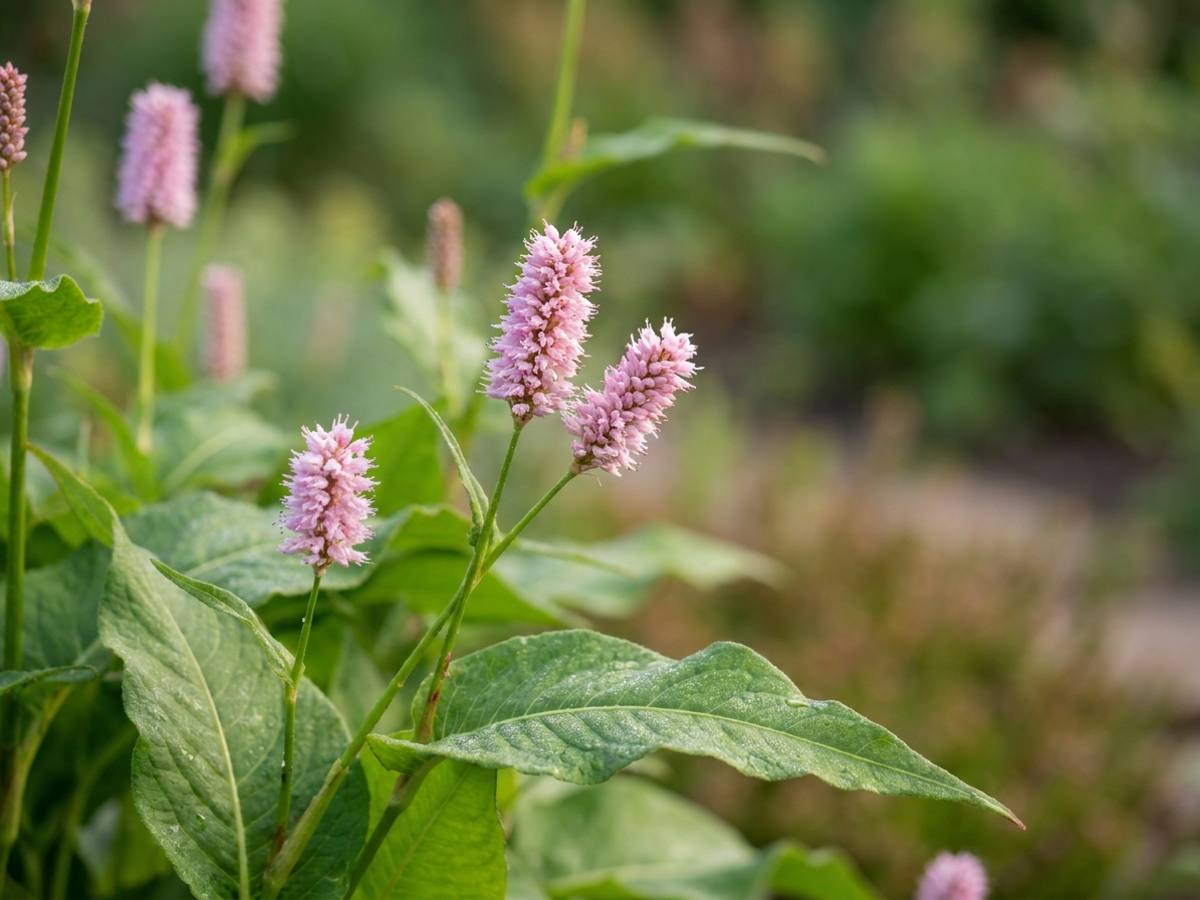
Persicaria bistorta is a handsome, easy-going perennial that sends up dense pokers of soft pink flowers above broad, paddle-shaped leaves from late spring onwards. It thrives in the damp, heavy ground that defeats many border plants, making it invaluable for pond margins, damp meadows and cool-season colour. Left unpicked, the faded flower spikes fade to a papery beige that catches the light beautifully well into summer.
Growing conditions
Bistort is happiest in full sun where the soil stays reliably moist, but it also performs well in partial shade — an unusual and useful combination. In hot, dry positions the leaves scorch at the edges and flowering is brief, so aim for a spot with at least half a day of sun and cool roots. In warmer climates, dappled afternoon shade gives much better results.
The soil matters more than the light. Bistort wants moisture-retentive, reasonably fertile ground and is one of the few border perennials that genuinely enjoys heavy clay. It copes with a pH from mildly acidic to slightly alkaline, and tolerates winter wet that would rot most herbaceous plants, though it dislikes soil that is bone dry in summer.
A native of damp meadows across Europe and northern Asia, it is fully hardy throughout the British Isles and much of northern Europe. Gardeners in Mediterranean or southern US climates should treat it as a plant for damp shade or bog gardens rather than an open border.
How to plant Persicaria
Plant in autumn or early spring, when the soil is moist and warm enough for roots to establish before the plant needs to support flowers. Container-grown plants can go in at any time from March to October provided you water attentively.
Space plants 45–60 cm apart — the clumps knit together within two seasons to form a weed-suppressing carpet.
Set the crown level with the surrounding soil; burying it deeply invites rot in wet ground.
Fork in a bucketful of garden compost or well-rotted manure per planting hole to hold moisture, especially on free-draining sand.
Water in thoroughly, then keep the soil damp for the first six weeks — bistort establishes fast but resents drying out while rooting.
Propagate by lifting and splitting the fleshy rhizomes in autumn or early spring; each piece with a bud and a few roots will grow away readily.
Persicaria bistorta growing in a naturalistic garden border
Care through the seasons
Spring: Pleated new leaves push through in March and April, so clear old debris and slug-check around the emerging crowns. Apply a generous mulch of compost or leaf mould over damp soil to lock in moisture for the season ahead. A light feed of general-purpose fertiliser is enough on poor soils; overfeeding produces floppy growth.
Summer: Water deeply during dry spells — bistort wilts and goes semi-dormant if it dries out, and the foliage may brown off entirely. Deadhead spent spikes to encourage a second flush of flowers in late summer, or leave them for their fawn-coloured seedheads. Trim back any rhizomes creeping into neighbouring plants with a spade.
Autumn: Cut the foliage back to ground level once frost has knocked it down, or leave it until late winter as insulation and wildlife shelter. Autumn is the ideal time to divide congested clumps, which is worth doing every three to four years to keep flowering vigorous. Top up mulch on light soils.
Winter: The plant dies back completely to a hardy rhizome and needs no protection whatsoever, even in prolonged frost. Simply ensure the ground does not become a stagnant puddle for months on end.
Best varieties to grow
There are relatively few named forms, but the best of them are considerably better garden plants than the wild species.
‘Superba’ — the benchmark cultivar and an RHS Award of Garden Merit holder, with taller, sturdier stems to 90 cm and generous soft-pink pokers.
‘Hohe Tatra’ — a more compact selection at around 50–60 cm with deeper, richer rose-pink flowers, ideal for smaller borders.
subsp. carnea — a distinct alpine form from the Caucasus, bearing shorter, denser spikes in a warm salmon-pink.
‘Alba’ — an uncommon white-flowered form that lights up damp shade, though it is less vigorous than ‘Superba’.
Pests, diseases and common problems
Powdery mildew: White dusty patches on leaves in dry summers, usually a symptom of drought stress. Water at the base, mulch heavily and cut affected growth back hard — fresh foliage regrows clean.
Slugs and snails: Young spring shoots and unfurling leaves can be shredded overnight. Use beer traps, wildlife-safe ferric phosphate pellets or evening hand-picking during the first weeks of growth.
Leaf spot and rust: Brown or rust-coloured blotches appear in humid, crowded conditions. Improve airflow by dividing congested clumps, remove and bin affected leaves, and avoid overhead watering.
🌿 Nature & Garden Newsletter
Gardening tips, recipes & seasonal advice, twice a week.