Lapageria rosea: expert tips for growing Chile’s national flower
0
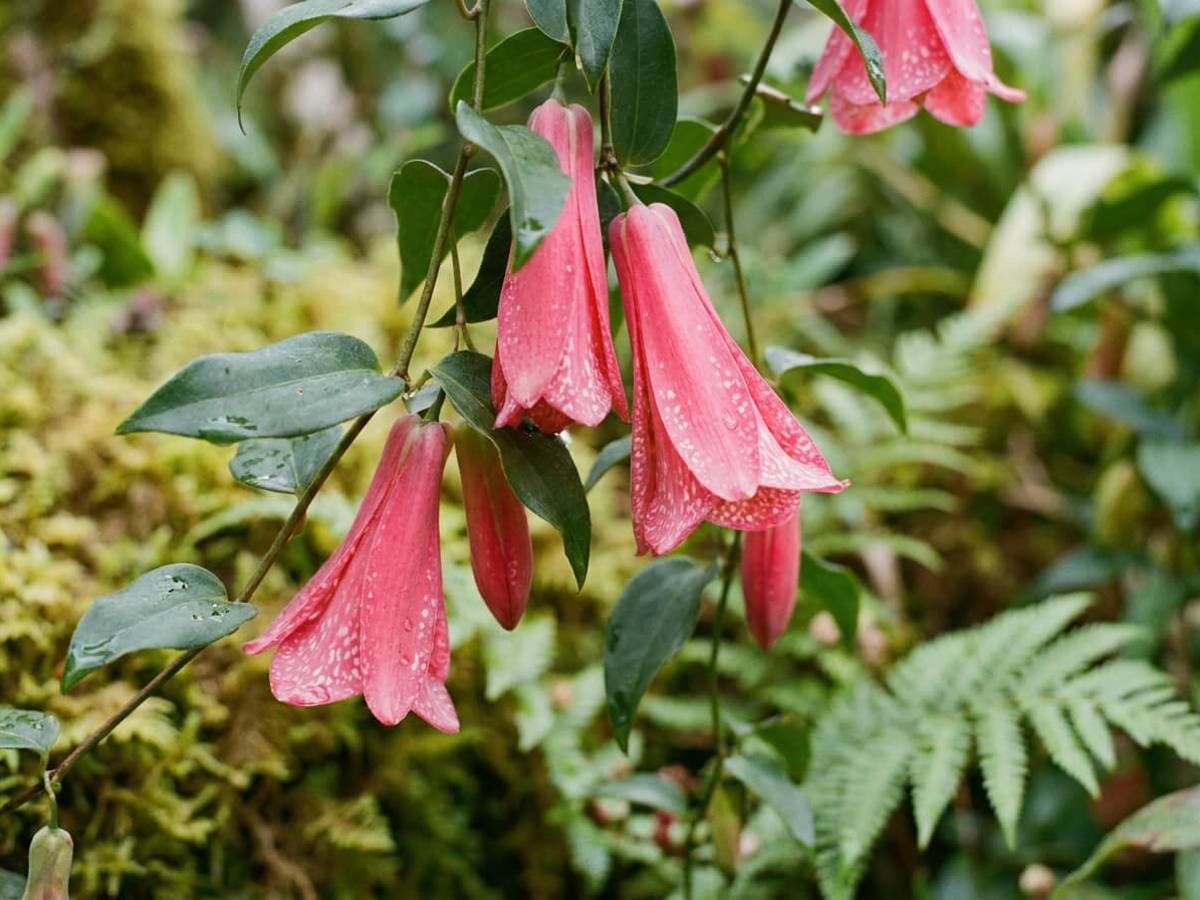
Lapageria rosea is the aristocrat of shade-loving climbers, draping its evergreen stems with thick, waxy bells of crimson or rose that look convincingly artificial until you touch them. Grown against a cool, sheltered wall or through a shrub in a woodland border, it flowers from midsummer until the first frosts, long after most climbers have finished. It is Chile’s national flower, and arguably the most covetable plant that mild-garden owners can grow.
Growing conditions
Think of a forest edge rather than a sunny pergola. Lapageria wants bright, filtered light with its roots in cool shade — a north-, north-east- or west-facing wall is ideal in mild districts. Direct midday sun scorches the leaves and bleaches the flowers to a washed-out pink.
Soil must be acidic to neutral, ideally pH 5.0–6.5, and rich in leaf mould or composted bark. The roots are fleshy and resent both drought and waterlogging, so aim for the open, spongy texture of a woodland floor. Lime, mushroom compost and hard tap water all cause yellowing between the leaf veins.
It thrives outdoors in mild, humid, frost-light gardens — the west coasts of Britain and Ireland, Brittany, the Pacific Northwest, coastal New Zealand. Elsewhere, grow it in a large pot in a frost-free conservatory or cool greenhouse kept above 2 °C.
How to plant Lapageria
Plant in late spring, once the soil has warmed and frost has passed, giving the plant a full growing season to establish before its first winter. Autumn planting is risky except in genuinely frost-free gardens.
Allow at least 1.5–2 m between plants, or from neighbouring shrubs, so the twining stems have room and air can move freely around them.
Set the crown at the same depth it sat in its pot — never deeper, as buried crowns rot in wet winters.
Prepare a planting pocket at least 45 cm wide, mixing in ericaceous compost, leaf mould and grit; add a flat stone or a low fern over the root area to keep it cool.
Water in thoroughly with rainwater, then mulch 5 cm deep with pine needles or composted bark, keeping it clear of the stems.
Propagate by layering a long shoot into a pot of ericaceous compost in spring or autumn — roots take 12–18 months. Seed sown fresh, after a 48-hour soak, germinates erratically at 15–18 °C.
Lapageria rosea growing in a naturalistic garden border
Care through the seasons
Spring: Top up the mulch and begin feeding once new shoots appear, using a balanced liquid feed or an ericaceous fertiliser every three to four weeks. Tie in or guide the new stems, which twine anticlockwise and need something thin — wires, netting or twiggy supports — to grip. Protect emerging growth from slugs, which can strip a season’s shoots in a night.
Summer: Water generously with rainwater in dry spells, aiming for consistently moist but never sodden soil; container plants may need daily attention in hot weather. Mist or damp down the surroundings under glass to keep humidity high and red spider mite at bay. Flowering begins in midsummer and builds steadily as nights cool.
Autumn: This is the peak flowering period, so keep feeding fortnightly with a high-potash tomato feed until the display fades. Carry out any layering now, and renew the mulch before the first frosts to insulate the fleshy roots. Avoid hard pruning: only remove dead or tangled stems.
Winter: The plant stays evergreen and simply pauses. In marginal areas, wrap the base in a thick collar of bracken or straw and screen the stems with horticultural fleece when temperatures threaten to drop below −4 °C.
Best varieties to grow
Named forms are scarce and slow to propagate, but worth hunting down from specialist nurseries.
Lapageria rosea — the species itself, with deep rose-crimson bells; holds the RHS Award of Garden Merit.
L. rosea ‘Nash Court’ — soft shell-pink flowers delicately marbled with deeper rose, a long-established and much-admired clone.
L. rosea var. albiflora — pure white, almost translucent bells that glow in deep shade; slightly less vigorous.
L. rosea ‘Flesh Pink’ — pale salmon-pink blooms, free-flowering and a good foil for the crimson forms.
Pests, diseases and common problems
Slugs and snails: New shoots are shredded at ground level in spring, often before they emerge above the mulch. Use copper rings, wool pellets or nematode drenches, and check nightly with a torch during mild damp spells.
Mealybug and scale insects: White woolly patches or brown limpets in leaf axils, with sticky honeydew and sooty mould below. Dab with cotton wool soaked in dilute horticultural soap, and introduce Cryptolaemus predators under glass.
Lime-induced chlorosis: Leaves turn pale yellow between dark green veins, usually from alkaline soil or hard tap water. Switch to rainwater, mulch with pine needles and apply chelated iron as a short-term correction.