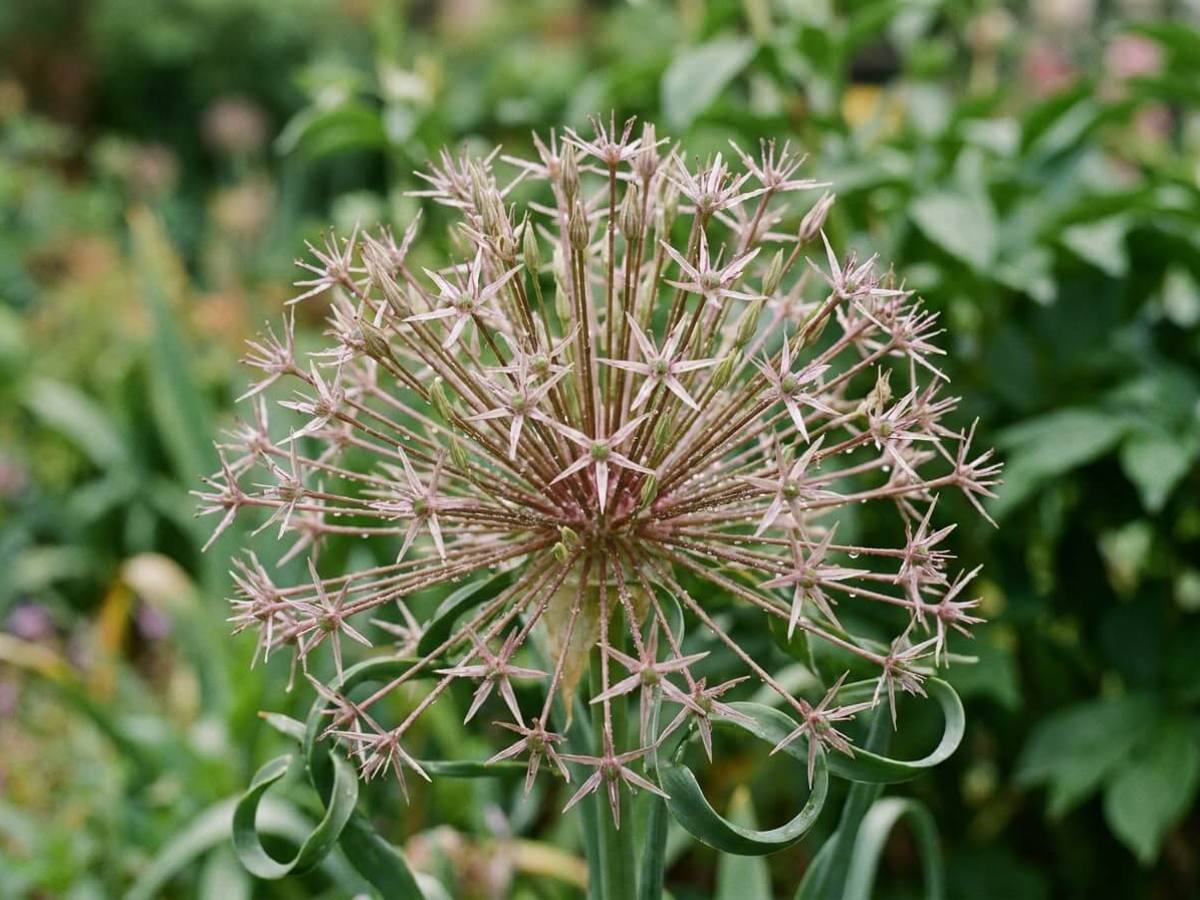
Allium schubertii is the showman of the ornamental onions: a vast, exploding sphere of rose-purple stars held on pedicels of wildly uneven length, like a firework frozen at the moment of detonation. A single head can measure 30–40 cm across, which makes it one of the largest flowers you can grow from a modest, fist-sized bulb. Plant it where low evening light can shine through the head, and it will steal the show from late May onwards.
Growing conditions
Give Allium schubertii the sunniest, most open position you have — a minimum of six hours of direct sun, and preferably more. In shade the stems stretch, lean and often fail to hold the enormous head upright. Shelter from strong wind helps, since the umbel acts rather like a sail.
Drainage matters more than fertility. This is a plant of dry, stony hillsides, so it thrives in sandy or gritty soil, chalk and thin loam, and resents winter wet above all else. A neutral to alkaline pH suits it best; on clay, raise the planting area or add a generous quantity of horticultural grit.
It is reliably hardy in most temperate gardens, but longevity depends on a warm, dry summer dormancy. In mild, wet maritime regions it behaves as a short-lived perennial unless given a baked, gravelly spot or grown in deep containers.
How to plant Allium
Plant dry bulbs in autumn, ideally from late September to early November, so they root before the soil cools below roughly 10 °C. The bulbs need a cold winter period to flower well the following season.
Spacing: set bulbs 25–30 cm apart — the heads are enormous and need room to open without colliding.
Depth:plant 12–15 cm deep, measured to the base of the bulb; deeper planting anchors the tall stem and protects against frost.
Soil preparation: fork in coarse grit or sharp sand on heavy ground, and sit each bulb on a handful of grit to shed water away from the basal plate.
Watering in: water once after planting to settle the soil, then leave well alone — autumn rainfall is normally sufficient.
Propagation: lift congested clumps during summer dormancy and detach offsets, or sow ripe seed in a cold frame, accepting a wait of three to four years until flowering.
Allium schubertii growing in a naturalistic garden border
Care through the seasons
Spring: Broad, strappy, grey-green leaves appear early and establish fast. Apply a light dressing of a low-nitrogen fertiliser, or sulphate of potash, as the shoots emerge to build next season’s bulb. Resist tidying the foliage, even as it starts to flag.
Summer: The leaves yellow and collapse just as the flowers open — this is entirely normal, so plant low perennials such as hardy geraniums or nepeta in front to mask them. Leave the heads standing after flowering for their sculptural seed structure. Keep the soil dry during dormancy; irrigated borders are the commonest cause of bulb rot.
Autumn: Cut or collect the dried heads before autumn gales roll them into the hedge, unless you want self-sown seedlings. Lift and divide congested clumps every three to four years, replanting the largest bulbs immediately. A gritty mulch helps, but avoid rich, moisture-holding compost over the crowns.
Winter: The bulb rests underground and needs no protection in most gardens. In very cold or very wet areas, a 5 cm mulch of grit or bark over the planting zone is useful insurance.
Best varieties to grow
Named cultivars of A. schubertii are scarce, so most gardeners grow the straight species alongside complementary alliums.
Allium schubertii — the species itself is the one to buy, holding the RHS Award of Garden Merit for its unmatched firework head.
Allium cristophii — Star of Persia, with a denser 20 cm sphere of metallic violet stars; earlier, shorter and more persistent on heavy soils.
Allium ‘Globemaster’ — a sterile hybrid with dense, deep violet drumsticks that flower for weeks and never self-seed.
Allium hollandicum ‘Purple Sensation’ — the reliable workhorse for repeating purple through a border, flowering just before A. schubertii.
Pests, diseases and common problems
Allium leaf miner: wavy white tunnels in the leaves and distorted growth, with brown pupae inside the tissue. Cover emerging shoots with insect-proof mesh in early spring and autumn, and destroy badly affected foliage rather than composting it.
Onion white rot: yellowing, wilting leaves and a fluffy white fungal mat with black specks at the bulb base. There is no cure — lift and bin affected plants, and avoid growing any allium, including onions and garlic, on that ground for many years.
Bulb rot in wet soil: bulbs fail to emerge, or emerge weakly and collapse, after a wet winter. Replant into raised, gritty beds or deep pots of loam-based compost with added grit, and never irrigate over summer.