Syngonium podophyllum: your complete indoor plant care guide
0
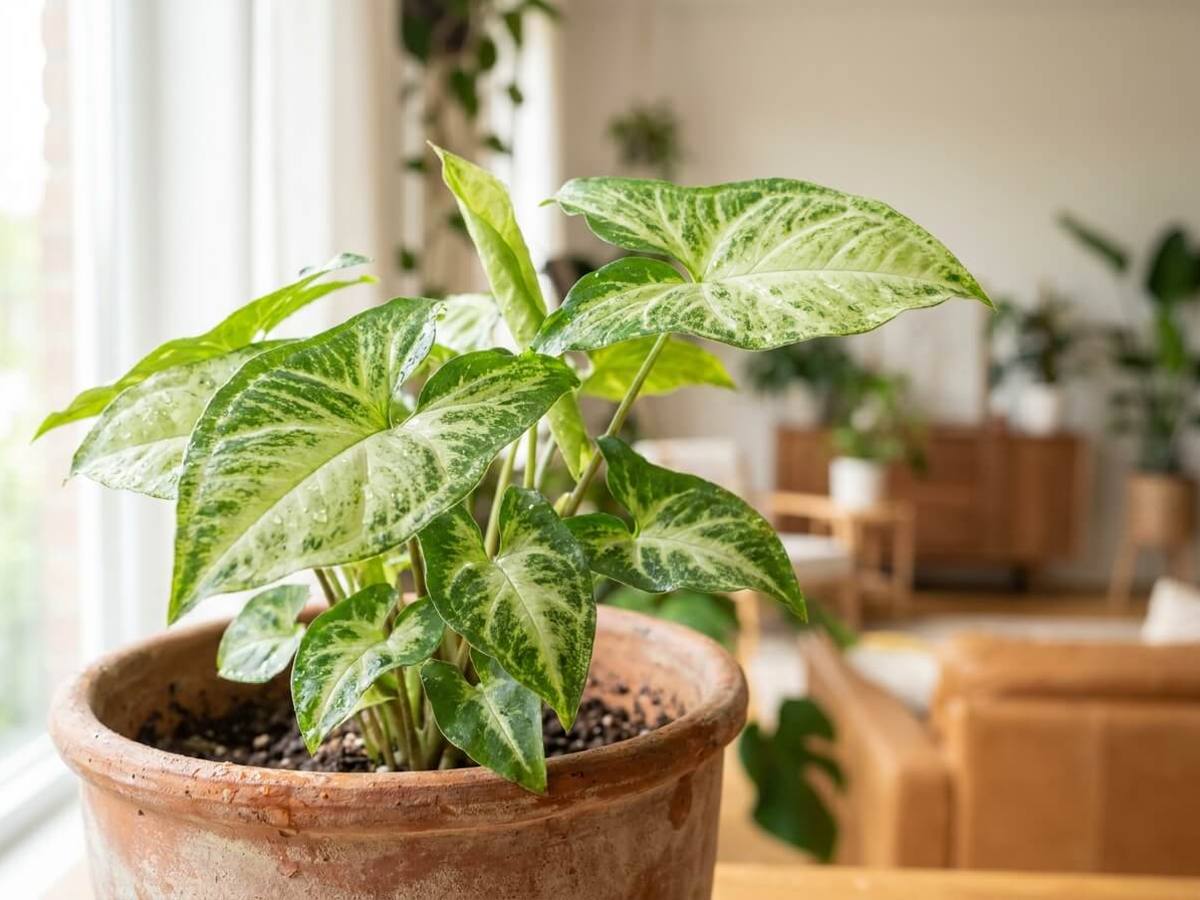
With its shape-shifting foliage and easy-going nature, Syngonium podophyllum is one of the most forgiving climbers you can grow indoors. Young plants produce neat arrow-shaped leaves in shades of cream, silver, pink and apple green, making it a favourite for shelves, hanging pots and office desks. Give it something to climb, however, and the leaves transform entirely — splitting into five, seven or even eleven lobes as the stems mature.
Growing conditions
Bright, filtered light suits arrowhead vine best — think of the dappled shade of its native Central American forest floor. Direct midday sun scorches the leaves and bleaches variegation, whilst deep shade causes leggy stems and dull colour. Pink and cream cultivars need noticeably more light than plain green ones to hold their markings.
Use a loose, airy compost: a peat-free houseplant mix lightened with perlite, orchid bark or coir works well. The plant resents sitting in soggy compost, so drainage holes are essential. A slightly acidic pH of 5.5 to 6.5 gives the best nutrient uptake.
Temperatures between 18 °C and 27 °C are ideal, with humidity above 50 per cent. Only gardeners in frost-free, tropical or subtropical climates can grow it outdoors year-round — elsewhere it can summer on a shaded patio but must come indoors before night temperatures fall below 12 °C.
How to plant Syngonium
Pot or repot in spring or early summer, when warmth and lengthening days push the plant into active growth. Repotting in the depths of winter risks root rot, since the compost dries far more slowly.
Spacing: Outdoors in frost-free climates, set plants 30–45 cm apart as ground cover; indoors, allow three plants per 20 cm pot for a full, bushy look.
Depth: Plant so the crown and the base of the stems sit level with the compost surface — burying the stems encourages rot.
Soil preparation: Mix one part perlite or bark to three parts compost to keep the root zone open and oxygenated.
Watering in: Water thoroughly until it runs from the drainage holes, then let the top 2–3 cm dry before watering again.
Propagation: Take 10 cm stem cuttings with at least one node and an aerial root; they root in water or damp compost within two to three weeks at 20 °C.
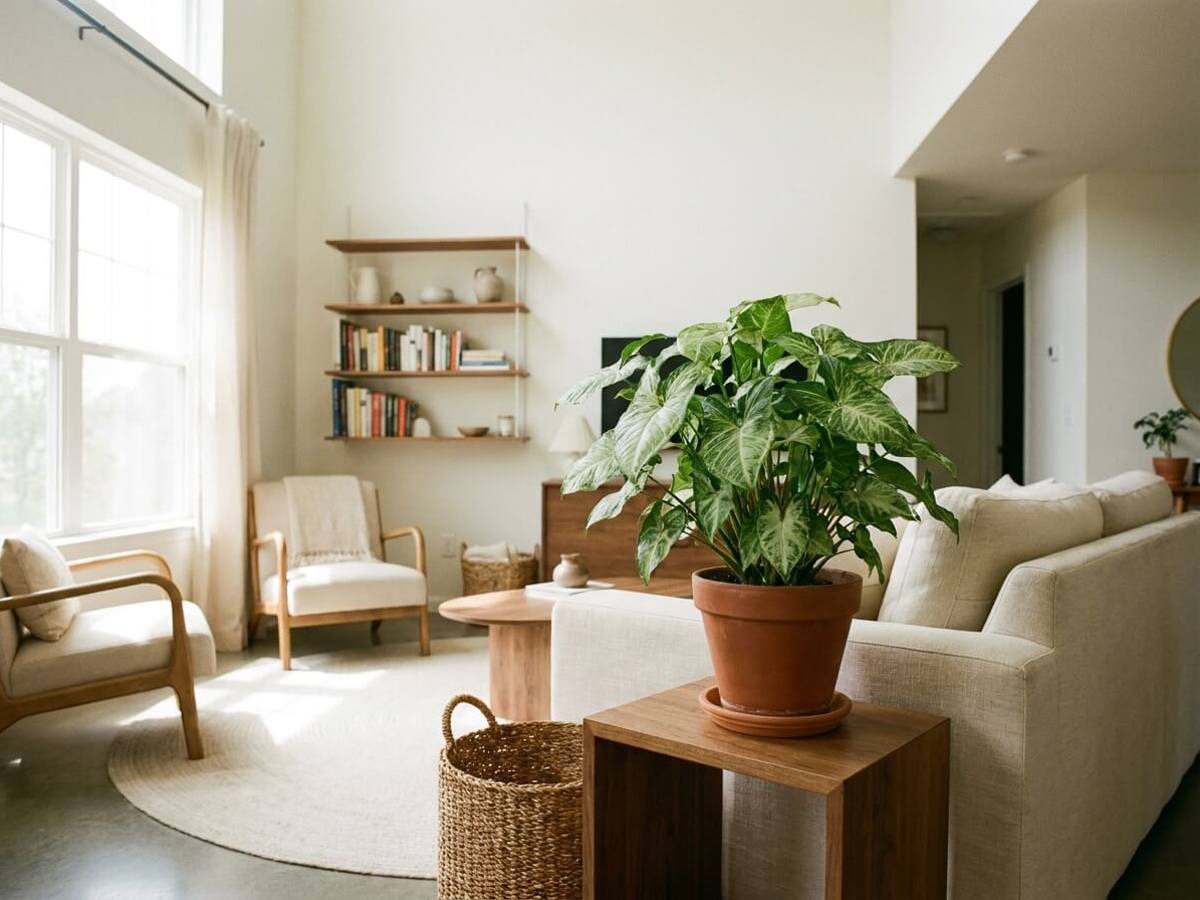
Syngonium podophyllum displayed as a houseplant in a home interior
Care through the seasons
Spring: Begin feeding with a balanced liquid houseplant fertiliser at half strength every two to three weeks as new leaves unfurl. This is the ideal moment to repot, divide congested clumps and pinch back leggy stems to encourage branching. Wipe the foliage with a damp cloth to clear winter dust.
Summer: Water generously whenever the top few centimetres of compost feel dry, but never leave the pot standing in a saucer of water. Mist regularly or stand the pot on a pebble tray if the air is dry, as crisp brown leaf edges are usually a humidity problem. Trim trailing stems to control spread, or tie them to a moss pole to encourage the dramatic lobed adult foliage.
Autumn: Taper off feeding from early autumn and reduce watering as light levels drop. Cut back any straggly growth to a node to keep the plant compact through the darker months. Move plants away from draughty doorways and closer to a bright window.
Winter: Growth slows almost to a standstill; water sparingly, allowing half the compost to dry out between drinks. Keep the plant above 12 °C and well away from radiators and cold glass.
Best varieties to grow
Dozens of cultivars exist, differing mainly in leaf colour, size and habit.
‘White Butterfly’ — the classic, with pale creamy-white leaf centres edged in green; vigorous and very tolerant of lower light.
‘Pink Allusion’ — compact and slow to climb, with soft green leaves veined in rose pink, ideal for a small shelf.
‘Neon Robusta’ — bold bubblegum-pink foliage that holds its colour best in bright indirect light.
‘Berry Allusion’ — green arrowheads flushed with pink and copper tones, naturally bushy and self-branching.
‘Mojito’ — striking irregular splashes of cream and lime marbled across dark green leaves, each one different.
Pests, diseases and common problems
Spider mites: Fine webbing and pale stippling on leaves, worst in dry winter air. Raise humidity, rinse the foliage under a tepid shower and treat with insecticidal soap or neem oil weekly for three weeks.
Mealybugs: White cottony clusters in leaf joints and along stems, causing sticky residue and stunted growth. Dab each one with a cotton bud soaked in surgical spirit, then follow up with neem oil.
Root rot: Yellowing lower leaves, a sour-smelling compost and limp stems point to overwatering. Unpot, cut away blackened roots, repot into fresh free-draining compost and water only once the surface has dried.
Loss of variegation: Pink and cream cultivars revert to plain green in poor light. Move to a brighter spot out of direct sun and prune out any fully green stems.
🌿 Nature & Garden Newsletter
Gardening tips, recipes & seasonal advice, twice a week.