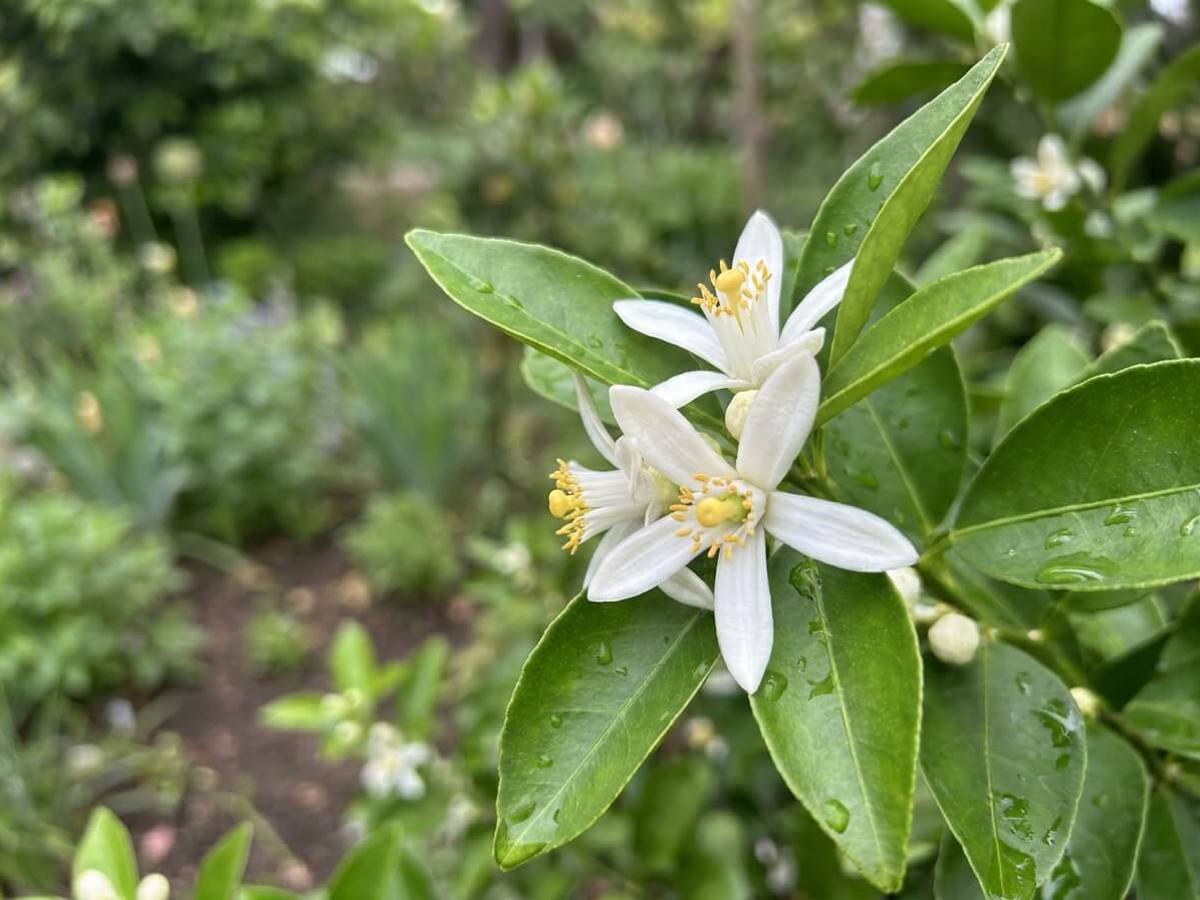
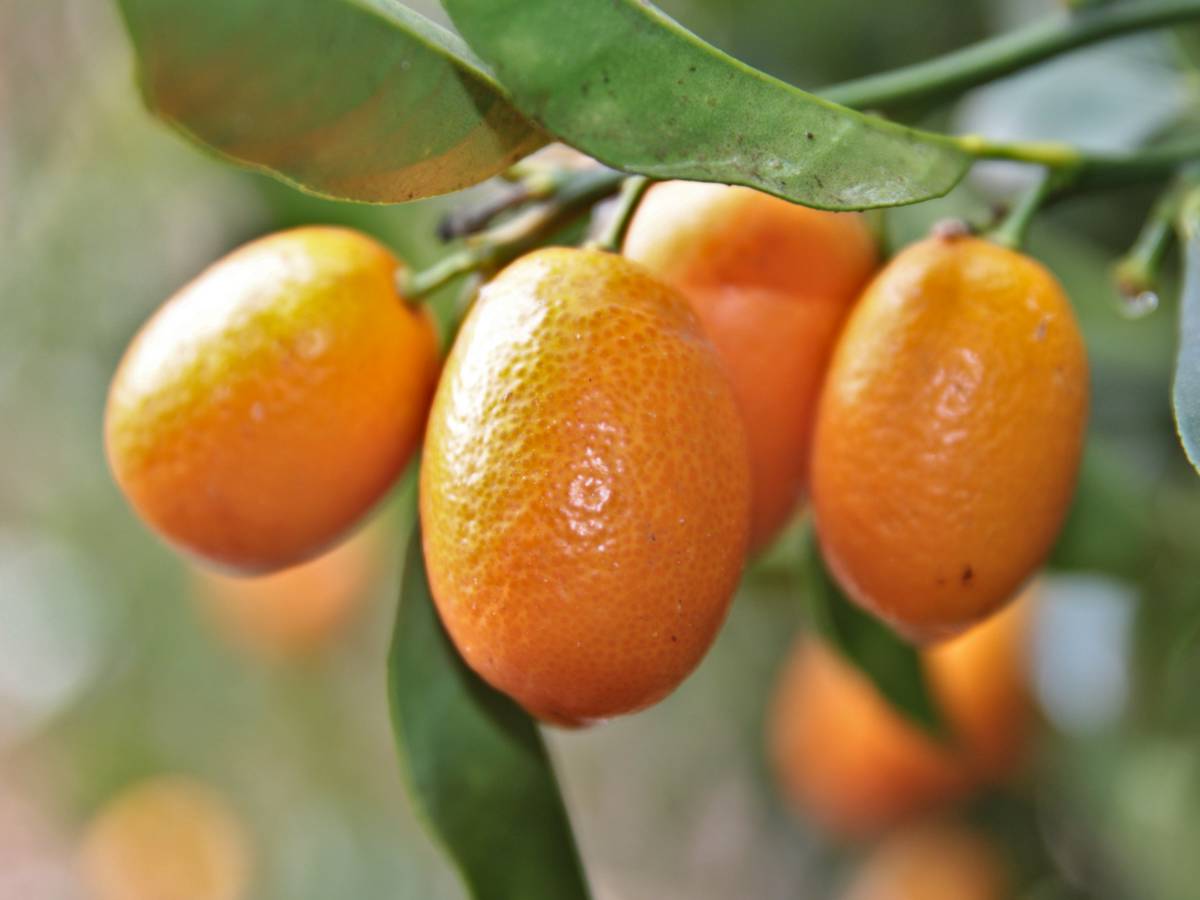
Citrus meyeri, the Meyer lemon, is the most forgiving of all lemons to grow in a pot: glossy evergreen leaves, intensely fragrant white flowers flushed with purple, and fruit that ripens to a deep golden-orange rather than the hard yellow of a supermarket lemon. It is naturally compact and bushy, making it ideal for a terrace, conservatory or sunny doorstep where its scent can be appreciated at close quarters. Most remarkably, a well-grown plant carries buds, blossom and ripening fruit all at the same time.
Growing conditions
Meyer lemon needs the brightest position you can offer — a minimum of six hours of direct sun in summer, and as much winter light as possible. Outdoors, choose a sheltered, south- or west-facing spot against a warm wall, which radiates heat into the evening. Avoid draughty corridors between buildings, as cold wind scorches the foliage and triggers leaf drop.
Drainage matters far more than richness. Use a gritty, loam-based citrus compost, or make your own from two parts John Innes No. 2, one part composted bark and one part coarse grit or perlite. Citrus dislike alkaline conditions: at pH above about 7, iron and manganese lock up and the young leaves turn yellow between green veins.
In most of Britain, northern Europe and the cooler United States, treat it as a container plant that summers outdoors and overwinters under glass. Only in zones 9b–11, or in the mildest Mediterranean and coastal gardens, can it stay in the ground all year.
How to plant Citrus
Pot or repot in spring, from late March to May, as root growth resumes and the plant can recover quickly. Never repot a tree that is carrying a heavy crop in autumn.
Allow 2–3 m between trees planted in open ground, so air circulates freely and the canopy ripens fruit evenly.
Keep the graft union and the top of the rootball at or slightly above the surrounding soil level — buried stems rot.
Choose a pot only 3–5 cm wider than the last; oversized containers hold wet compost and cause root death.
Water in thoroughly with rainwater until it runs from the drainage holes, then let the surface dry before watering again.
Propagate from semi-ripe cuttings, 10–12 cm long, taken in July and rooted at 20–24 °C with bottom heat; Meyer roots more readily than most citrus.
Citrus meyeri growing in a naturalistic garden border
Care through the seasons
Spring: Begin a high-nitrogen citrus summer feed as soon as new growth appears, usually in March, applying it with every watering at the dilution stated. Move the plant outdoors only once night temperatures stay reliably above 10 °C, acclimatising it over a fortnight in light shade. Prune lightly at this point to shorten leggy shoots and open the centre.
Summer: Water generously but allow the top 3–4 cm of compost to dry between waterings; rainwater is far better than hard tap water. Thin congested fruitlets after the natural June drop so the remaining fruit swells properly. In heatwaves, stand the pot on pot feet and shade the container itself, as hot roots suffer long before the leaves do.
Autumn: Switch to a low-nitrogen winter citrus feed in late September or October. Bring the tree back under cover before nights fall below about 5 °C, checking carefully under the leaves for scale and mealybug first. Fruit set in spring ripens from late autumn through to early spring, so handle branches gently.
Winter: Overwinter cool and bright — ideally 5–12 °C in a conservatory, porch or unheated greenhouse — and water only enough to stop the compost drying out completely. Warm, dim rooms with central heating are the single commonest cause of winter leaf fall.
Best varieties to grow
Meyer lemon is essentially a single clone, so the real choice lies in selection and rootstock.
‘Improved Meyer’ — the certified virus-free selection that accounts for almost all nursery stock; reliable, heavy-cropping and the one to buy.
‘Meyer’ on Poncirus trifoliata ‘Flying Dragon’ — a dwarfing rootstock that keeps trees to around 1.2 m and encourages earlier, heavier fruiting in containers.
‘Meyer’ on Citrus macrophylla — a vigorous rootstock that suits larger pots and cooler, lower-light conservatories.
Citrus limon‘Quatre Saisons’ — not a Meyer, but the obvious alternative if you want sharper, true-lemon acidity with a similarly long cropping season.
Pests, diseases and common problems
Scale insects: Brown limpet-like bumps on stems and leaf veins, with sticky honeydew and sooty mould below. Wipe off with a cloth dipped in diluted horticultural soap, repeating fortnightly, and improve ventilation under glass.
Red spider mite: Fine pale speckling and faint webbing in dry indoor air. Raise humidity by misting and damping down, and introduce the predatory mite Phytoseiulus persimilis once temperatures exceed 16 °C.
Lime-induced chlorosis: Yellow leaves with green veins, caused by hard water or alkaline compost. Switch to rainwater and apply a chelated iron and trace-element tonic in spring and midsummer.
Root rot and leaf drop: Sudden shedding of leaves with sour-smelling, waterlogged compost. Reduce watering sharply, repot into fresh gritty compost, and never let the pot stand in a saucer of water.