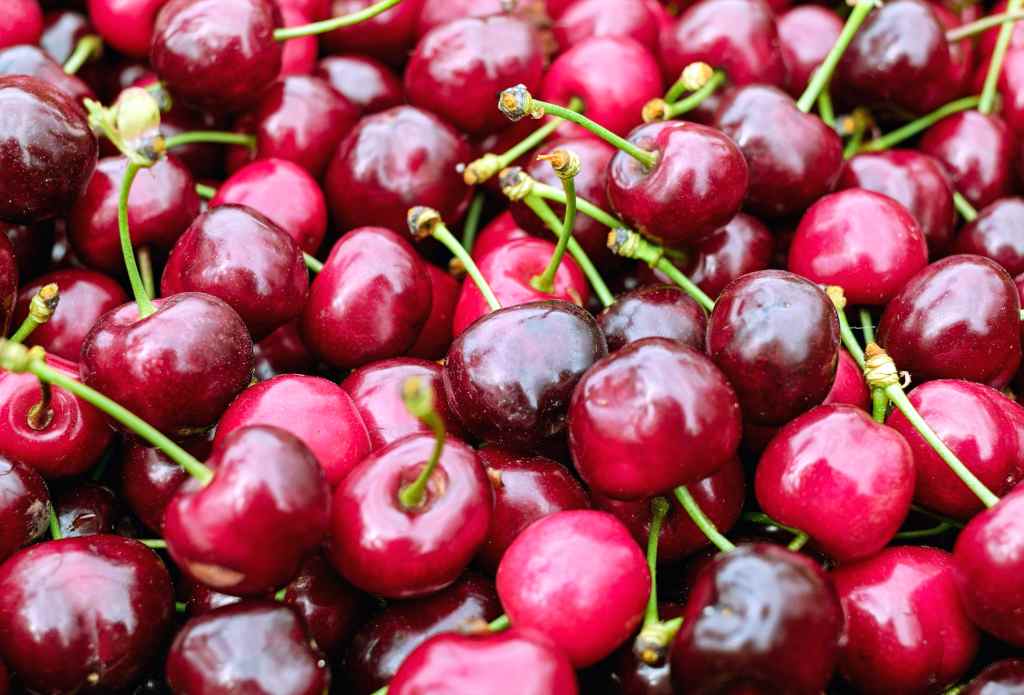
Firm, fleshy cherries, sweet and rich in vitamin C, follow a magnificent late blooming that sets fruit generously on this vigorous, fast-growing tree (Prunus avium). Bigarreau suits almost any climate and asks for neither special care nor watering, but it will not forgive waterlogged ground: give it a freely draining spot and the harvest is abundant.
| Name | Prunus avium |
|---|---|
| Family | Rosaceae |
| Type | fruit tree |
| Height | 20 to 50 feet (6 to 15 meters) |
| Exposure | full sun |
| Soil | ordinary |
| Foliage | deciduous |
| Flowering | mid-spring |
| Harvest | early summer to midsummer, depending on the variety |
Planting, for this cherry tree variety, is an important step because, if properly performed, it increases growth of the tree, fruit formation and thus the harvest of bigarreau cherries.
Bigarreau cherries hate waterlogged ground, so pick a spot that drains freely and avoid hollows where winter water sits, as soggy roots invite collar rot and gum flow.
Keep the graft union clearly above the soil surface when backfilling.
Allow for the mature size: a vigorous Bigarreau can spread wide enough to shade a whole corner of the garden, so keep it well away from walls, paths and neighbouring fruit trees.
Drive in a stake before the tree goes into the hole, then tie the trunk loosely so wind cannot rock the new roots.
This is a topic that is quite divisive, because pruning a Bigarreau cherry tree, whatever the sub-variety, tends to weaken the tree and increases its vulnerability to many diseases.
Nonetheless, it might still be necessary to prune if the Bigarreau cherry tree grows too large, or if certain branches become too weak. Since cherry trees are more vulnerable when pruned, it must be performed as lightly as you can.
Bigarreau cherry tree is a vigorous and fast-growing cherry tree. Certainly among the most commonly grown in temperate climates, it adapts well to most types of soil and climates.
Definitely a consideration when setting up an orchard or adding fruit trees in our gardens, the Bigarreau cherry tree offers many advantages.
Bigarreau cherries do not ripen any further once picked, so leave them on the tree until fully coloured and firm.
Pick them with the stalk attached; they keep far better that way.
Despite its tolerance of ordinary soil, this cherry hates waterlogging, and heavy wet ground encourages gummosis and root rot, so avoid hollows where water sits.
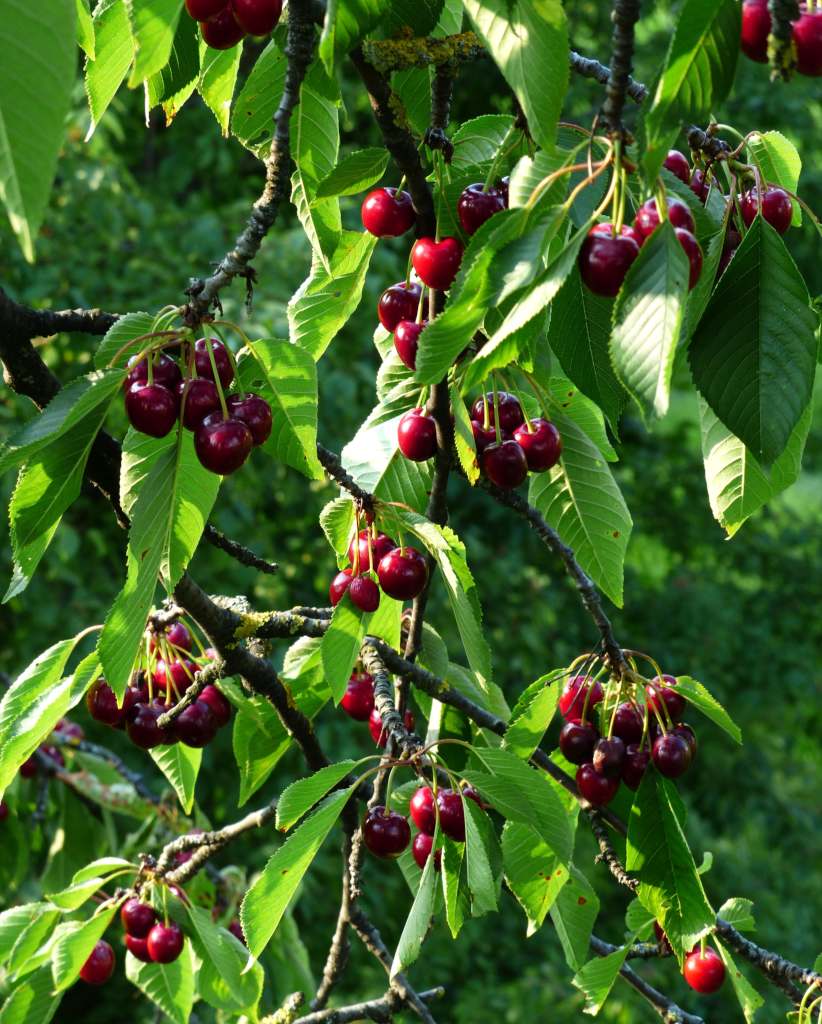
If you can plant more than one tree, mix different varieties in order to enhance pollination and hence productivity.
If you only plant one specimen, select a self-pollinating variety like ‘Bigarreau summit’ or ‘Bigarreau sweetheart’ for your desserts and preserves.
Finally, if an early harvest is what you are aiming for, prefer the Burlat Bigarreau cherry tree and its bright red and juicy cherries.
Your only option is to plant a self-pollinating variety when there will only be one cherry tree, if not, you won’t have any cherries.
Plant cross-pollinating cherry trees as close together as practical — generally within about 100 feet (30 m) — since the shorter the distance, the more reliably bees carry pollen between them.
Ask for a tree grafted on a dwarfing rootstock if you would rather pick from the ground than from a ladder.
Late bigarreau types such as Napoleon are harvested from late June, sometimes extending into July depending on site and season, and their ripening fruit is notably prone to cracking after heavy rain.
Cherry trees are considered sensitive fruit trees, and pruning must be avoided as much as possible: each wound is an entry point, for fungus especially.
Remove and bin every mummified cherry left hanging on the branches.
Hang yellow sticky traps in the canopy as the cherries begin to turn from green to yellow, so you know whether cherry fly is actually present before the fruit is stung.
Early varieties such as Burlat often ripen ahead of the main cherry fly egg-laying and escape maggots, while late-ripening bigarreaux are hit hardest.
Watch out for the damage that our bird friends can cause.
They can leave devour your harvest in only a few days.