Growing Fuchsia magellanica: care, varieties and garden uses
·
0
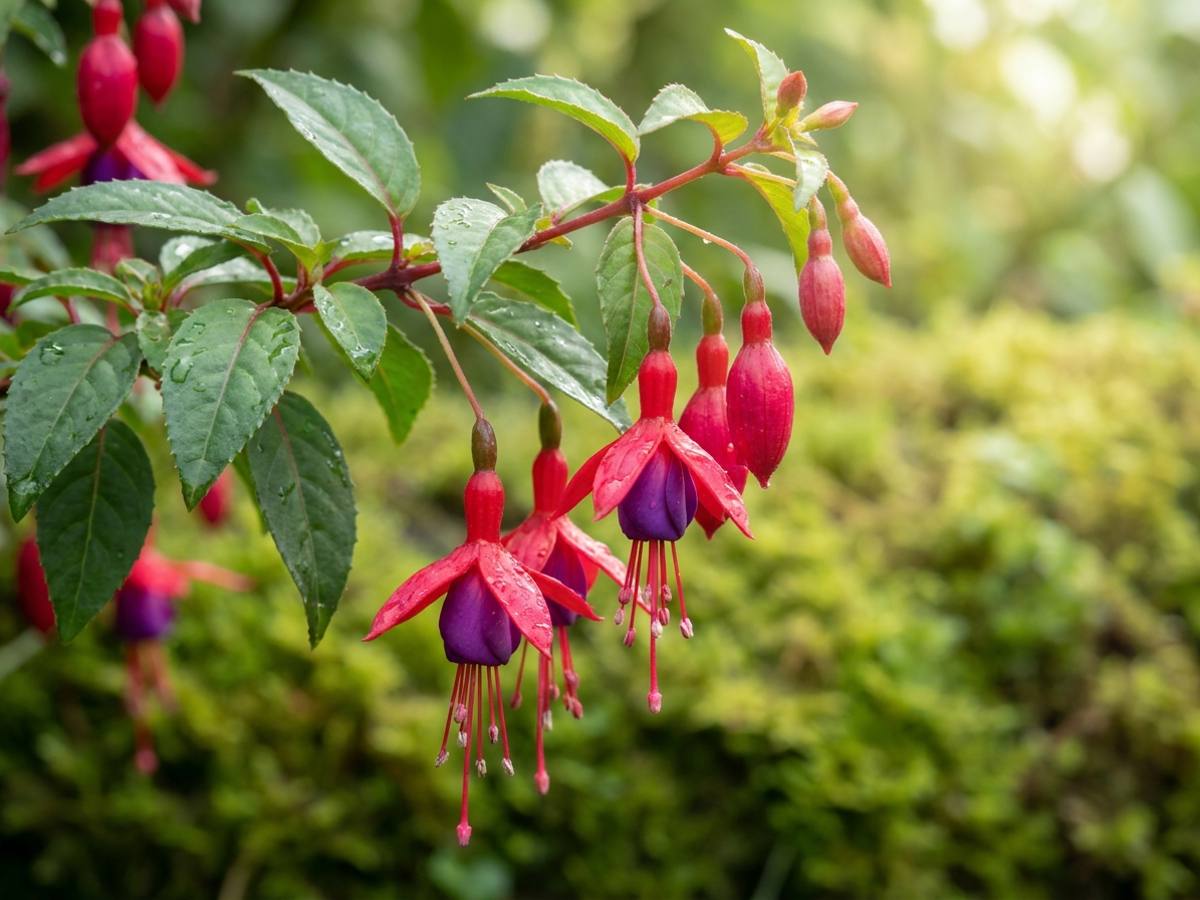
With its dangling, ballerina-like blooms of crimson and violet, Fuchsia magellanica is the toughest and most graceful of all the fuchsias, flowering tirelessly from midsummer until the first hard frosts. Native to the cool, damp forests of southern Chile and Argentina, it forms an arching, informal shrub that suits cottage borders, coastal gardens and shady walls alike. Unlike its tender bedding cousins, this species is genuinely hardy and will regrow from the base even after a savage winter.
Growing conditions
Hardy fuchsia is happiest in a spot that receives morning sun and light afternoon shade, particularly in warmer, drier regions. In cool maritime climates such as Ireland, Cornwall and western Scotland it will flower magnificently in full sun. Deep shade is tolerated but produces leggy growth and noticeably fewer flowers.
Give it a moisture-retentive yet free-draining soil enriched with plenty of leaf mould or well-rotted compost. It is unfussy about pH, thriving anywhere from slightly acidic to mildly alkaline, and copes with clay provided winter waterlogging is avoided. Thin, dry, chalky soils are the one real weakness, so mulch generously if that is what you have.
It flourishes in cool, humid summers and shelters well from salt-laden wind, making it a classic coastal hedging plant. In colder inland gardens treat it as a herbaceous subshrub: the top growth dies back, but the rootstock survives −15 °C beneath a mulch. Note that it self-seeds freely and has naturalised in Ireland, western Britain and New Zealand, where it is regarded as invasive.
Where to plant it: choosing the right position
Hardy fuchsia adapts to very different sites, but the position you choose decides how freely it flowers and whether it behaves as a shrub or a die-back subshrub. Use the table below to match your garden to the right treatment.
Where to plant it: choosing the right position
Position
Best suited to
What to expect
Morning sun with light afternoon shade
Warmer, drier inland regions
The happiest compromise for flowering and foliage
Full sun
Cool maritime climates such as Ireland, Cornwall and western Scotland
Magnificent flowering
Deep shade
Difficult dark corners only
Tolerated, but leggy growth and noticeably fewer flowers
Exposed coastal site
Informal flowering hedging
Shelters well from salt-laden wind and thrives in cool, humid summers
Cold inland garden
Growing as a herbaceous subshrub
Top growth dies back, but the rootstock survives −15 °C beneath a mulch
Whichever site you pick, thin, dry, chalky ground is the one real weakness, so mulch generously if that is what you garden on.
How to plant Fuchsia
Plant in mid to late spring, once the soil has warmed and frost risk has passed, so roots establish a full season before winter. Autumn planting is only advisable in mild, frost-free coastal districts.
Spacing: allow 60–90 cm between plants for a hedge and 1–1.5 m in a mixed border, so air circulates and mildew is discouraged.
Depth: set the crown 5–8 cm below soil level in cold gardens — this buries the buds and dramatically improves winter survival.
Preparation: fork a bucketful of garden compost or leaf mould into the planting hole and break up compacted subsoil.
Watering in: soak thoroughly after planting and keep the root zone evenly moist for the first full growing season.
Propagation: softwood cuttings taken in May or June root in two to three weeks in a shaded propagator; semi-ripe cuttings in August work equally well.
Fuchsia magellanica growing in a naturalistic garden border
Care through the seasons
Spring: Wait until you see new buds swelling low on the stems — usually April — before cutting back last year’s growth. In cold gardens prune to 10–15 cm from the ground; where growth survived, simply shorten by a third. Apply a balanced general fertiliser and a 5 cm mulch of compost around the base.
Summer: Water deeply once or twice a week in dry spells; drought stress causes bud drop and browning leaf edges. A high-potash feed such as tomato fertiliser every fortnight keeps flowering prolific from July onwards. Deadheading is unnecessary but removing developing berries encourages more blooms and limits self-seeding.
Autumn: Resist the urge to tidy — leave the stems standing, as they insulate the crown and shelter overwintering insects. Mound bark chips, bracken or leaf mould 10–15 cm deep over the base in November, especially on young plants. Collect the edible dark berries if you fancy making a tart, mildly peppery jelly.
Winter: The plant is fully dormant and leafless, and top growth may be blackened by frost without any harm to the rootstock. Container-grown specimens need their pots wrapped in fleece or moved against a sheltered wall.
Best varieties to grow
Several selections offer improved hardiness, variegation or unusual colouring while keeping the elegant species habit.
Fuchsia magellanica ‘Riccartonii’ — the classic hedging fuchsia of Irish and Cornish lanes, exceptionally tough with scarlet and deep purple flowers; holds an RHS Award of Garden Merit.
Fuchsia magellanica var. gracilis ‘Versicolor’ — grey-green foliage flushed pink and cream on arching stems, a superb foliage plant; AGM.
Fuchsia magellanica var. molinae ‘Hawkshead’ — slender, ice-white flowers over dark green leaves, ideal for lighting up shade; AGM.
Fuchsia magellanica ‘Aurea’ — golden-yellow leaves contrasting beautifully with red and violet blooms, best in dappled light to prevent scorch.
Pests, diseases and common problems
Fuchsia gall mite: shoot tips become swollen, distorted and reddish, with flowers failing to open. There is no organic spray; prune out and bin affected growth promptly, and choose resistant species-type plants where the mite is established.
Vine weevil: adults notch leaf margins whilst the grubs devour roots, causing sudden collapse of container plants. Water nematodes (Steinernema kraussei) into the compost in spring and autumn when soil is above 5 °C.
Fuchsia rust: orange pustules on leaf undersides and yellow blotches above, worst in humid, crowded conditions. Remove infected leaves, improve air flow by thinning stems and avoid overhead watering.
Grey mould and bud drop: fuzzy grey growth or flowers dropping unopened, usually from erratic watering or poor ventilation. Water consistently, clear fallen debris and space plants properly.
🌿 Nature & Garden Newsletter
Gardening tips, recipes & seasonal advice, twice a week.