Tomato season is peaking, and now’s the moment to measure what you’ve actually spent. I grew twelve plants in large pots this summer and tracked every penny against a neighbour’s ground bed. The results might surprise you, and they could reshape how you garden next year.
Late summer is when tomato gardeners face their reckoning. Across the UK and US, pots are heavy with fruit, watering cans are working overtime, and feed bottles are emptying fast. Ground beds, meanwhile, are largely left to their own devices, quietly producing without the daily fuss.
The season’s spending and the hours it swallowed set the two methods apart far more clearly than the harvest does. Here is how my pots, my neighbour’s bed and the two compromise approaches compared.
| Method | Cash outlay | Labour | Watering demand |
|---|---|---|---|
| Large pots, twelve plants | £47 compost, £18 feed, £22 stakes and string | Roughly twelve hours over the season | Every other day in hot spells, twice daily above 25°C |
| Prepared ground bed, three plants | £8 for amendments, no feed (garden compost used) | Perhaps four hours | Far less intervention where summer rain is reliable |
| Containers with automated drip | Extra investment in a drip system | Reduced labour time | Automated, with less water waste |
| Hybrid: pots plus beds | Homemade compost enriches the main-crop bed | Pots kept only for early starts and trials | Limited to the few potted plants |
Yields were nearly identical, so the choice comes down to budget, space and the time you can spare.
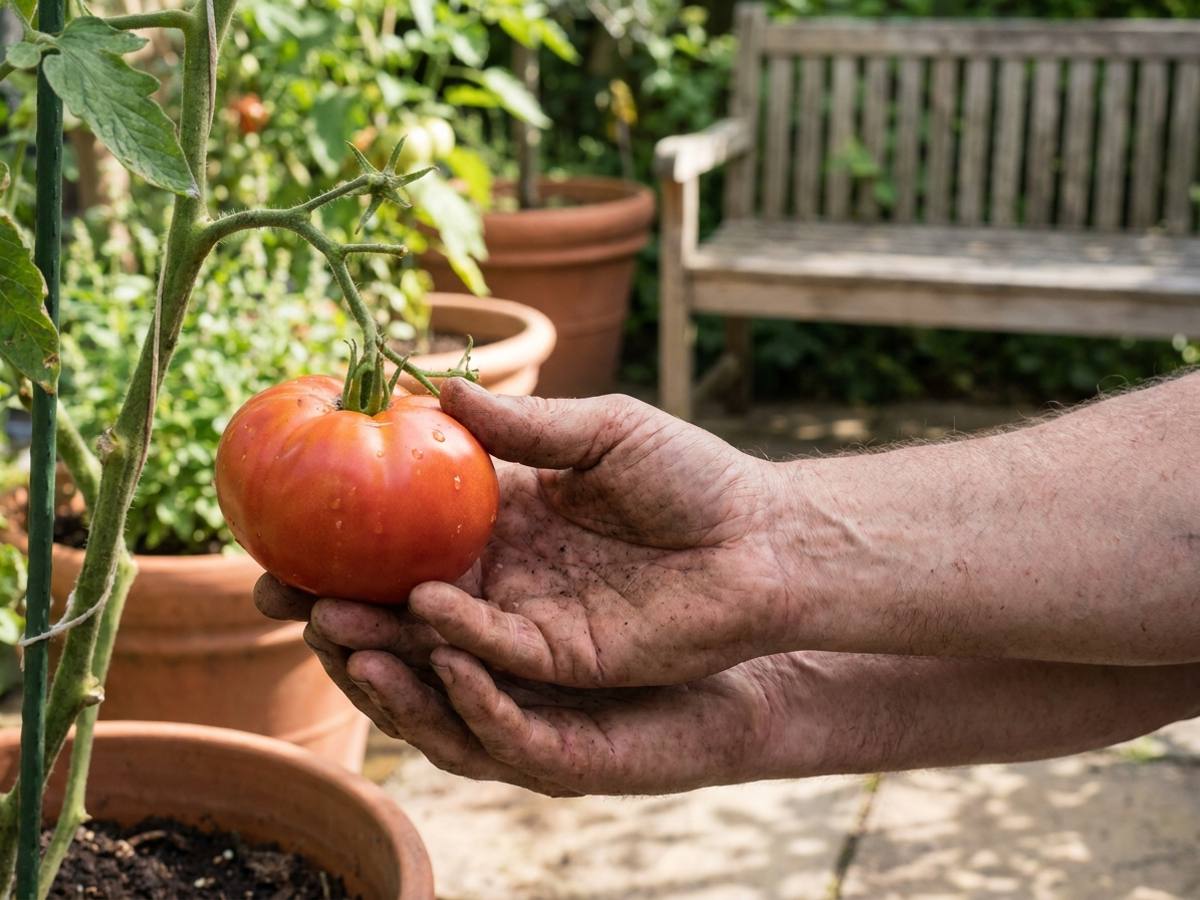
My pot-grown tomatoes demanded constant attention. I spent £47 on quality compost, £18 on specialist tomato feed, £22 on stakes and string, and roughly twelve hours on watering and deadheading across the season. My neighbour’s three plants in a prepared bed cost her £8 for amendments, no feed at all (she used garden compost), and perhaps four hours of labour. Her yield was nearly identical to mine.
The labour difference is stark. Container plants need watering every other day in hot spells, sometimes twice daily when temperatures spike above 25°C. Ground beds, especially in the UK where summer rain is reliable, need far less intervention. In the US, where droughts are common, both methods demand irrigation, but ground beds retain moisture longer and need less frequent attention.
Before next season’s planning begins, measure your actual spend and time commitment:
Late summer is planning month. If your containers have stretched your budget, hybrid approaches work well. Keep pots for early starts and experimental varieties, but grow your main crop in beds enriched with homemade compost. If space is tight or soil quality poor, containers remain worth the investment, but invest in automated drip systems to cut labour time and water waste. The real winner isn’t one method; it’s choosing the right one for your circumstances, your budget, and your lifestyle.