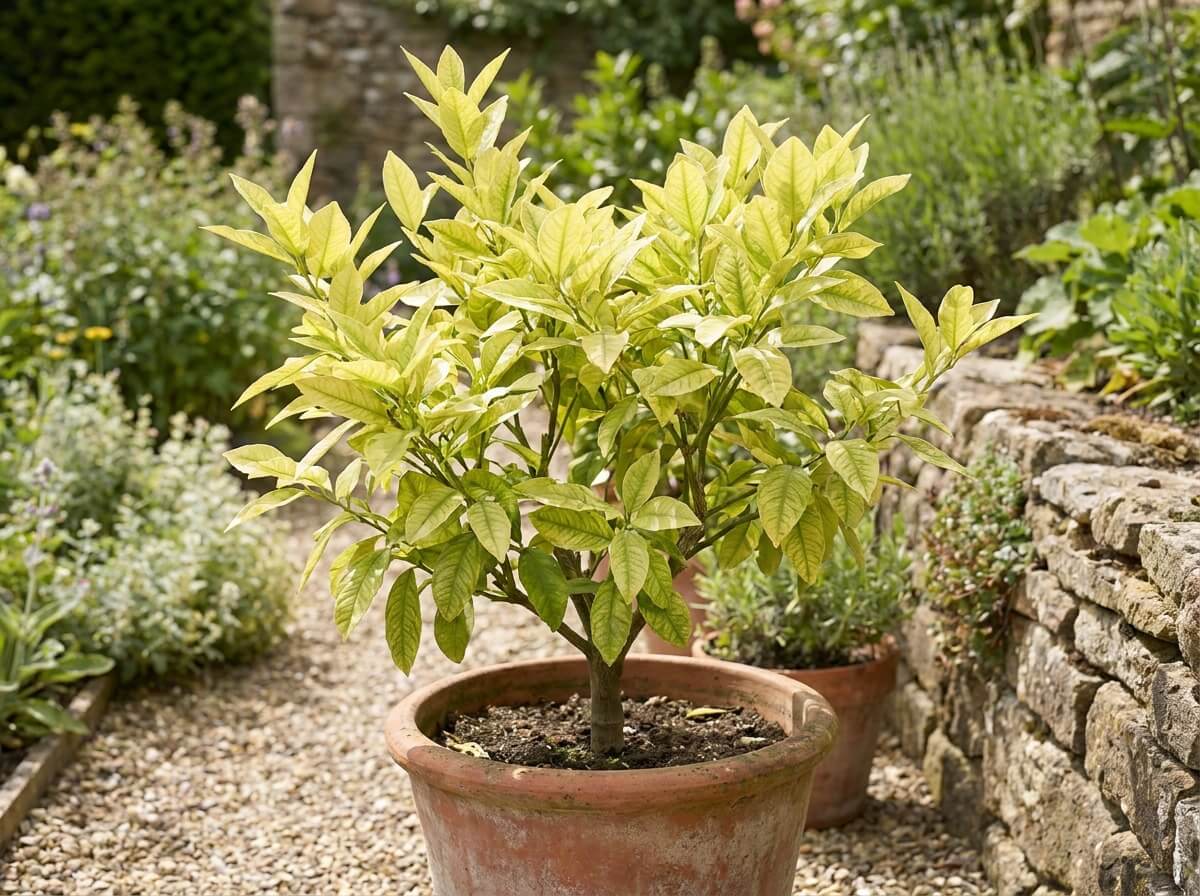
Most citrus trees that look fatigued, fruit poorly, or drop leaves mid-season are not suffering from disease or pests. They are being fed the wrong thing at the wrong time.
The fertilising mistake is almost universal — and almost entirely fixable. Get the timing and formula right, and the difference in leaf colour, fruit set and overall vigour shows up within a month.
The standard advice — “feed your citrus once a month with a general-purpose fertiliser” — sounds sensible. But citrus trees do not have one nutritional need all year.
Trees cycle through distinct phases. Vigorous spring growth. Summer fruiting. Late-season hardening. A single all-purpose feed ignores all of that.
The most damaging version of this mistake is feeding a high-nitrogen fertiliser deep into summer. Nitrogen drives leafy, green growth.
That is exactly what you want in early spring. But by midsummer, when fruit is swelling and the tree needs to be consolidating energy, high nitrogen pushes out soft new shoots instead — shoots that will not harden properly and that actively compete with the developing fruit for resources.
And there is a second, quieter error. Feeding a citrus that has not been watered first.
Dry roots can not absorb nutrients — they can only be damaged by the concentrated salts in the fertiliser. Many pot-grown trees suffer minor root burn this way every summer without the gardener ever realising it. This can lead to a right old mess, really.
The tree looks a bit dodgy. Leaves pale slightly.
Growth stalls. The assumption is always that more feed is needed, which makes things worse.
A tree fed incorrectly through summer does not usually die. But it underperforms in ways that compound over time.
Potted trees suffer faster than garden-grown ones. A lemon in a 40cm container can exhaust usable nutrients in six weeks during peak growth. The margin for error is small. You need to get this sorted.
See how watering errors compound feeding issues in summer.
First: stop whatever you are currently using and assess the season. If it is midsummer, the tree is in fruiting mode. Switch to a high-potassium, low-nitrogen citrus feed — products labelled specifically for citrus fruiting, or a tomato-type feed (which works surprisingly well), applied every three weeks.
Before every feeding session, water the tree deeply first. Twenty minutes at the base for a pot-grown tree, longer for garden specimens.
Wait until the compost is visibly moist before applying any fertiliser. This is non-negotiable. Full stop.
If yellowing between leaf veins is already visible, apply a foliar spray of chelated iron or a dedicated citrus micronutrient mix. The RHS guidance on fertiliser types covers chelated versus sulphate forms clearly — chelated iron works across a wider pH range and absorbs faster through leaves. But it needs consistent application.
Yes, it is more precise than “feed once a month.” Do it anyway. The difference in fruit weight alone makes it worthwhile. Seriously. It does wonders for your harvest.
Your tree will tell you when the feeding balance is off. Pale green, slightly translucent new leaves point to nitrogen shortage.
Dark green leaves with no flowering suggest the opposite — too much nitrogen, not enough phosphorus or potassium. Mottled yellowing on older leaves, while new growth looks fine, almost always means magnesium deficiency; add a magnesium sulphate drench (Epsom salts, 15g per litre) once a month.
Also watch for tip burn on leaves — the very tips going brown and papery. That is usually salt accumulation in the pot, caused by repeated fertiliser applications without enough water to flush the soil through. This is a common issue.
Flush the pot thoroughly every six to eight weeks: water until it drains freely from the base, then repeat twice more. That is how to properly sort things out.
If fruit is dropping before ripening despite correct feeding, the issue is likely water stress rather than nutrition — worth reading about why citrus drops small fruits in summer before adjusting anything else.
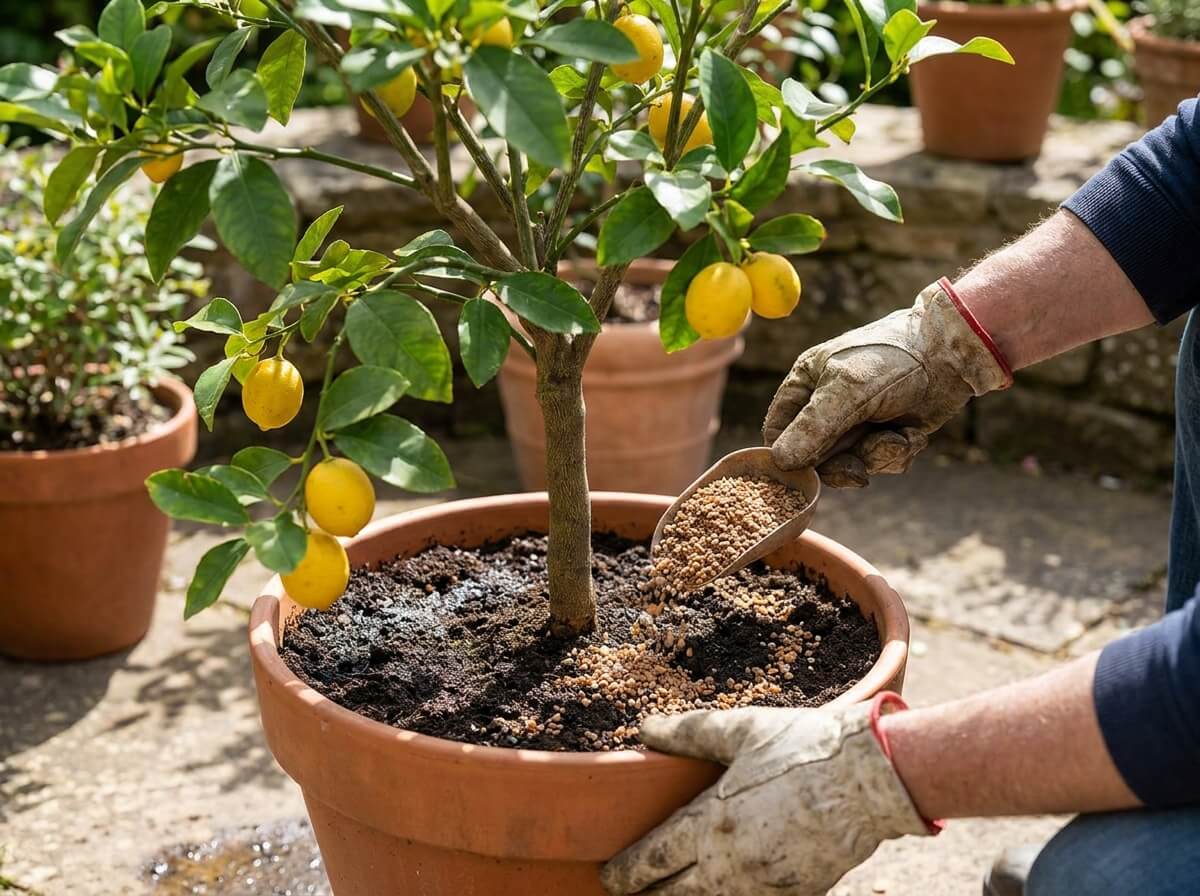
Smart tip: Always water your citrus deeply before feeding — dry roots burn, they do not absorb.
Yes — a high-potassium tomato fertiliser works well for citrus during the fruiting phase in summer. Avoid using it in spring when the tree needs more nitrogen to shoot up fresh foliage.
Every three weeks during the active shooting up and fruiting season (spring through late summer). Stop completely in winter — a resting tree gains nothing from fertiliser and may be harmed by it.
Yellowing despite regular feeding usually means either the wrong feed type, soil pH that blocks nutrient uptake, or salt build-up from over-fertilising. Check the pH (citrus prefers 5.5–6.5) and flush the pot before adding more fertiliser. But make sure the water is draining freely.
It corrects magnesium deficiency specifically — the mottled yellowing on older leaves — but it is not a general fertiliser. Use it as a targeted fix at 15g per litre, once a month, rather than as a routine feed. The UC Davis Cooperative Extension recommends soil testing before applying magnesium regularly.