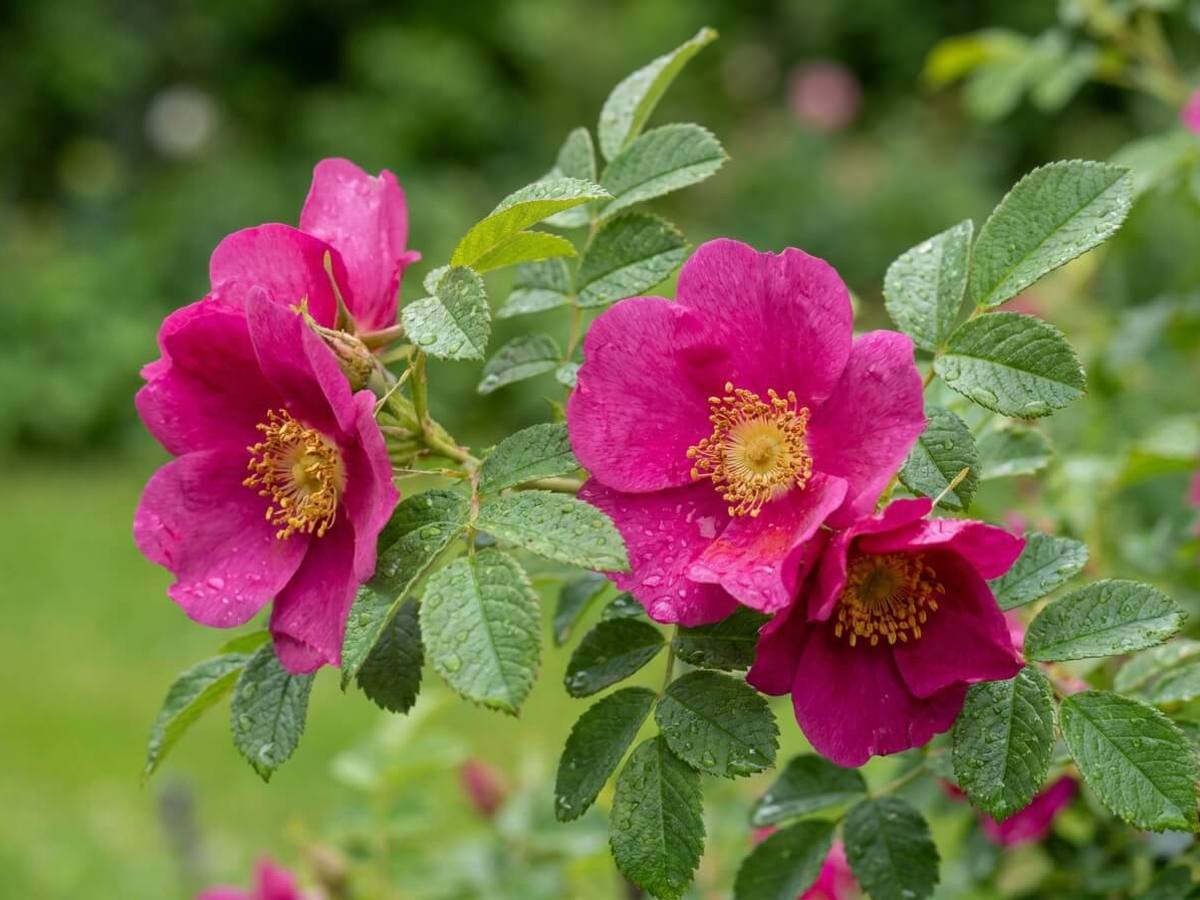
Rosa moyesii is one of the most arresting of all wild roses, bearing single, blood-red flowers with a boss of cream stamens along tall, arching canes in early summer. It earns its keep twice over: the flowers give way to long, flagon-shaped scarlet hips that glow against autumn foliage well into the first frosts. Give it space at the back of a border or in a wild garden and it becomes a living sculpture rather than a conventional shrub rose.
Growing conditions
Full sun produces the best flowering and the heaviest crop of hips. Rosa moyesii will cope with a few hours of shade, but in deep shade the canes stretch, flowering thins and mildew becomes more likely. An open, airy site suits it far better than a sheltered pocket of still air.
It is not fussy about soil type and grows happily on clay, loam or chalk, provided drainage is reasonable and the ground does not lie wet all winter. A slightly acid to neutral pH of around 6.0–7.0 is ideal, though it performs well on alkaline soils too. Poor, thin, sandy soils give a weaker plant with smaller hips, so improve them with organic matter before planting.
This is a mountain species from western China and it is genuinely tough, shrugging off hard frost and cold winds. Gardeners in hot, humid summer climates may find it less happy, as it prefers cool summers and a distinct winter chill.
How to plant Rosa
Bare-root plants are best planted between November and March, whilst the soil is workable and the plant is dormant; autumn planting gives roots time to establish before spring growth. Container-grown plants can go in at any time, though they will need regular watering if planted in late spring or summer.
Spacing: allow 2–2.5 m between plants, and at least 1.5 m from a wall or path — the arching canes need room to fountain out naturally.
Depth: plant own-root species roses at the same depth they grew before; if the plant is budded, set the union 5 cm below soil level in cold districts.
Soil preparation: dig a hole twice the width of the roots and fork a bucket of well-rotted manure or garden compost into the base and backfill.
Watering in: water with 10–15 litres at planting to settle the soil, then mulch 5–7 cm deep, keeping the mulch clear of the stems.
Propagation: take 20–25 cm hardwood cuttings of ripened wood in late October or November and line them out in a sheltered trench of gritty soil.
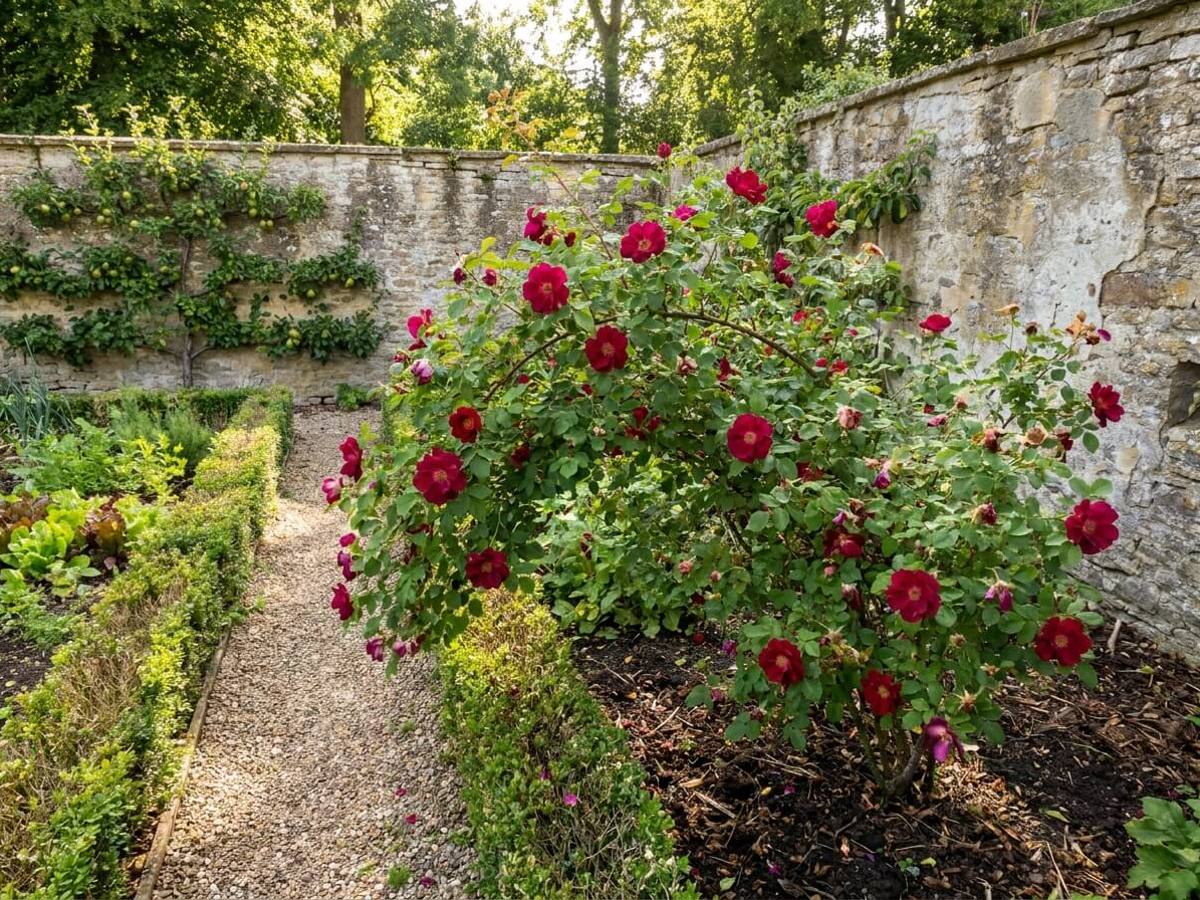
Rosa moyesii growing in a naturalistic garden border
Care through the seasons
Spring: Scatter a balanced rose fertiliser or pelleted poultry manure around the base as the buds break in March, then top up the mulch. Remove any stems killed over winter and cut back damaged tips to healthy wood. Resist the temptation to prune hard — the flowers come on wood made in previous seasons.
Summer: Water young plants thoroughly once a week in dry spells for the first two summers; established shrubs are notably drought tolerant. Do not deadhead after flowering, or you will sacrifice the autumn hips that are half the plant’s appeal. If shape needs correcting, do it immediately after the flowers fade in July.
Autumn: The hips ripen from late August and colour fully through September and October, often with good yellow leaf tints. This is the time to plant new bushes, take hardwood cuttings and apply a thick mulch of compost. Leave the hips for birds through the winter months.
Winter: Fully dormant and completely hardy, needing no protection in temperate gardens. Between December and February, remove one or two of the oldest, least productive canes at the base to encourage fresh growth.
Best varieties to grow
Several named selections and hybrids offer a more compact habit or larger hips than the wild species.
Rosa moyesii ‘Geranium’ — raised at RHS Wisley, more compact at around 2.5 m, with brilliant geranium-red flowers and outstanding flask-shaped hips; holds an RHS Award of Garden Merit.
Rosa moyesii ‘Sealing Wax’ — also from Wisley, with clear rose-pink single flowers and exceptionally glossy, sealing-wax red hips.
Rosa ‘Highdownensis’ — a vigorous seedling raised at Highdown in Sussex, with cerise-crimson flowers and a huge crop of flagon-shaped hips.
Rosa moyesii ‘Fred Streeter’ — deep cerise-pink blooms on a slightly tidier, more upright shrub, good where space is limited.
Pests, diseases and common problems
Rose rust: bright orange pustules appear on leaf undersides in summer, turning black by autumn; species roses can be susceptible, so rake up and bin fallen leaves and improve air circulation by thinning congested canes.
Blackspot: purple-black blotches with ragged edges cause early leaf drop in wet summers; mulch to stop rain splash, feed with potash-rich fertiliser to harden growth, and remove affected foliage.
Aphids and rose sawfly: colonies on shoot tips, or larvae skeletonising leaves in June and July; squash by hand, blast off with water, and encourage ladybirds, hoverflies and blue tits rather than spraying.
🌿 Nature & Garden Newsletter
Gardening tips, recipes & seasonal advice, twice a week.