Grape hyacinth: varieties, planting and garden uses
0
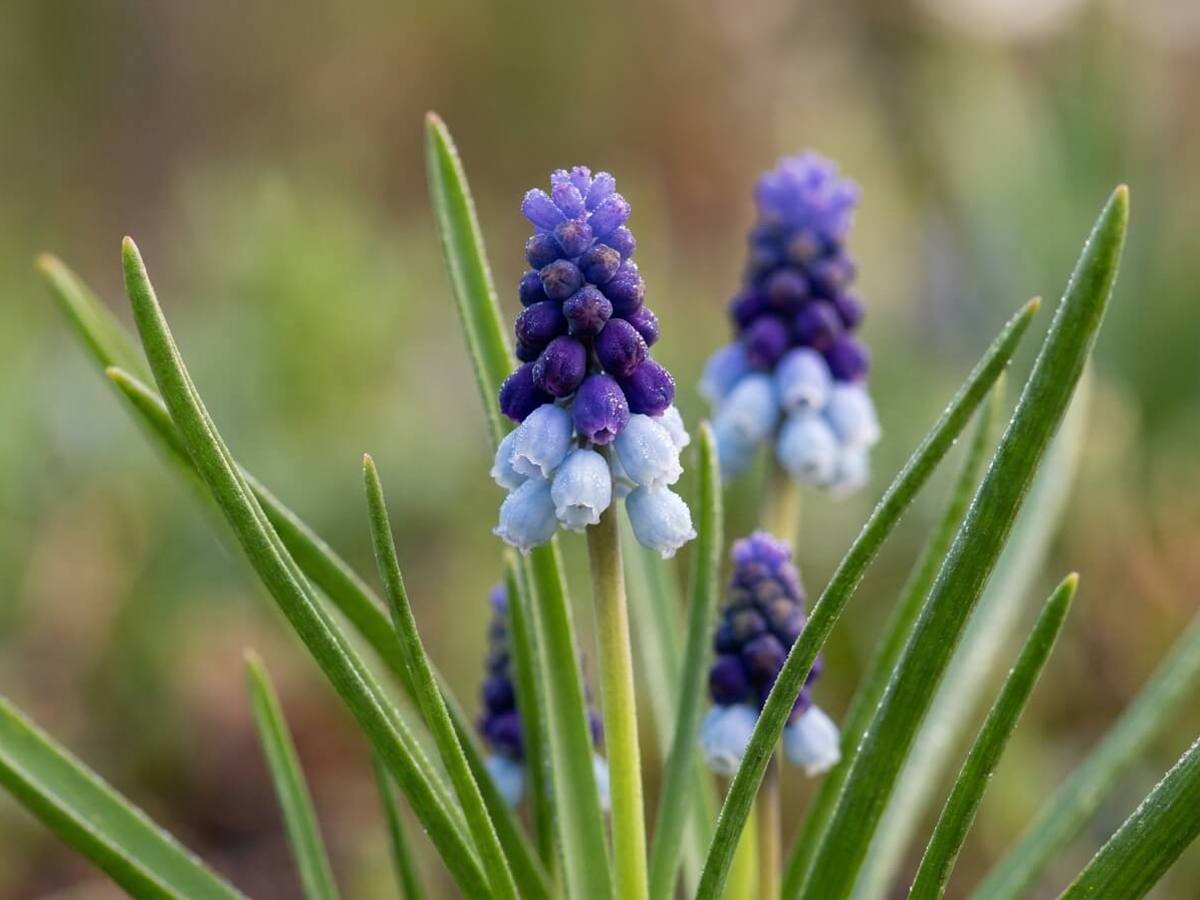
With its curious two-tone flower spike — inky violet-black bells below, topped by a crown of bright blue-violet sterile florets — Muscari latifolium is the most architectural of the grape hyacinths. It is a superb bulb for edging paths, filling gravel gardens and threading between tulips, where the dark lower flowers make paler companions glow. Unusually for a muscari, each bulb produces a single broad, upright leaf rather than a floppy tangle of grassy foliage.
Growing conditions
Give Muscari latifolium full sun for the strongest colour and the sturdiest stems. It also copes well with the dappled shade beneath deciduous shrubs and trees, since it flowers and feeds before the canopy closes over. Deep, permanent shade is the one situation to avoid, as bulbs gradually starve and stop flowering.
Free drainage matters far more than fertility. A gritty loam, sandy soil or thin chalk suits it perfectly, and it is happy anywhere from mildly acid to distinctly alkaline — roughly pH 6 to 8. On heavy clay, work in horticultural grit and garden compost, or plant on a raised bed or slope.
The species withstands hard frosts without protection and needs no lifting in winter. In mild, wet maritime regions the main risk is summer damp rather than cold, so choose the driest, sunniest corner you have.
How to plant Muscari
Plant dry bulbs in early to mid autumn, from September to early November, so roots establish before the soil cools. Bulbs planted late still flower, but often on shorter stems in their first spring.
Spacing: set bulbs 7–10 cm apart in groups of at least 15–25; tight clusters read as a solid ribbon of colour rather than dots.
Depth: plant 8–10 cm deep, nose upwards — around three times the height of the bulb.
Soil preparation: fork over the planting area and add a handful of grit per planting hole on heavier ground; skip rich manures, which encourage soft growth.
Watering in: water once after planting to settle the soil, then leave alone — autumn rainfall is usually sufficient.
Propagation: lift congested clumps in summer once the foliage has died down, detach the offsets and replant immediately at the same depth.
Muscari latifolium growing in a naturalistic garden border
Care through the seasons
Spring: The single broad leaf pushes up with or just before the flower spike, so resist the urge to tidy it. A light scattering of general-purpose fertiliser or bonemeal as shoots appear supports next year’s flowers. Deadhead spent spikes if you would rather the bulb put its energy into offsets than seed.
Summer: Let the foliage yellow and wither naturally — it is recharging the bulb, and cutting it green is the most common cause of poor flowering. Once dormant, the bulbs want to bake dry, so avoid irrigating the area or overplanting with thirsty bedding. Container-grown bulbs can be moved to a sheltered spot and kept almost dry.
Autumn: This is the season for lifting and dividing overcrowded colonies and for planting new stock. A thin mulch of leaf mould or garden compost over the planting area is welcome, but keep it shallow so emerging shoots are not smothered. Mark clump positions before the leaves vanish to avoid spearing bulbs with a fork.
Winter: Bulbs sit dormant or produce only the earliest leaf tips, and need no protection. Pots left outdoors should be raised on feet so meltwater drains freely.
Best varieties to grow
Muscari latifolium is usually sold as the straight species, which holds an RHS Award of Garden Merit, but a few selections and close relatives are well worth seeking out.
Muscari latifolium — the species itself: violet-black fertile bells crowned with bright blue-violet sterile florets, and the classic broad single leaf (AGM).
Muscari latifolium ‘Grape Ice’ — a bicolour selection with a notably paler, icy-blue crown that lifts the dark base still further.
Muscari armeniacum ‘Valerie Finnis’ — soft powder-blue spikes that make a beautiful, gentler partner for the darker latifolium (AGM).
Muscari aucheri ‘Blue Magic’ — compact, neat-leaved and two-toned, an excellent choice for pots and narrow edgings.
Pests, diseases and common problems
Bulb rot and basal rot: bulbs turn soft and brown and shoots fail to appear, almost always after winter waterlogging. Improve drainage with grit, replant on a slight mound, and discard any mushy bulbs rather than composting them.
Slugs and snails: the broad leaf and flower stem are chewed at ground level in damp springs. Water in the morning, clear nearby debris and use wildlife-safe ferric phosphate pellets or night-time hand collection.
Leaves but no flowers: caused by overcrowding, shade, or foliage removed too early the previous summer. Lift and divide congested clumps in late summer, replant into an open sunny spot and always let the leaves die back naturally.
🌿 Nature & Garden Newsletter
Gardening tips, recipes & seasonal advice, twice a week.