Fothergilla gardenii: expert tips and planting advice
0
Compact, slow-growing and quietly spectacular, Fothergilla gardenii earns its place twice over: honey-scented white bottlebrush flowers in mid-spring, followed by some of the most fiery autumn colour of any small shrub. It sits happily at the front of a woodland border, beside a path, or among rhododendrons and azaleas that share its taste for acid soil. Most remarkably, those spring “flowers” have no petals at all — the display is made entirely of stamens.
Growing conditions
Dwarf fothergilla flowers and colours best in full sun, provided the roots never dry out. In hotter, drier gardens, light dappled shade for part of the day is kinder, though autumn tints will be softer and more yellow than scarlet. Deep shade produces a thin, sparse shrub with few flowers.
Soil is the one non-negotiable: it must be acid to neutral, ideally pH 5.0–6.5, and rich in organic matter. The plant hails from damp pine savannas and pocosins of the south-eastern United States, so it enjoys constant moisture but resents waterlogged, airless ground in winter. Thin chalky or limy soils will cause yellowing leaves and a slow decline.
It is thoroughly hardy across the British Isles and much of northern Europe, tolerating hard frosts without protection. In exposed coastal or frost-pocket sites, a sheltered position simply protects the early flowers from wind scorch.
How to plant Fothergilla
Autumn, from October to November, is the ideal planting season, allowing roots to settle whilst soil is still warm. Early spring, from March to April, is the next best option, especially on heavy or wet ground.
Spacing: allow 90 cm to 1.2 m between plants; they slowly sucker and will knit into a low colony over time.
Depth: set the top of the rootball flush with the surrounding soil — burying the crown encourages rot on damp sites.
Soil preparation: fork in generous leaf mould, composted bark or ericaceous compost; avoid mushroom compost, which contains lime.
Watering in: soak thoroughly after planting and keep the rootball evenly moist through the first two growing seasons.
Propagation: detach rooted suckers in early spring, or take softwood cuttings in June under mist or a propagator lid with bottom heat.
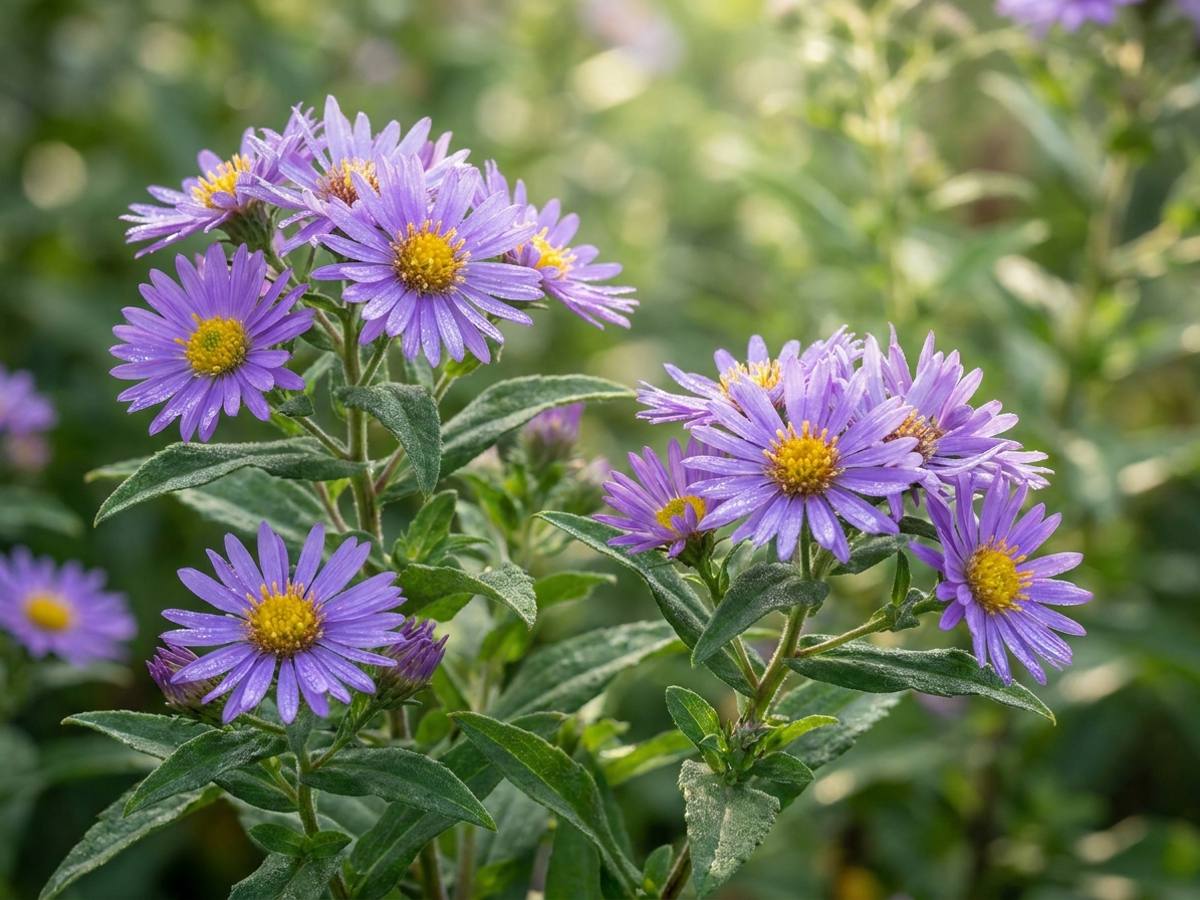
Fothergilla gardenii growing in a naturalistic garden border
Care through the seasons
Spring: Apply a thin mulch of leaf mould or composted pine bark in March, keeping it clear of the stems. A light feed of ericaceous or slow-release shrub fertiliser supports new growth. Deadheading is unnecessary — the spent spikes fall away as the leaves expand.
Summer: Water deeply during dry spells, particularly for shrubs under two years old or those planted in full sun; leaf edges will scorch brown if the roots run dry. If pruning is needed to tidy the shape, do it within a few weeks of flowering, as next spring’s buds are set on the current season’s wood by midsummer. Remove any unwanted suckers with secateurs at ground level.
Autumn: This is the shrub’s finest hour, with foliage turning butter-yellow, apricot, scarlet and burgundy, often all on the same branch. Do not cut back — simply enjoy the display and top up the mulch once the leaves have dropped. Autumn is also the best time to lift and replant rooted suckers.
Winter: The bare, zig-zagging twigs and neat outline need no protection in open ground. Container-grown plants benefit from having the pot wrapped in fleece or hessian to shield roots from prolonged freezing.
Best varieties to grow
A handful of selections offer distinct foliage colour, habit and autumn performance.
‘Blue Mist’ — a true F. gardenii selection with glaucous, blue-grey summer foliage, though its autumn colour is gentler than the species.
‘Harold Epstein’ — exceptionally dwarf and slow, rarely exceeding 45 cm, perfect for a raised bed or trough of acid compost.
‘Suzanne’ — compact and rounded at around 90 cm, with reliably rich orange-red autumn tints.
‘Jane Platt’ — narrower, crinkled leaves, elegant arching growth and outstanding scarlet colouring; the related F. major holds an RHS Award of Garden Merit if you need a larger shrub.
Pests, diseases and common problems
Lime-induced chlorosis: leaves turn yellow between green veins on alkaline soil. Mulch with pine needles or composted bark, water with rainwater rather than tap water, and apply chelated iron as a stopgap — long term, grow it in a container of ericaceous compost instead.
Leaf scorch and browning margins: caused by drought, reflected heat or drying winds. Mulch to 5–7 cm deep, water deeply once a week in dry weather rather than little and often, and site new plants out of the path of cold spring winds.
Vine weevil: notched leaf edges and, more seriously, grubs eating the roots of container plants, causing sudden collapse. Apply Steinernema or Heterorhabditis nematodes to the compost when soil temperatures exceed 12 °C, in spring and again in late summer.
🌿 Nature & Garden Newsletter
Gardening tips, recipes & seasonal advice, twice a week.