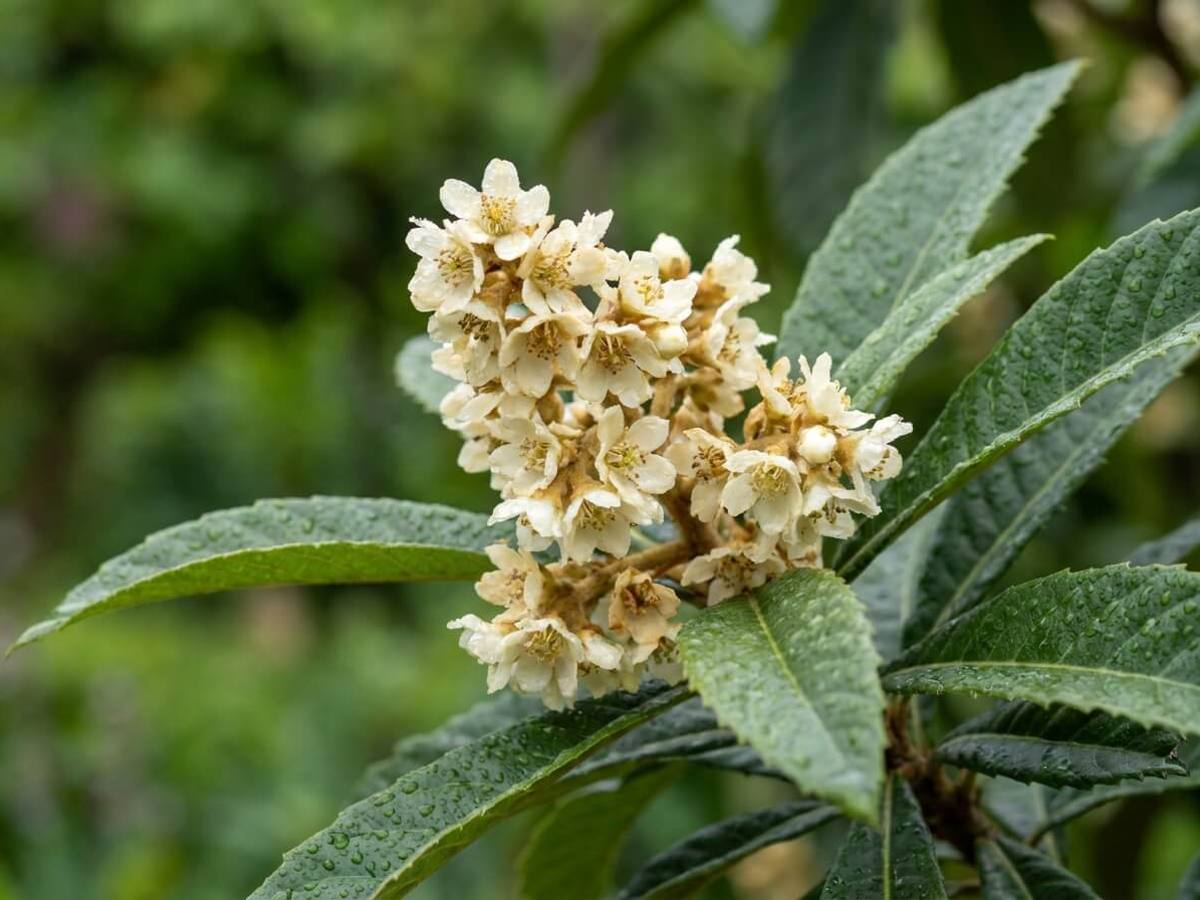
With its bold, deeply veined evergreen leaves — some the length of a forearm — the loquat brings a distinctly subtropical architecture to temperate gardens. It is grown as much for its handsome, russet-felted foliage as for the clusters of apricot-coloured fruit that follow, and it makes a superb specimen tree or evergreen screen against a warm wall. Most unusually among hardy fruit trees, it flowers in the depths of autumn and winter, perfuming the cold air with an almond-scented sweetness.
Growing conditions
Loquats want full sun for at least six hours a day, especially if you hope for a crop — sunlight drives the sugar content of the fruit. Light shade is tolerated, but plants become leggier and flower less freely. Shelter from cold, drying winds matters just as much, as the huge leaves tatter and brown at the edges in exposed sites.
Almost any reasonably fertile soil will do, provided it drains freely. The loquat is notably tolerant of alkaline and chalky ground, happily growing between pH 6.0 and 8.0, but it sulks badly in waterlogged clay where root rots take hold. Improve heavy ground with grit and well-rotted compost, or plant on a slight mound.
In Britain, Ireland and northern Europe, treat it as a handsome evergreen first and a fruit tree second: a sheltered, south- or west-facing wall in a mild coastal or urban garden gives the best chance of ripe fruit. In Mediterranean climates, the Gulf states and California it crops reliably in the open ground.
How to plant Eriobotrya
In cool-temperate gardens, plant in mid-spring once the soil has warmed, giving the tree a full season to root before its first winter. In mild Mediterranean-type climates, autumn planting is better, taking advantage of winter rainfall.
Allow 5–8 m between standard trees, or 3–4 m for wall-trained and dwarfed specimens — crowded loquats shade each other and suffer more leaf spot.
Plant at exactly the depth it grew in the pot, keeping any graft union 10–15 cm clear of the soil surface.
Fork over a generous area rather than digging a narrow hole, and mix in garden compost; avoid heavy nitrogen feeds at planting, which encourage soft, fireblight-prone growth.
Water in with 15–20 litres, then mulch with 5–7 cm of bark or compost, kept a hand’s width from the trunk.
Propagate named cultivars by whip-and-tongue or cleft grafting onto loquat seedlings in early spring; seed germinates readily but must be sown fresh and gives variable trees that take 6–8 years to fruit.
Eriobotrya japonica growing in a naturalistic garden border
Care through the seasons
Spring: Apply a balanced general fertiliser as growth resumes, repeating lightly after harvest. Thin each fruit truss to four to six fruits for larger, sweeter loquats. This is also the moment for formative pruning — immediately after fruiting — to keep the crown open and within reach.
Summer: Water young trees deeply every 7–10 days in dry spells; established trees are notably drought-tolerant but fruit size suffers if they go thirsty the following spring. Top up the mulch to conserve moisture. Remove any suckers from below the graft union as they appear.
Autumn: Flower buds swell and open from October onwards, so avoid pruning at this stage or you will cut off the crop. Clear fallen leaves showing dark spotting to reduce fungal carry-over. In borderline climates, a thick mulch over the root zone insulates against a sudden freeze.
Winter: The tree remains fully clothed and often in bloom, needing no cutting back. Where temperatures dip below −5 °C, fleece wall-trained specimens or container plants to protect the open flowers.
Best varieties to grow
Choose a grafted, named cultivar if fruit matters to you — seedlings are a lottery.
‘Tanaka’ — the most widely planted cultivar in cooler regions: large orange, late-ripening fruit, self-fertile and among the hardiest.
‘Mogi’ — compact Japanese selection with small, pale-fleshed, very sweet fruit in heavy clusters; needs a warm, frost-free winter.
‘Gold Nugget’ (syn. ‘Thales’) — vigorous and productive, with round, apricot-flavoured fruit ripening late in the season.
‘Variegata’ — grown purely for ornament, with cream-splashed foliage that lights up a sheltered courtyard; fruiting is unreliable.
Pests, diseases and common problems
Fireblight (Erwinia amylovora): Shoot tips blacken and hook over as though scorched, often after warm, wet flowering weather. Prune out affected wood at least 30 cm into healthy tissue in dry conditions, disinfecting secateurs between cuts, and avoid high-nitrogen feeding.
Loquat scab and leaf spot (Fusicladium, Entomosporium): Purple-brown blotches on leaves and corky scabs on fruit skins, worst in humid springs. Rake up and remove fallen leaves, thin the canopy for airflow, and avoid overhead watering.
Scale insects and aphids: Sticky honeydew and sooty mould on the upper leaf surfaces, with colonies on shoot tips and leaf undersides. Wash off with soapy water, encourage ladybirds and lacewings, and apply horticultural oil in late winter if infestations recur.
🌿 Nature & Garden Newsletter
Gardening tips, recipes & seasonal advice, twice a week.