Filipendula rubra, known as queen of the prairie, is a stately North American perennial that lifts frothy plumes of candyfloss-pink flowers well above head height in midsummer. Its deeply cut, jagged foliage forms handsome clumps that stay attractive long after the blooms have faded, making it a superb structural plant for damp borders and naturalistic planting schemes. Given the moist soil it craves, it spreads steadily by underground rhizomes to form generous colonies that hum with pollinators.
Queen of the prairie flowers most freely in full sun, provided the roots never dry out. In hotter, drier regions — or on lighter soils — a position in dappled or afternoon shade prevents the foliage scorching and browning at the edges. Shelter from strong wind is worthwhile, as the tall flowering stems can be battered in exposed sites.
Soil moisture matters far more than soil type. Aim for deep, fertile, humus-rich ground that stays damp all summer: heavy loam, clay and the margins of ponds or ditches all suit it perfectly. A neutral to slightly acidic pH is ideal, and it dislikes thin, hungry chalk that bakes dry in July.
This is an exceptionally cold-hardy plant, sailing through winters down to −25 °C without protection. Gardeners in mild, dry Mediterranean climates will struggle unless they can irrigate generously; in cool, damp northern and upland gardens, it thrives with almost no intervention.
Plant in autumn or early spring, when the soil is naturally moist and roots can settle before the summer heat arrives. Container-grown plants can go in at any time from March to October if you commit to watering.
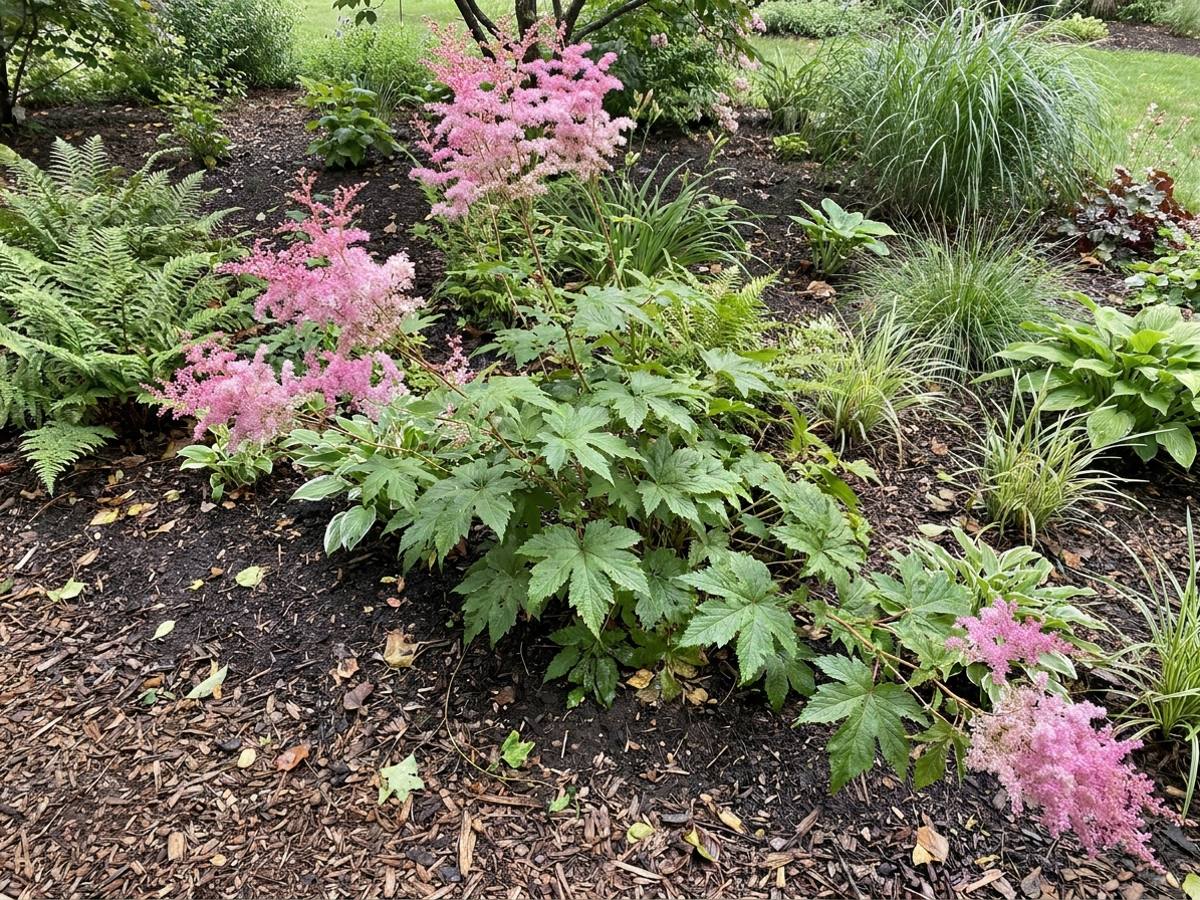
A handful of named forms of Filipendula rubra differ in height and flower colour, which decides where each one belongs in a damp border. Use this table to pick before you plant, since spacing and staking follow from the size you choose.
| Variety | Height | Flower colour | Best used for |
|---|---|---|---|
| ‘Venusta’ | 2 m stems | Deep rose-pink | The best-known selection, holding an RHS Award of Garden Merit |
| ‘Venusta Magnifica’ | Slightly more compact | Richer, darker carmine-pink | The back of a damp border |
| ‘Albicans’ | Not stated | Soft white | Shaded, moist corners, with blue irises |
| ‘Vénusta Nana’ | Around 120 cm | Pink | Smaller gardens where the species is too tall |
Whichever form you choose, allow 90 cm between plants — a full metre for the vigorous ‘Venusta’.
A handful of named forms of Filipendula rubra differ in height and flower colour, which decides where each one belongs in a damp border. Use this table to pick before you plant, since spacing and staking follow from the size you choose.
Whichever form you choose, allow 90 cm between plants — a full metre for the vigorous ‘Venusta’.
Spring: Bronze-tinted new shoots push through in March and April, so clear away old debris to let them emerge cleanly. Apply a generous mulch of compost or leaf mould around — but not over — the crowns to lock in moisture. A light feed of general-purpose organic fertiliser supports the tall flowering stems.
Summer: Water deeply and regularly during dry spells; wilting foliage and crisped leaf margins are the first signs of stress. Tall stems in exposed gardens benefit from discreet staking with pea sticks before they reach full height. Remove faded flowerheads if you dislike the rusty seedheads, though many gardeners leave them for autumn interest.
Autumn: Cut stems back to about 10 cm once the foliage yellows, or leave them standing until late winter for wildlife. Autumn is the ideal moment to lift and divide congested clumps or to curb a colony that has outgrown its allotted space. Top-dress with well-rotted manure to feed next year’s growth.
Winter: The plant dies back completely to dormant rhizomes and needs no protection whatsoever, even in severe frost. Avoid planting where winter waterlogging turns to standing ice, as this can rot the crowns.
A handful of named forms offer variations in height and flower colour worth seeking out.