Globe thistle care: how to grow and maintain Echinops ritro
0
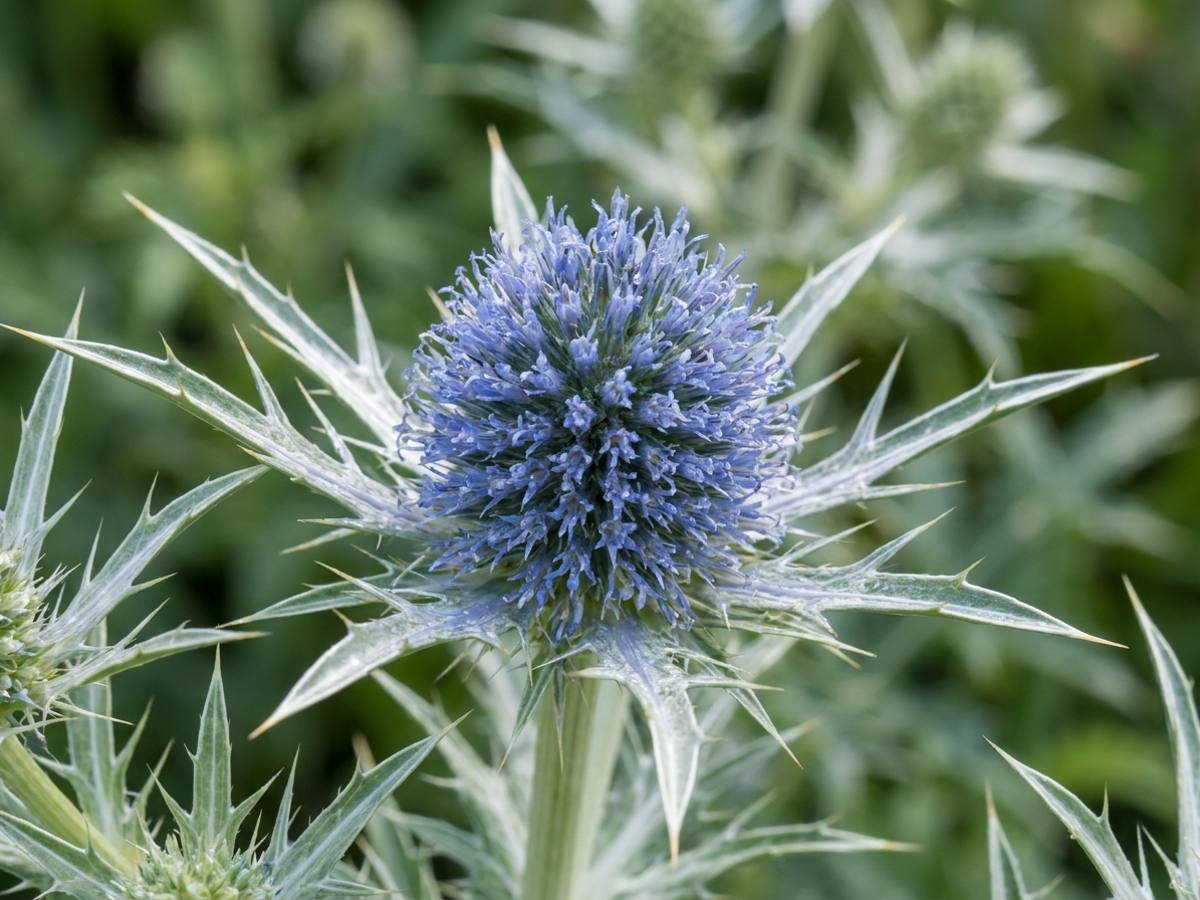
Few perennials command attention quite like Echinops ritro, whose perfectly spherical, steel-blue flower heads hover above deeply cut, thistle-like foliage from midsummer onwards. It is a stalwart of gravel gardens, prairie-style borders and wildlife plantings, where its nectar-rich globes draw bumblebees in astonishing numbers. Best of all, it thrives on neglect — poor, dry soil produces sturdier plants than rich, pampered ground ever will.
Growing conditions
Globe thistle demands full sun — at least six hours of direct light daily, and ideally more. In shade or crowded borders the stems stretch, flop and flower poorly. An open, airy position also keeps the foliage dry and reduces mildew.
Sharp drainage matters far more than fertility. Echinops ritro hails from the stony hillsides of southern and eastern Europe, so it revels in thin, gritty, alkaline soils and copes happily with chalk. Heavy clay is the one real enemy: waterlogged winter roots cause far more losses than cold ever does.
Once established, it is exceptionally drought-tolerant and wind-firm, making it ideal for coastal and exposed gardens. Gardeners in wet western regions should improve drainage with grit or plant on a slight mound.
How to plant Echinops
Plant container-grown specimens in spring, once the soil has begun to warm, so the deep taproot establishes before summer. Autumn planting is possible on free-draining ground, but avoid it on cold, wet clay.
Spacing: allow 45–60 cm between plants — the bold, arching foliage needs room, and air circulation prevents mildew.
Depth: set the crown level with the surrounding soil; burying it invites rot.
Soil preparation: fork in horticultural grit on heavy ground, but skip the manure — rich soil produces soft, floppy stems.
Watering in: water thoroughly at planting, then weekly for the first season only; established plants rarely need irrigation.
Propagation: divide congested clumps in early spring, or take 8 cm root cuttings in late autumn and grow them on in a cold frame.
Echinops ritro growing in a naturalistic garden border
Care through the seasons
Spring: Cut away any remaining old stems as fresh silvery foliage emerges. Resist the temptation to feed — a light mulch of gravel or leaf mould around (not over) the crown is plenty. This is also the moment to lift and divide clumps older than four years.
Summer: Water only during prolonged drought in the first year; thereafter the taproot fends for itself. Tall stems in windy spots may need discreet staking, though plants grown hard usually stand unaided. Deadhead spent globes to encourage a modest second flush and to limit self-seeding.
Autumn: Leave a proportion of the seed heads standing — goldfinches feed on them and the silvered globes look magnificent under frost. Cut the remainder back to 10 cm once foliage collapses. Take root cuttings now if you want extra plants.
Winter: The plant disappears completely below ground and needs no protection. Ensure winter wet drains freely away from the crown, as sodden soil is the main cause of losses.
Best varieties to grow
A handful of selections offer better colour, sturdier stems or more compact habits than the straight species.
‘Veitch’s Blue’ — the classic garden form, with intensely blue globes over a long season and a reliably upright habit.
‘Blue Glow’ — taller at around 120 cm, with large steel-blue heads that hold their colour well in dried arrangements.
subsp. ruthenicus — narrower, whiter-backed foliage and vivid blue flowers; holds an RHS Award of Garden Merit.
‘Platinum Blue’ — a compact, sterile selection reaching about 70 cm that does not self-seed, ideal for smaller borders.
Pests, diseases and common problems
Aphids: dense colonies gather on stems and unopened buds in early summer. Blast them off with a jet of water or leave them to the ladybirds and hoverflies, which arrive quickly in an unsprayed garden.
Powdery mildew: a white bloom on lower leaves during hot, dry spells or in crowded plantings. Improve spacing and airflow, water at the base rather than overhead, and remove affected leaves promptly.
Crown and root rot: plants collapse or fail to reappear in spring, almost always after a wet winter on clay. Lift and replant on a raised, grit-amended bed rather than attempting to save a rotted crown.
Flopping stems: caused by too much shade, too much feeding, or both. Move plants into full sun and withhold fertiliser entirely.