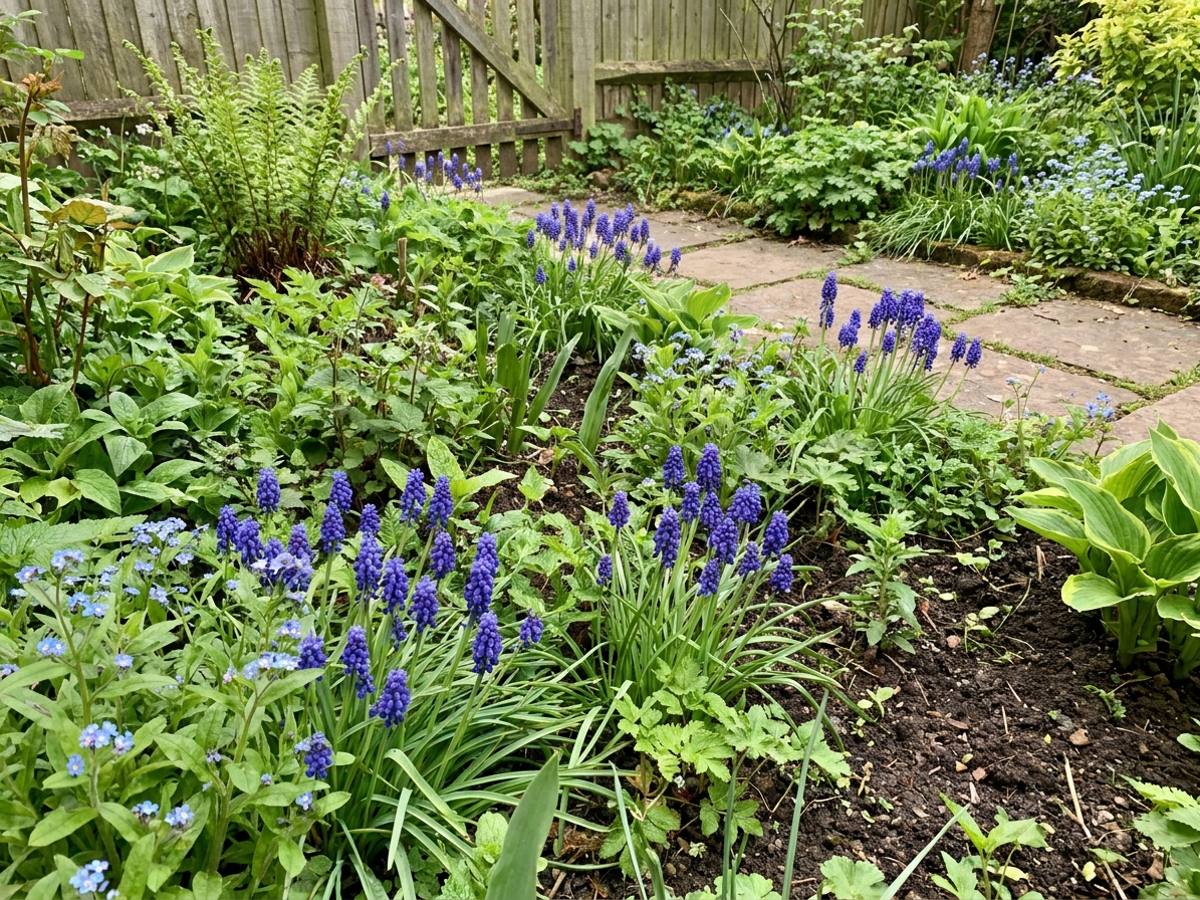
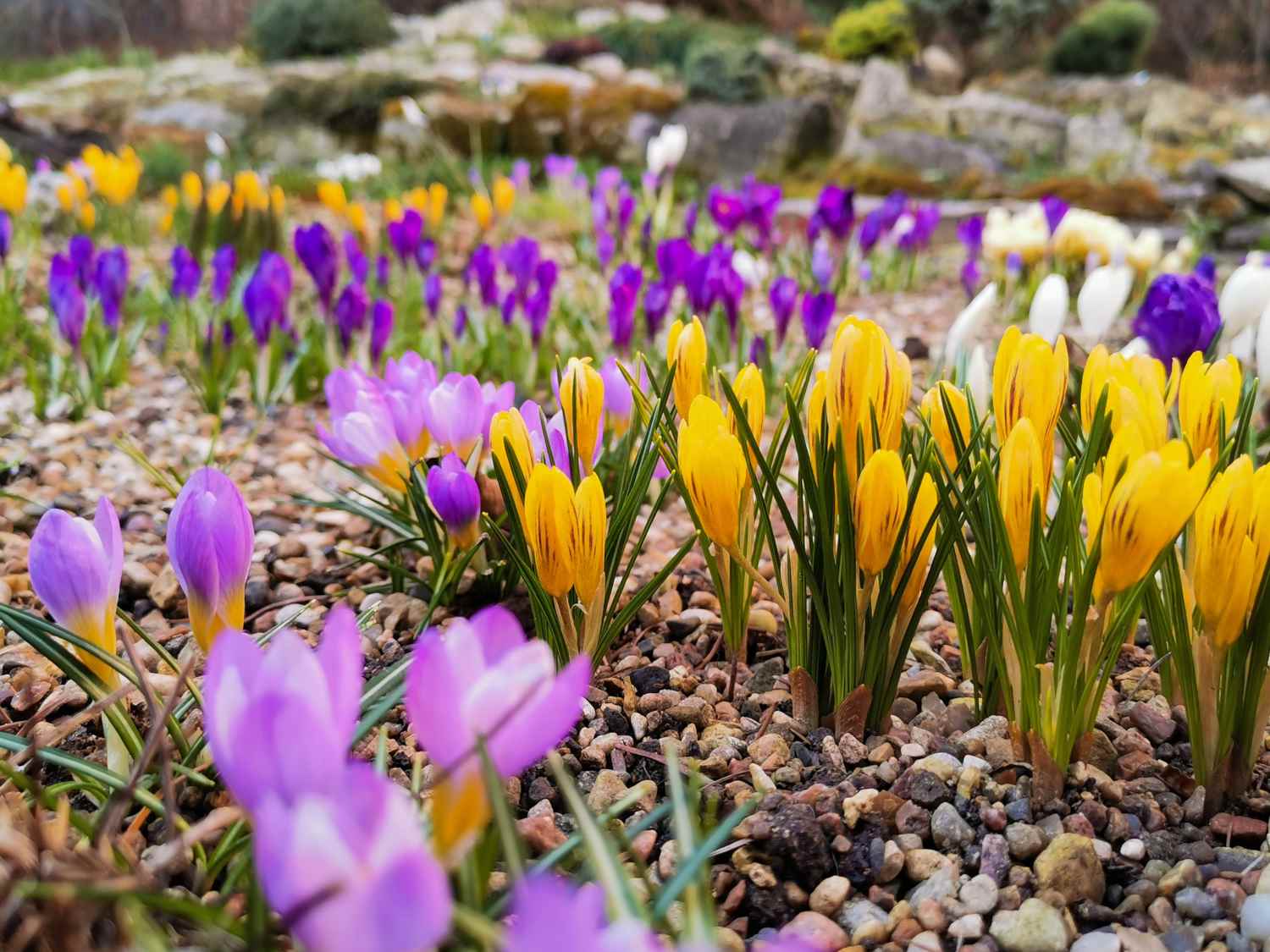
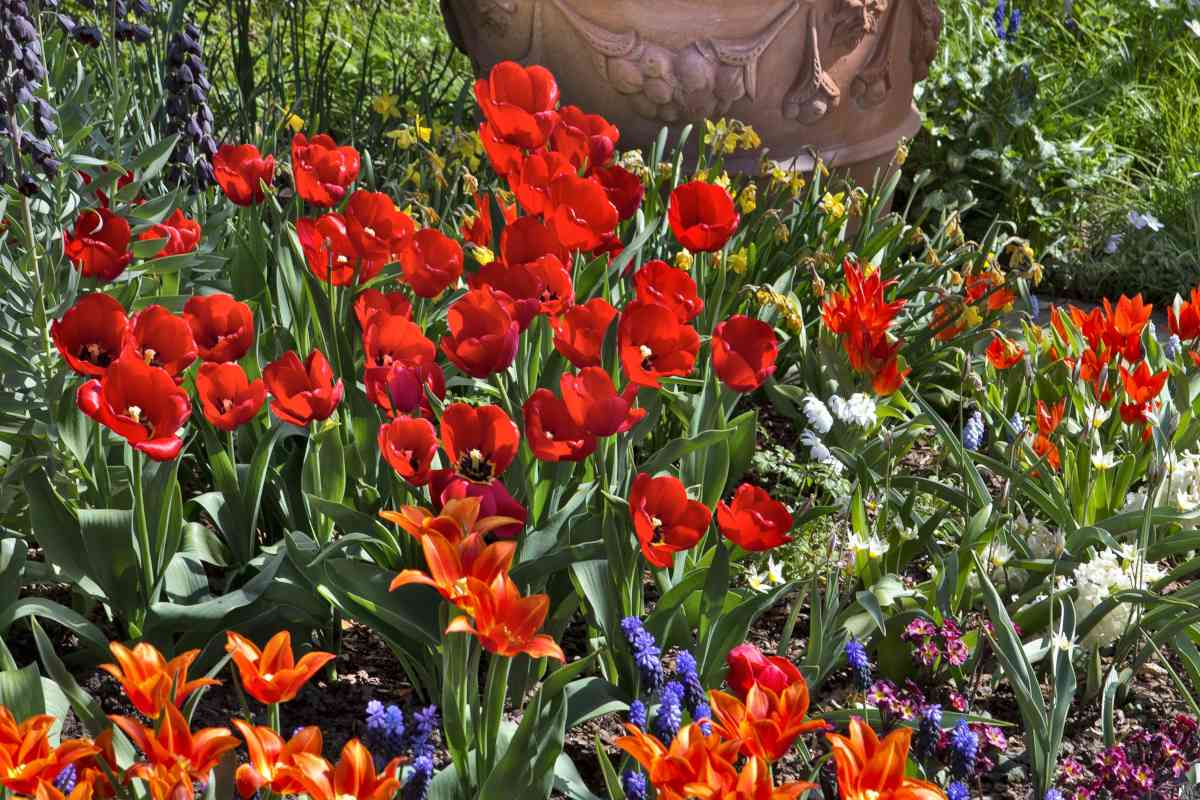
Muscari armeniacum, commonly known as grape hyacinth, is a cheerful spring bulb beloved for its tight spikes of deep blue flowers that resemble tiny grapes. It provides reliable colour to borders, rockeries and naturalised settings, often flowering when little else offers interest. This vigorous perennial is especially valued for its ability to naturalise in grass and its undemanding nature.
Growing conditions
Grape hyacinths thrive in full sun to partial shade, though flowering is most abundant in sunny positions. They are flexible about light levels and will tolerate dappled shade beneath deciduous trees, making them ideal for woodland edges and spring bulb displays.
These bulbs prefer well-drained soil rich in organic matter, though they are not fussy about pH and adapt to neutral, slightly acidic or chalky ground. Heavy clay should be improved with grit or coarse sand to prevent waterlogging during dormancy, which can cause bulb rot.
Muscari armeniacum is fully hardy and tolerant of cold winters, reliably growing across the UK and northern Europe. They require winter chilling to break dormancy, so are ideal for cold-climate gardeners and do not thrive in warm, frost-free regions.
How to plant Muscari
Plant bulbs in autumn, between September and November, when soil temperatures have dropped to around 13 °C. This timing allows roots to establish before winter, ensuring strong spring growth and reliable flowering.
Space bulbs 5–8 cm apart in groups of at least five for visual impact; closer spacing creates denser flower spikes
Plant at a depth of 7–10 cm (three times the bulb height), pressing firmly into the soil
Enrich planting holes with well-rotted compost or bonemeal to encourage establishment
Water gently after planting to settle soil around bulbs, then allow autumn and winter moisture to do the rest
Divide congested clumps every three to four years in late summer, separating small bulblets and replanting immediately
Plant in groups of at least five for impact
Which grape hyacinth to choose
The species itself is the workhorse for naturalising, but a handful of cultivars and one close relative offer different colours, heights and uses. Compare them before you order bulbs for autumn planting.
Which grape hyacinth to choose
Variety
Flower colour
Form or height
Best use
Muscari armeniacum (species)
Deep blue
Tight grape-like spikes, 15–20 cm
Borders, rockeries and naturalising in grass
‘Blue Spike’
Rich blue
Fully double, dense pompom-like blooms
Cutting and long-lasting display
‘Valerie Finnis’
Pale blue with a darker blue eye
More delicate and refined than the species
Naturalistic planting
‘Sapphire’
Deep cobalt-blue
Compact, just 10 cm
Small spaces and alpine troughs
Muscari latifolium
Dark purple lower florets, pale blue upper ones
Slightly taller, 20 cm
Striking bicolour effect in a border
Whichever you choose, the planting depth, spacing and care that follow are the same.
Care through the seasons
Spring: Once shoots emerge, feed with a balanced, low-nitrogen fertiliser or a granular rose food to support flowering. Remove any dead leaves from previous year and allow flowers to develop fully before deadheading — leave some spent flower spikes on the plant to set seed for natural increase. Water during dry spells in late April and May.
Summer: After flowering, allow foliage to yellow and die back naturally; this replenishes the bulb for next year’s blooms, so resist the urge to tidy prematurely. Once leaves have turned brown, usually by late June, cut back to ground level. These bulbs are drought-tolerant once dormant, but water container-grown specimens if the season is unusually dry.
Autumn: By September, plant any young bulblets that have been raised separately. Divide established clumps if they have become too dense, working carefully around the rooted bulbs and replanting immediately into freshly prepared soil. Apply a 2–3 cm mulch of well-rotted compost around plants to improve soil structure and suppress weeds.
Winter: Grape hyacinths require no protection in the UK; their bulbs rest underground and appreciate the cold spell. In severe frosts below −15 °C, a light covering of straw or bracken may offer extra insulation to newly planted young bulbs, though mature plantings are entirely self-sufficient.
Best varieties to grow
Several cultivars of Muscari armeniacum and closely related species offer variations in colour and form:
Muscari armeniacum ‘Blue Spike’ — A fully double-flowered form with dense, pompom-like blooms in rich blue; excellent for cutting and long-lasting display.
Muscari armeniacum ‘Valerie Finnis’ — Produces pale blue flowers with a darker blue eye, more delicate and refined than the species; a fine choice for naturalistic planting.
Muscari armeniacum ‘Sapphire’ — Compact cultivar reaching just 10 cm, with deep cobalt-blue flowers; ideal for small spaces and alpine troughs.
Muscari latifolium — Two-tone blooms with dark purple lower florets and pale blue upper ones, creating a striking bicolour effect; slightly taller at 20 cm.
Pests, diseases and common problems
Slugs and snails: Newly emerged shoots in spring can be grazed by slugs, causing ragged holes in foliage. Encourage ground beetles and hedgehogs, remove debris where pests shelter, or use beer traps and copper tape barriers around vulnerable plantings.
Bulb rot (Fusarium and Sclerotium species): Soft, mushy bulbs indicate fungal rot, usually caused by poor drainage or waterlogged soil. Always plant in free-draining soil, avoid planting in clay depressions, and remove affected bulbs immediately to prevent spread.
Excessive self-seeding: Grape hyacinths set copious seed and may spread beyond their intended area, particularly in lawns. Deadhead spent flowers before they set seed if spread is unwanted, though many gardeners welcome the naturalistic effect.
Poor flowering or sparse growth: Overcrowded bulbs or insufficient winter chilling can reduce flower production. Divide congested clumps every three to four years, and ensure bulbs experience at least eight weeks of cold below 10 °C during autumn and winter.