Black-eyed Susan: expert tips for growing Rudbeckia fulgida
0
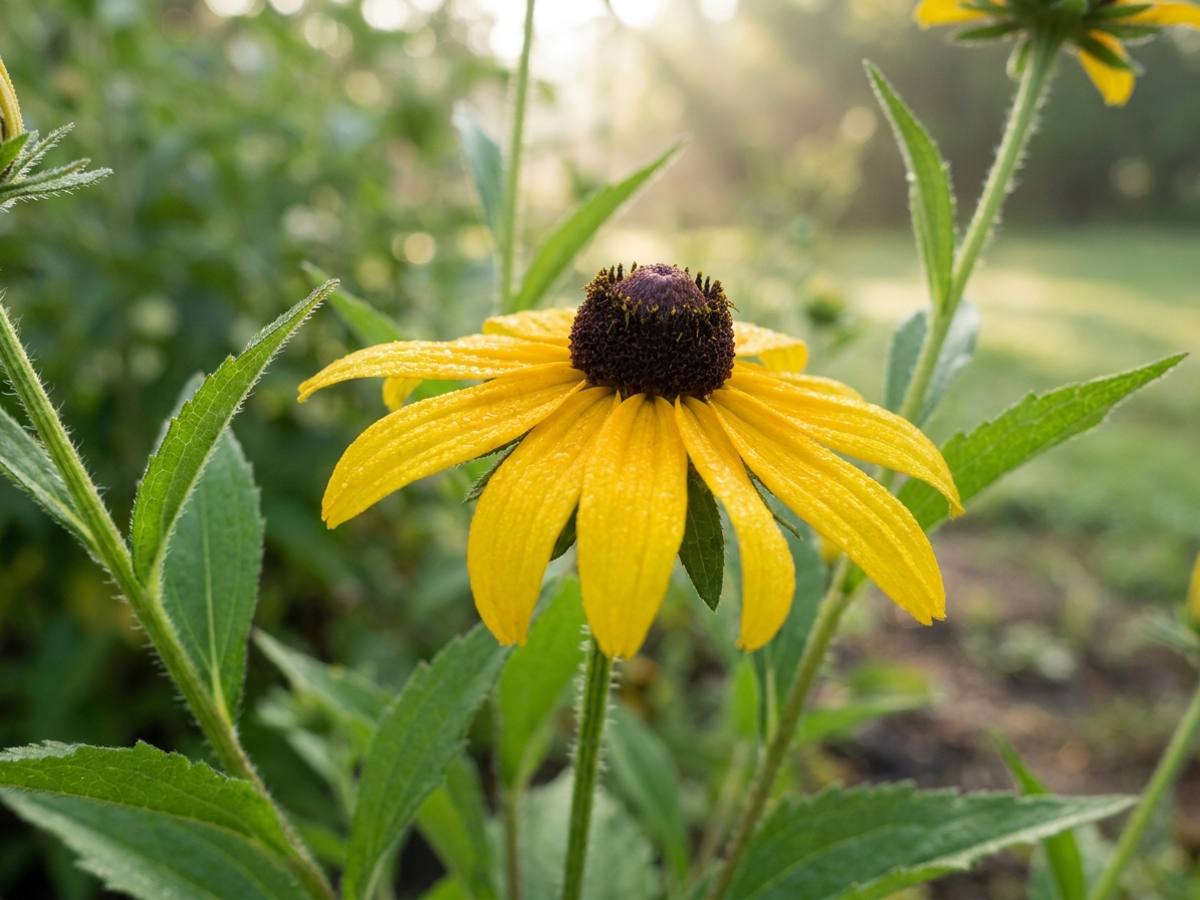
Rudbeckia fulgida is one of the most dependable late-summer perennials, throwing out waves of golden-yellow daisies with dark chocolate cones from midsummer until the first frosts. It forms neat, spreading clumps of dark green foliage that hold themselves upright without staking, making it invaluable in prairie-style borders and pollinator plantings. Unlike its short-lived cousin Rudbeckia hirta, this species is a genuinely long-lived perennial that thickens up year after year.
Growing conditions
Give Rudbeckia fulgida the sunniest spot you can spare — at least six hours of direct sun daily. In too much shade the stems stretch, lean and flower sparsely, and mildew becomes far more likely. A little afternoon shade is acceptable in hot Mediterranean or continental summers.
Soil matters more than most gardeners expect. This is a plant of damp North American meadows, so it wants soil that stays reliably moist through summer yet never waterlogs in winter. Heavy clay improved with garden compost suits it perfectly, as does chalk; pH is unimportant anywhere between 5.5 and 7.5. Thin, sandy soils that bake dry are the one situation where it genuinely struggles.
Hardiness is excellent — established clumps shrug off −20 °C without protection, and the species is grown successfully from Scotland to southern Sweden. In wet maritime winters, sharpen drainage with grit rather than worrying about cold.
How to plant Rudbeckia
Spring is the ideal planting season, from March to May, giving roots a full growing season to establish before winter. Early autumn planting also works well in mild regions, provided the soil is still warm.
Spacing: set plants 45–60 cm apart — close enough to knit into a solid drift, open enough for the air movement that deters mildew.
Depth: plant so the crown sits exactly level with the surrounding soil; burying it invites rot in wet winters.
Soil preparation: fork a bucketful of well-rotted compost or leaf mould into each planting hole to hold summer moisture.
Watering in: soak thoroughly after planting, then water weekly for the first two months until new growth appears.
Propagation: divide established clumps every three to four years in spring, or sow seed at 18–21 °C in early spring for flowers the following year.
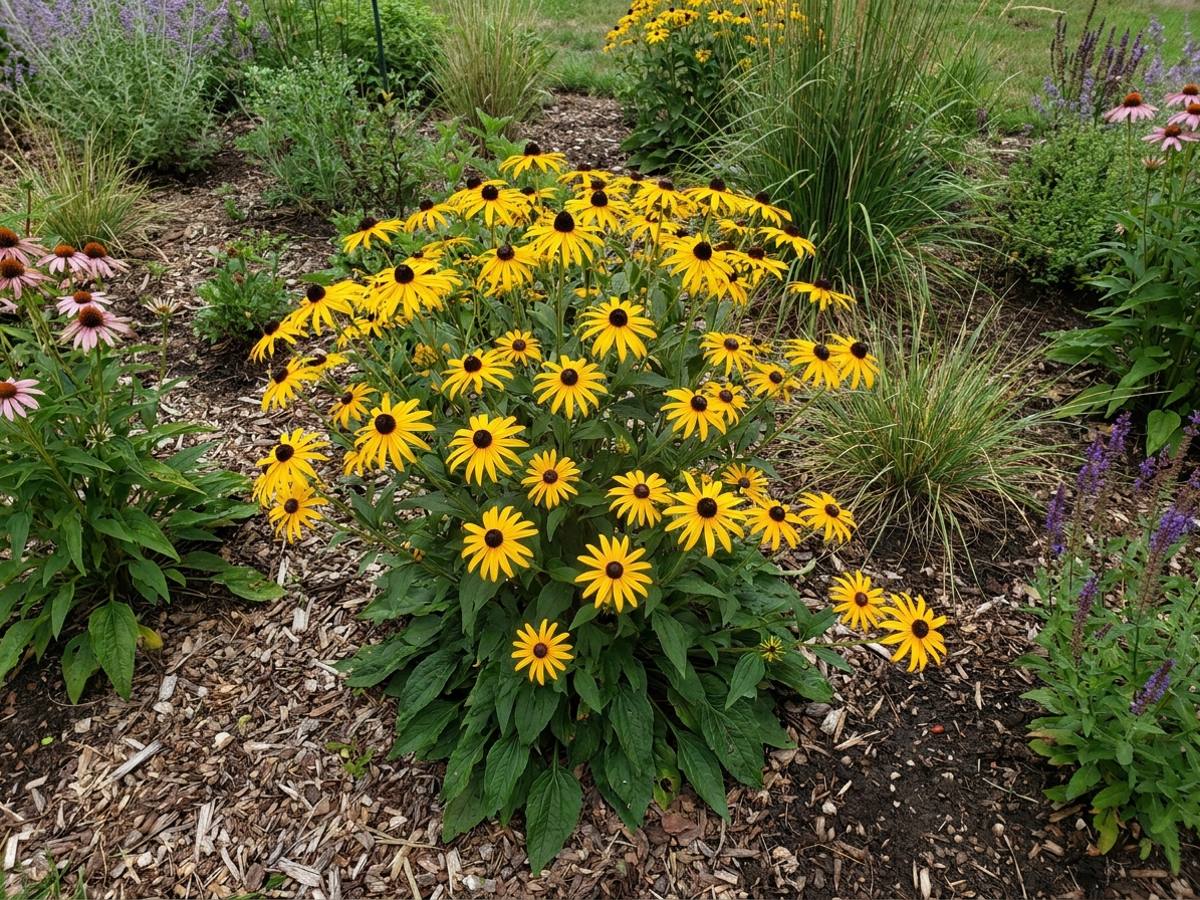
Rudbeckia fulgida growing in a naturalistic garden border
Care through the seasons
Spring: New shoots push through from mid-April and are a magnet for slugs, so protect them early. Scatter a light dressing of general-purpose fertiliser or spread 5 cm of compost mulch around — not over — the emerging crowns. This is also the moment to lift, split and replant congested clumps.
Summer: Water deeply once a week during dry spells; this species wilts and drops its lower leaves faster than most perennials when parched. Deadhead regularly through July and August to keep new buds coming, and cut a few stems for the vase — they last a good week in water. Clumps spread by short rhizomes, so slice away outward-creeping growth with a spade if it encroaches on neighbours.
Autumn: Flowering continues until the frosts, after which you can either cut stems to 10 cm or leave the seedheads standing. Left in place, the black cones feed goldfinches and look sculptural under frost. Autumn is the second-best window for division, ideally completed by early October so roots settle before cold weather.
Winter: The plant dies back completely to a dormant crown and needs no protection in most of Europe. On very heavy, wet soils, a thin gravel mulch around the crown helps prevent rot.
Best varieties to grow
Most garden plants sold as Rudbeckia fulgida belong to a handful of outstanding selections.
‘Goldsturm’ — the classic, correctly R. fulgida var. sullivantii ‘Goldsturm’; 60–70 cm of huge golden flowers over a very long season, and an RHS AGM holder.
var. deamii — an AGM-winning botanical variety with smaller, more numerous flowers, exceptional drought resilience and a looser, more naturalistic look.
‘Little Goldstar’ — a genuinely compact form at 35–40 cm, ideal for the front of a border or a large container.
‘Viette’s Little Suzy’ — reaches around 45 cm with slightly reflexed petals, flowering freely and needing no support whatsoever.
Pests, diseases and common problems
Powdery mildew: a white bloom on upper leaves in late summer, worst on dry, crowded or shaded plants. Improve air circulation by thinning stems, water at the base, and remove affected foliage rather than composting it.
Slugs and snails: young spring shoots can be grazed to nothing overnight. Use wildlife-safe ferric phosphate pellets, evening hand-picking or a barrier of sharp grit around each crown.
Septoria leaf spot: brown or purplish angular spots that spread from the lowest leaves upwards in humid weather. Strip and bin affected leaves, avoid overhead watering, and clear all debris in autumn to break the cycle.
🌿 Nature & Garden Newsletter
Gardening tips, recipes & seasonal advice, twice a week.