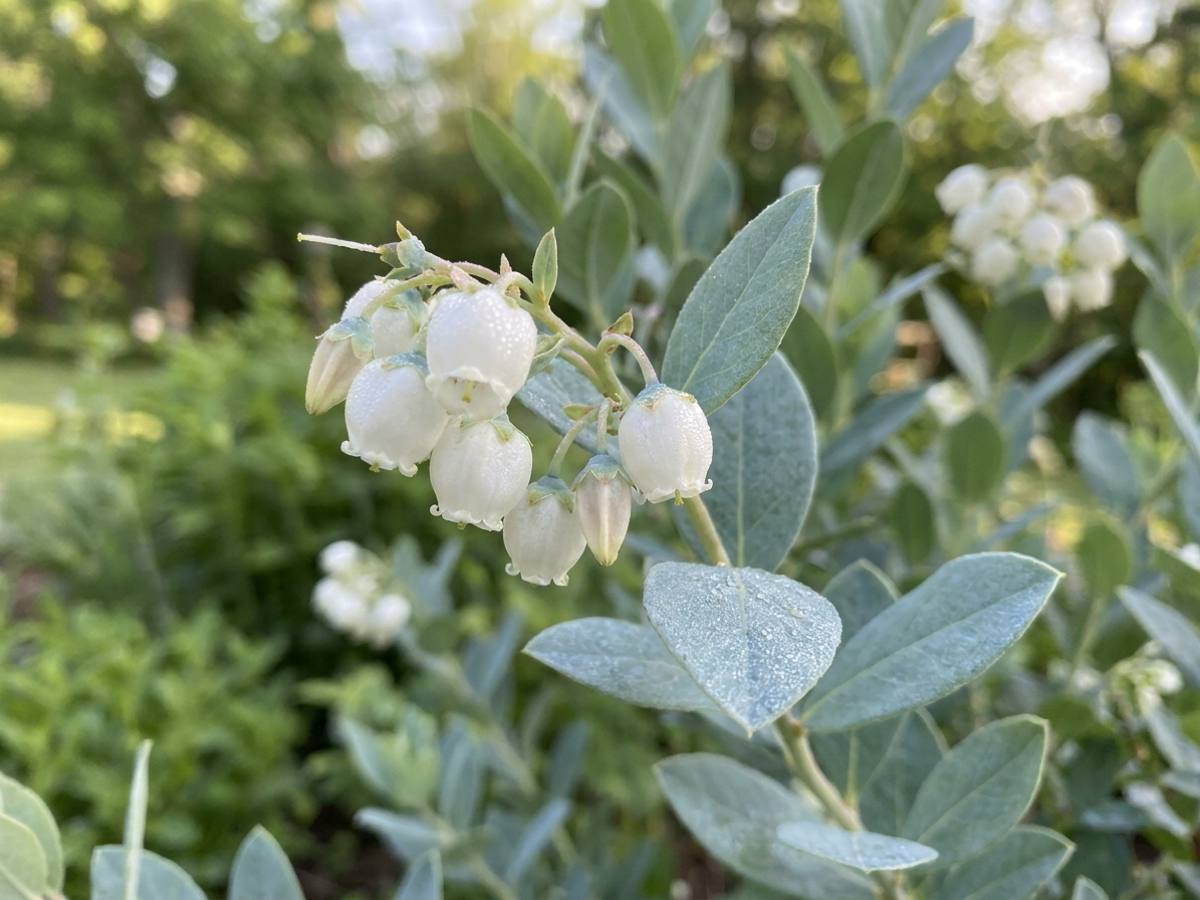
Zenobia pulverulenta is one of those quietly brilliant shrubs that deserves far wider planting: its arching stems carry leaves dusted with a chalky blue-white bloom, and in early summer they hang with waxy white bells that smell distinctly of aniseed. It is a natural partner for rhododendrons, pieris and blueberries in acid soil, bringing a cool, metallic foliage tone that few other shrubs can match. Cut a stem and you will find the flowers last remarkably well in a vase, scenting a whole room.
Growing conditions
Honeycup is happiest in dappled woodland light or a spot that receives morning sun and afternoon shade. In cooler, damper regions it will take full sun quite happily, and the extra light intensifies the silvery bloom on the leaves. Deep shade is the one exposure to avoid, as it produces lax, sparsely flowered stems.
Soil is where success or failure is decided. Zenobia is a true ericaceous plant and needs an acid soil of roughly pH 4.5–5.5, rich in leaf mould or composted bark, moisture-retentive yet never waterlogged. In its native Carolina pocosins it grows in peaty, sandy ground at the margins of bogs, which tells you it tolerates seasonal wetness far better than drought or lime.
It is reliably hardy throughout the British Isles and across much of northern Europe, shrugging off around −20 °C once established. Gardeners on chalk or heavy clay should grow it in a large container of ericaceous compost or a purpose-built raised bed rather than fighting the native soil.
How to plant Zenobia
Autumn is the ideal planting season, giving the shallow, fibrous root system a full winter and spring of moist soil in which to establish. Early spring is the next best option, particularly in cold, exposed gardens.
Spacing: allow 1–1.5 m between plants so the arching habit can develop naturally; closer spacing produces a thicket that hides the pendent flowers.
Depth: plant so the top of the rootball sits level with, or barely 1 cm below, the surrounding soil — deep planting suffocates the surface roots.
Soil preparation: fork a generous barrowload of leaf mould, composted bracken or ericaceous compost into the planting area; never add mushroom compost, lime or fresh manure.
Watering in: soak the rootball in a bucket beforehand until bubbles stop rising, then water in with 10 litres of rainwater rather than hard tap water.
Propagation: take semi-ripe cuttings in July or August with a heel, root them in a 50:50 mix of ericaceous compost and perlite under a propagator lid, or simply layer a low stem into the ground in autumn.
Zenobia pulverulenta growing in a naturalistic garden border
Care through the seasons
Spring: Feed in April with a slow-release ericaceous fertiliser or a mulch of pine needles and leaf mould, keeping it clear of the stems. New shoots emerge with the strongest blue bloom of the year, so avoid disturbing the soil around the base. This is also the moment to check that the mulch layer is topped up to 5 cm.
Summer: Water thoroughly during dry spells, ideally with stored rainwater, as prolonged drought causes bud drop and leaf scorch. Once flowering finishes in July, shorten any overlong or wayward stems to shape the plant — this is the only pruning it truly needs. Zenobia suckers gently rather than running, so spread is rarely a nuisance.
Autumn: Resist cutting the shrub back; instead, enjoy the plum and bronze autumn tints on the older leaves. Plant new specimens now, and renew the organic mulch after the first frosts to insulate the surface roots. Layered stems taken this season can be severed the following autumn.
Winter: In mild gardens a proportion of the foliage is retained, giving a semi-evergreen effect; in cold ones the shrub drops most of its leaves. No protection is needed beyond mulch, though container-grown plants benefit from having the pot wrapped in hessian.
Best varieties to grow
Selections differ mainly in how intense the leaf bloom is and in flower size, and the species itself holds an RHS Award of Garden Merit.
Zenobia pulverulenta (species) — the benchmark form, with strongly glaucous foliage and aniseed-scented white bells; AGM.
Z. pulverulenta ‘Blue Sky’ — a compact selection at around 1.2 m with unusually silver-blue new growth.
Z. pulverulenta ‘Raspberry Ripple’ — flowers flushed and streaked with soft pink, a charming contrast against the pale leaves.
Z. pulverulenta var. nuda — the green-leaved botanical variety, lacking the waxy bloom but flowering just as freely.
Pests, diseases and common problems
Lime-induced chlorosis: yellowing leaves with green veins signal alkaline soil or hard tap water. Switch to rainwater, mulch with pine needles and apply chelated iron as a stopgap while improving soil acidity.
Vine weevil: notched leaf margins and sudden collapse of container plants point to grubs eating the roots. Drench pots with parasitic nematodes (Steinernema kraussei) in late summer when soil is above 5 °C.
Phytophthora root rot: wilting despite moist soil and dark, dead roots indicate waterlogging. Improve drainage by planting on a slight mound, and never let containers stand in saucers of water.