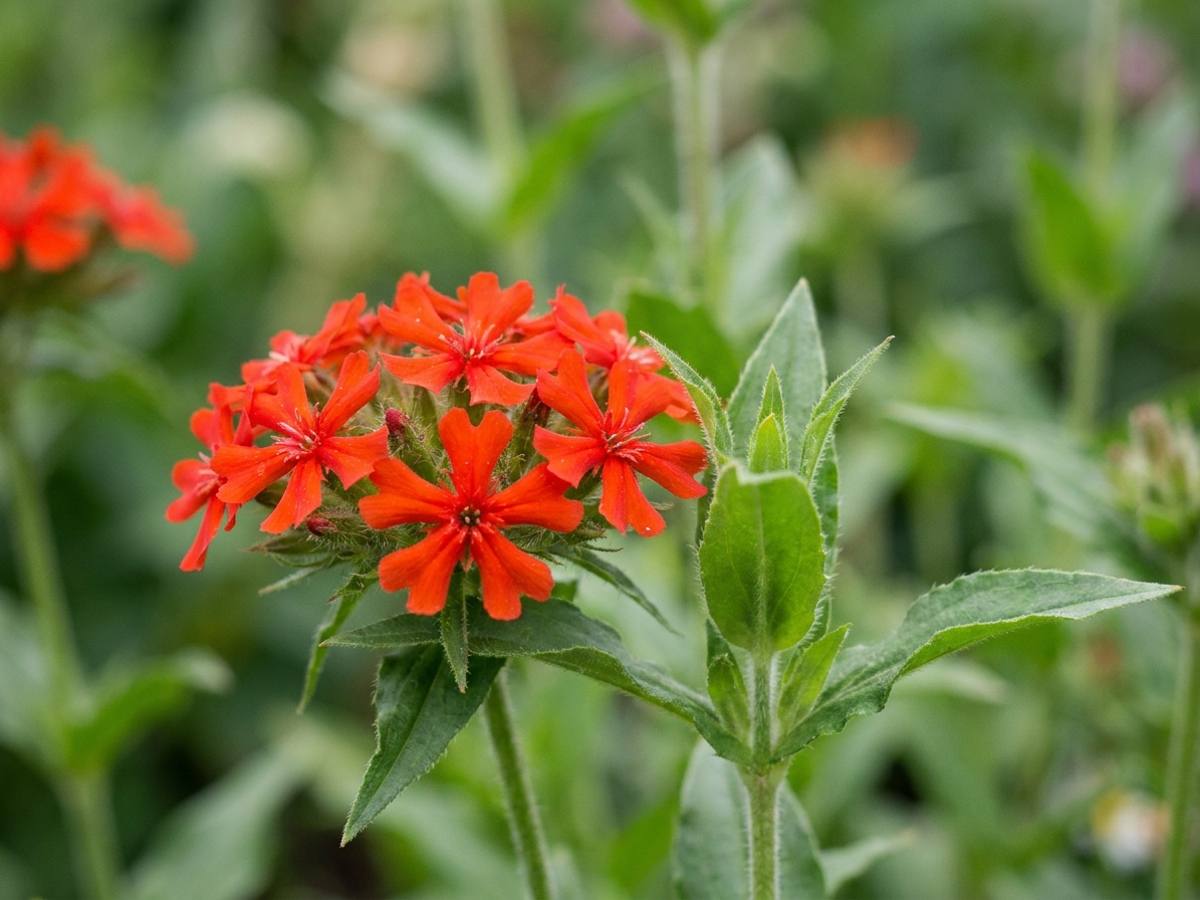
Few perennials save their best performance for so late in the year as Zauschneria californica. From midsummer until the first frosts it throws out slender, scarlet trumpet flowers above grey-green, softly downy foliage — an electric shock of colour just as the rest of the border begins to fade. In its native California it is pollinated by hummingbirds, which explains the long, tubular blooms and the plant’s alternative name of hummingbird trumpet.
| Latin name | Zauschneria californica |
|---|---|
| Common names | California fuchsia, hummingbird trumpet, hummingbird flower (also sold as Epilobium canum) |
| Family | Onagraceae (willowherb family) |
| Type | Herbaceous to sub-shrubby perennial, spreading by rhizomes |
| Height | 30–60 cm |
| Spread | 60–90 cm, more in time |
| Flowering | Midsummer to mid-autumn, often into late autumn in mild areas |
| Hardiness | Hardy to about −12 °C in dry soil (RHS H4; USDA zones 6–10) |
| Sun | Full sun — the hotter the better |
| Soil | Sharply drained, poor to moderately fertile, gritty or sandy; tolerates chalk |
Give Zauschneria the sunniest, most baked position you have. It flowers freely only where it receives at least six hours of direct sun, and in shade the stems flop and the display is thin. A south- or west-facing spot at the foot of a warm wall is close to ideal, as the reflected heat both ripens the growth and keeps winter damp away.
Drainage matters far more than fertility. Light, sandy, stony or chalky soils suit it perfectly, and it is genuinely happy in the poor rubble of a gravel garden or the crevices of a dry-stone wall. Aim for a neutral to alkaline pH; on heavy clay, raise the planting area or add generous grit, because cold, wet soil in winter kills more plants than frost ever does.
In the UK and northern Europe it is reliably perennial in southern and coastal gardens, and more of a gamble in cold, wet inland districts. Gardeners in Mediterranean and Californian climates can treat it as an unkillable, drought-proof groundcover.
Before you plant, match the spot to the plant. The table below sets the main garden situations and climates described here side by side, with what each one asks of you.
| Site or climate | How it performs | What it needs there |
|---|---|---|
| Foot of a south- or west-facing wall | Close to ideal — reflected heat ripens the growth and keeps winter damp away | At least six hours of direct sun |
| Gravel garden or dry-stone wall crevice | Genuinely happy in poor rubble and thin stony soil | Sharp drainage; no rich feeding |
| Heavy clay | Risky — cold, wet winter soil kills more plants than frost ever does | Raise the planting area or fork in generous grit |
| Southern and coastal gardens in the UK and northern Europe | Reliably perennial; a gamble in cold, wet inland districts | The sunniest, most baked position you have |
| Mediterranean and Californian climates | An unkillable, drought-proof groundcover | Virtually no irrigation once established |
Whatever the situation, drainage settles the outcome: this is a plant that dies of wet feet rather than of cold.
Spring is by far the best planting season, from April to early June, once the soil has warmed. This gives the roots a full growing season to establish before facing their first winter — autumn planting often ends in rot.
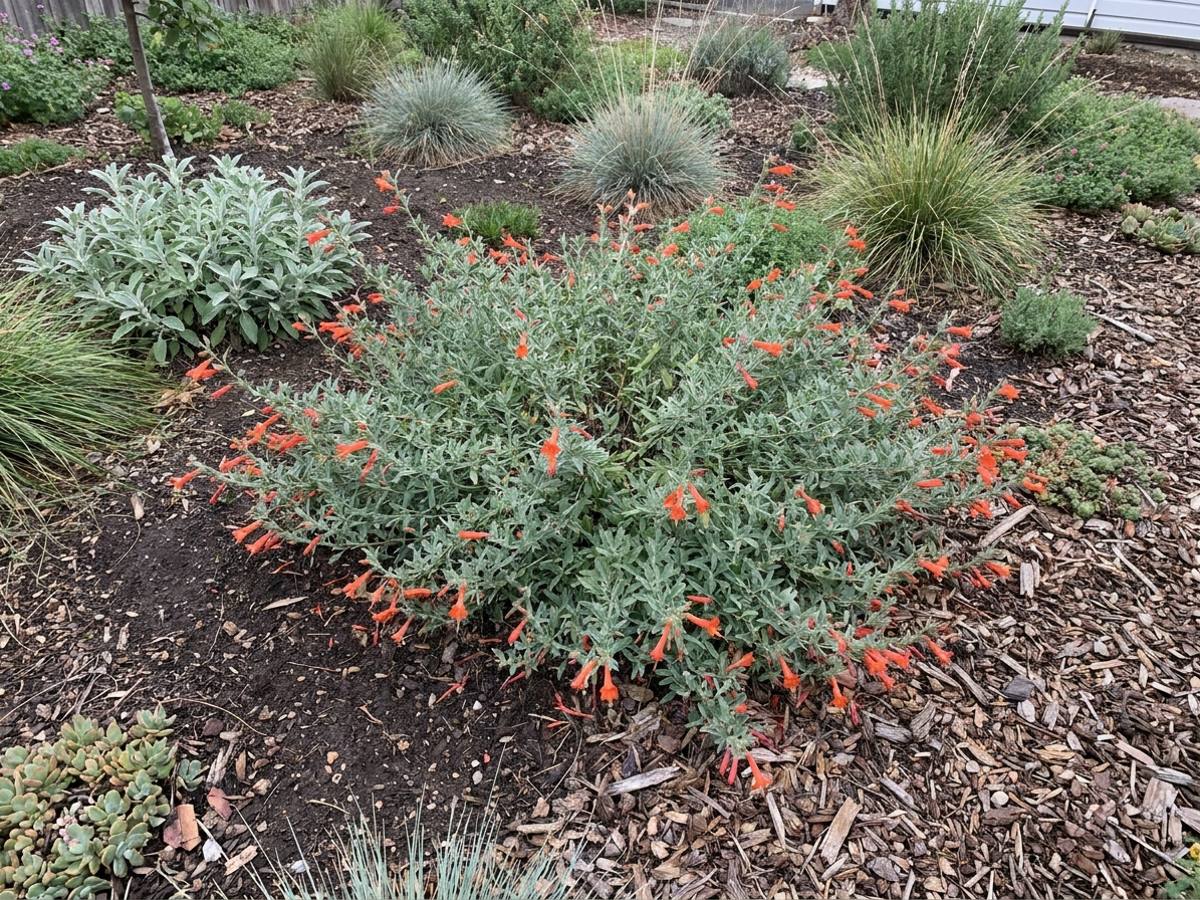
Spring: Zauschneria breaks dormancy late, often not showing above ground until May, so mark its position to avoid hoeing it out. Cut any remaining old stems back to 5 cm as new shoots appear. Do not feed with nitrogen-rich fertiliser — lush growth means fewer flowers and floppier stems.
Summer: Established plants need virtually no watering; a deep soak once a month in prolonged drought is ample. Pinch out the growing tips in early June to produce bushier, self-supporting plants and a heavier crop of blooms. Keep an eye on the spread and slice off any runners straying into neighbouring plants with a spade.
Autumn: Resist the urge to tidy — leave the top growth intact over winter, as it shelters the crown and traps insulating air. Deadheading is unnecessary; the flowers simply keep coming until frost stops them. If you must divide, wait until spring instead.
Winter: The plant dies back to a woody base and is entirely dormant. In cold or wet gardens, tuck a 5 cm mulch of grit or gravel around the crown — never leafy compost, which holds moisture against the stems.
Most garden plants sold as Zauschneria californica are selected forms chosen for hardiness, flower size or restrained habit.