
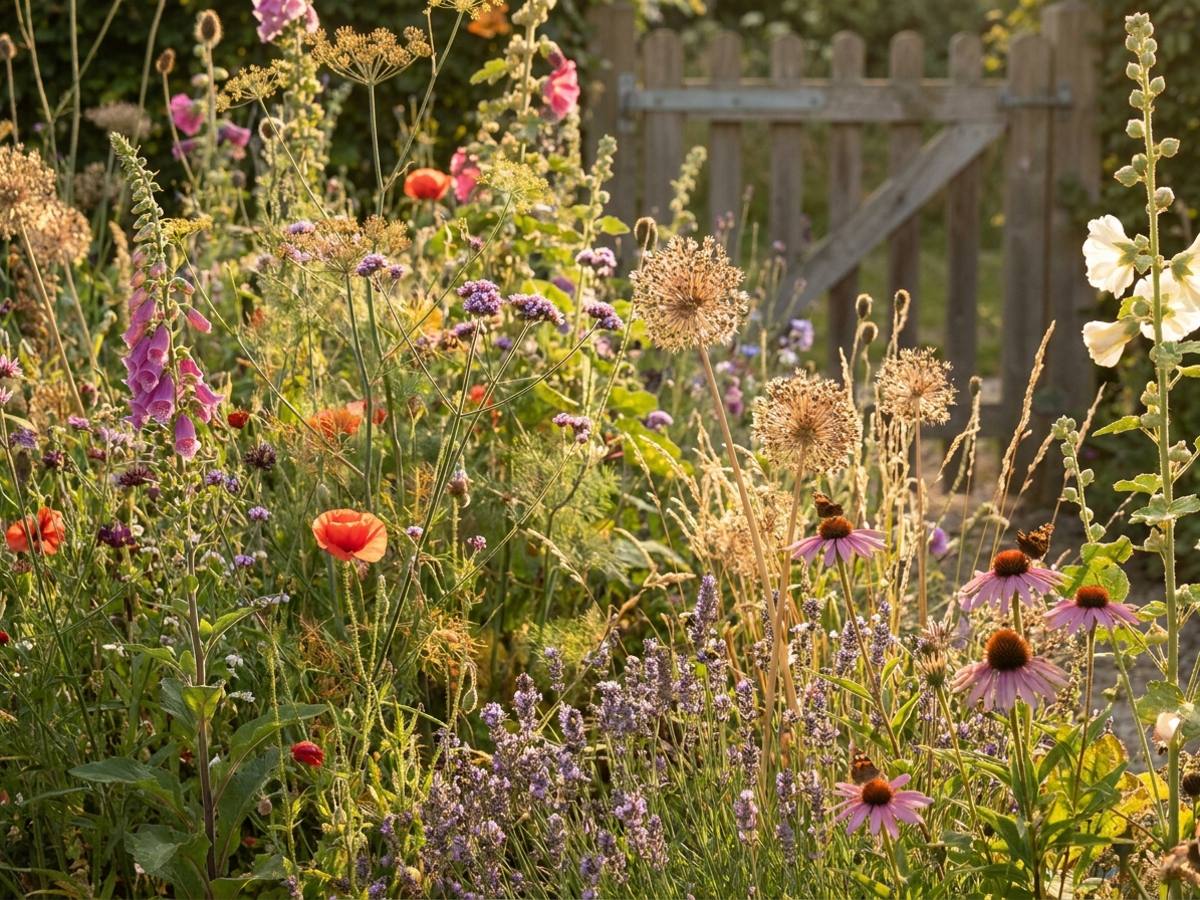
I stopped deadheading, ceased weeding, and ignored the rulebook for eight weeks. The results? Exploding insect populations, self-seeding surprises, and plants that looked more resilient than ever. Here’s what hands-off gardening taught me about summer borders.
Right now, across UK and US gardens, the summer maintenance machine is in overdrive. Gardeners are scissor-happy, dead-heading daily, pulling every unwanted seedling, and spraying at the first sign of aphids. But whilst we fuss, something else is happening: flowers are setting seed, shelter is building, and insects are finding food sources we’ve meticulously removed.
We’ve been conditioned to believe that pristine borders equal healthy gardens. The reality is messier. When we remove spent flowers, we’re eliminating seed heads that feed goldfinches and other birds through late summer and into autumn. When we weed religiously, we’re clearing the very plants that provide pollen and nectar for pollinators during the lean weeks of August.
Research from pollinator conservation groups shows that gardens managed with zero-tolerance deadheading produce 30 per cent fewer insect visits by late summer compared to gardens where seedheads are left intact. My eight-week experiment, running from early June through late July, tested whether abandoning this orthodoxy would actually harm or help.
Here’s what stepping back actually involved:
By week six, the borders looked wilder. By week eight, they looked purposeful. Bees visited the coneflower seedheads in waves. A single cosmos plant had volunteered in a gap and was blooming prolifically. Fennel that I’d forgotten about had become a ferny backdrop for salvias. I spotted lacewings, hoverflies, and more butterflies than I’d seen all summer.
The plants themselves responded. Perennials didn’t exhaust themselves chasing re-bloom cycles. They stood taller, rooted deeper, and handled the heat waves of late July with visible resilience. Yes, some seedlings were spindly and some self-sown plants looked chaotic. But the garden fed something far larger than my aesthetic preferences.
This isn’t a call to abandon all maintenance. But it is permission to stop in July, step back, and ask whether the weed you’re pulling or the flower you’re deadheading is truly the problem.


