Mowing season is in full swing, and most gardeners are chained to their machines every week. But what if you stopped? I abandoned my lawnmower for eight weeks during peak summer growth to test whether a wild lawn could slash water use, carbon emissions, and labour while actually supporting wildlife. The results were surprising, beautiful, and entirely achievable for any gardener tired of the weekly grind.
Right now, across the UK and US, gardens are at their peak growth cycle. Grass is surging, temperatures are climbing, and heatwaves are becoming routine. The traditional weekly mow consumes fuel, takes hours of labour, and strips the lawn of the wildflowers and insects that thrive in unmown sward during summer months.
This is the perfect season to question whether the bowling-green aesthetic is worth the cost, both to your time and to the environment.
A typical petrol mower emits about 11 kg of CO2 per year, equivalent to driving a car for roughly 50 miles. Add water requirements for maintaining that dense monoculture, plus the energy cost of regular cutting, and a standard suburban lawn becomes a genuine environmental burden. But there is another perspective: what if your lawn became a meadow instead?
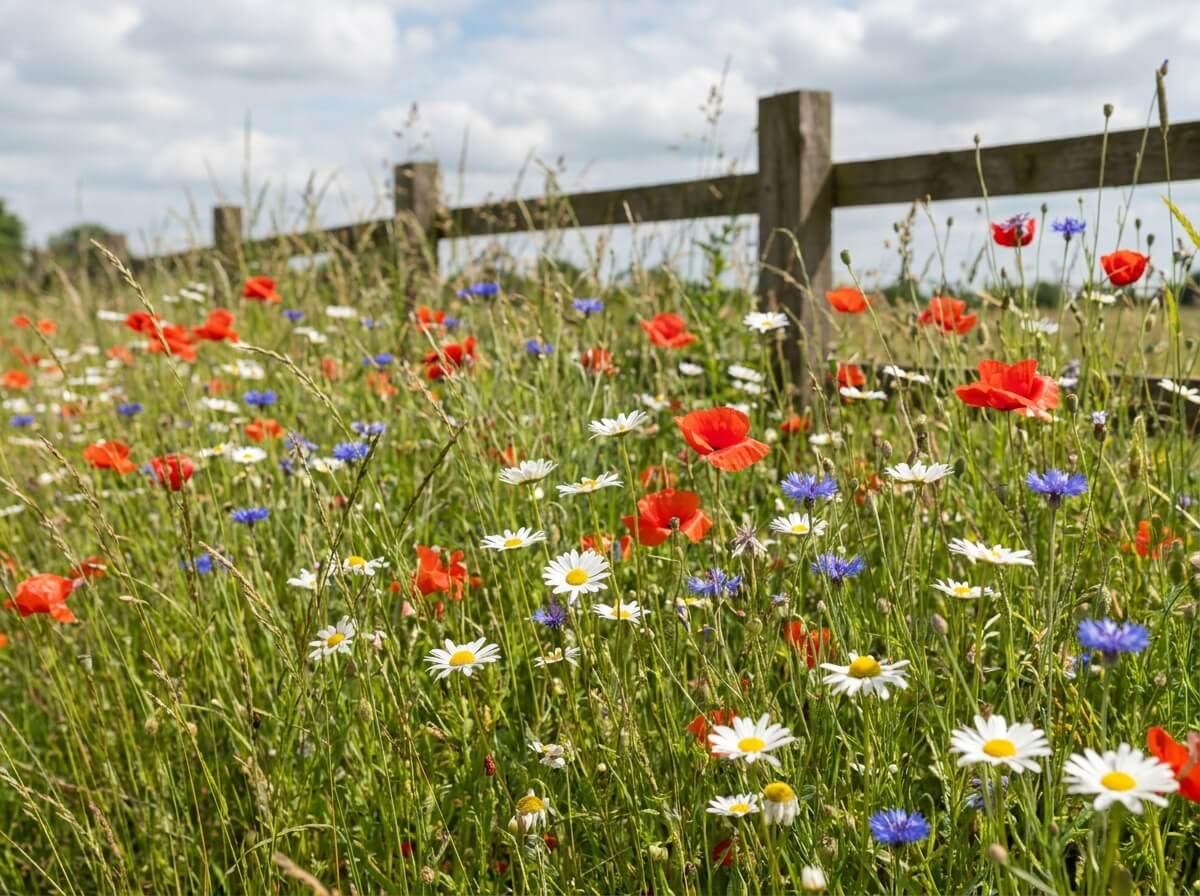
When I stopped mowing in early June, I expected chaos. Instead, by week four, white clover, bird’s-foot trefoil, and self-heal had emerged through the longer grass. Bumblebees arrived by late June. Butterflies followed. The lawn became a functioning ecosystem rather than a sterile green desert. Visual appeal, counterintuitively, improved. The meadow-like quality felt intentional and naturalistic, not neglected.
If you want to trial an unmown approach without abandoning all structure, here are practical steps to begin now:
Watch for pollinator activity over the next four weeks. Bumblebees and hoverflies are reliable indicators that your experiment is working. You may also notice a shift in how you perceive your garden. The slightly unkempt appearance often feels liberating rather than sloppy once you understand what is happening ecologically. By early autumn, you will have measurable data on time saved, water conserved, and wildlife gained. That is when the real decision comes: do you return to the mower, or stay wild?