Growing Fragrant Honeysuckle: Care Tips and Planting Guide
·
0
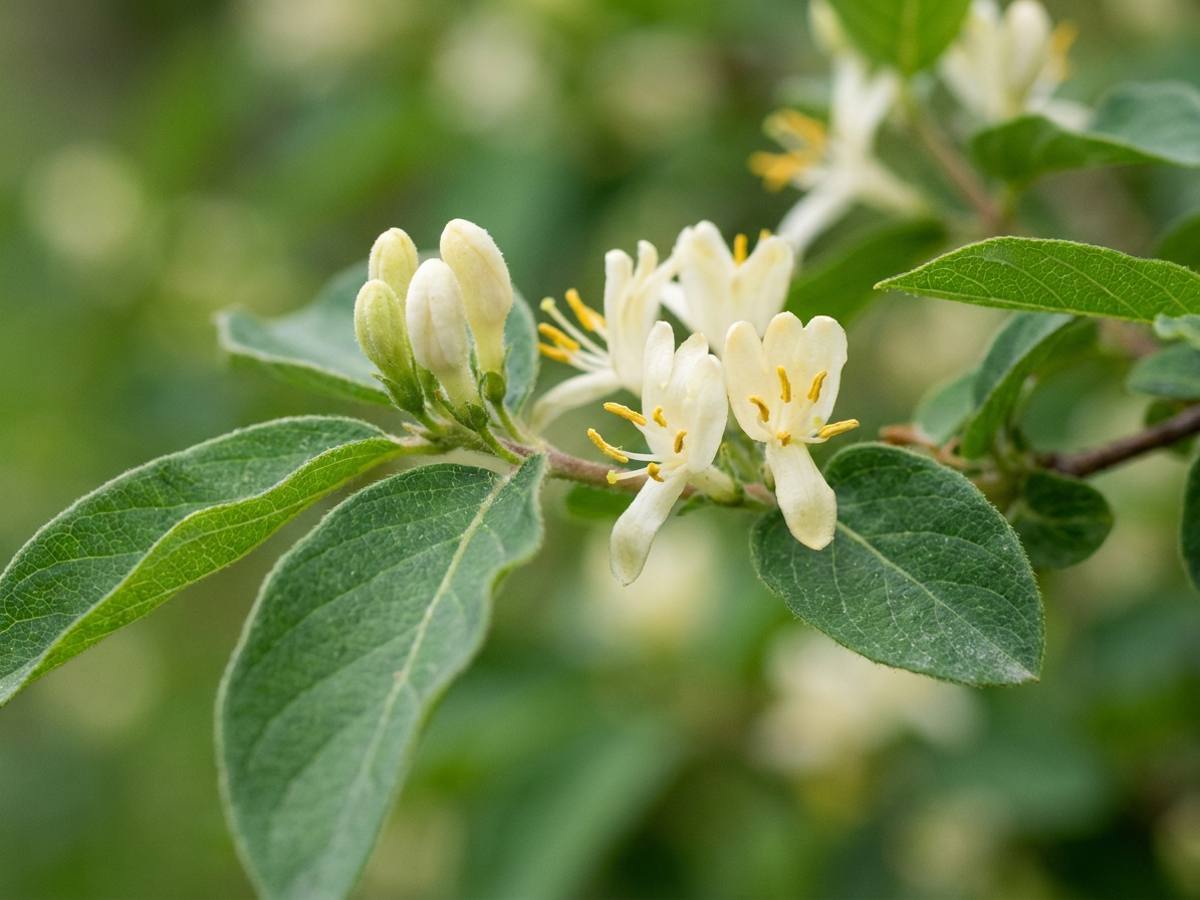
Few shrubs earn their keep in the dead of winter quite like Lonicera fragrantissima, whose bare, arching twigs open small creamy-white flowers when little else stirs. The scent is the point: a rich, lemony perfume that carries several metres on still, frosty air. Plant it beside a path, gate or doorway and it will greet you every time you pass between December and March.
Growing conditions
Winter honeysuckle flowers most freely in full sun, but it is remarkably tolerant of partial shade and will still perform beneath the light canopy of deciduous trees. In deep shade the growth becomes lax and flowering thins noticeably. A position sheltered from harsh easterly winds helps the delicate blooms last longer and keeps the fragrance hanging in the air.
Soil is rarely a limiting factor. This shrub thrives on chalk, clay, loam and sand alike, provided drainage is reasonable and the ground does not sit waterlogged in winter. It is happy anywhere between mildly acidic and distinctly alkaline, roughly pH 5.5 to 8.0, which makes it a genuine problem-solver on thin chalky soils.
It is fully hardy throughout the British Isles and across much of northern Europe, shrugging off temperatures down to about −20 °C. In very mild coastal gardens it may hold much of its foliage through winter; in colder inland areas it drops its leaves cleanly, which actually shows off the flowers better.
How to plant Lonicera
Autumn is the ideal planting season, giving roots several months to establish before the first dry spell. Container-grown plants can go in at any time the ground is neither frozen nor baked hard, though spring plantings will need diligent watering.
Spacing: Allow 2–2.5 m between plants, or 1.5 m if you want an informal flowering hedge to knit together within three or four years.
Depth: Set the top of the rootball flush with the surrounding soil — burying the stem base invites rot and encourages suckering.
Soil preparation: Fork over an area twice the width of the rootball and mix in two bucketfuls of garden compost or well-rotted manure; there is no need to dig deeply on heavy clay.
Watering in: Soak thoroughly with 10 litres of water after planting, then mulch 5–7 cm deep, keeping the mulch clear of the stems.
Propagation: Take semi-ripe cuttings in July or August, or hardwood cuttings in November; low branches also layer readily if pinned to the soil in autumn.
Lonicera fragrantissima growing in a naturalistic garden border
The winter honeysuckle year, season by season
Everything this shrub asks for falls into four short windows, and the pruning window is the one that decides whether you get flowers. Use this as a quick calendar before reading the detail below.
The winter honeysuckle year, season by season
Season
Main job
Watch for
Early spring, straight after flowering
Prune, taking one stem in three out from the base, then feed or mulch around the drip line
Aphids clustering on the soft new shoots
Summer
Water young shrubs weekly in drought; tidy wayward shoots by midsummer at the latest
Powdery mildew in hot, dry summers, worst against walls
Autumn
Plant, move or layer, take hardwood cuttings and top up the mulch
Late pruning, which removes next winter’s flower buds
Midwinter
Nothing but cutting a few twigs for a vase indoors
No winter protection needed, even in frost and snow
Keep the secateurs away from the plant outside that early spring window and the scent looks after itself.
Care through the seasons
Spring: Prune immediately after flowering finishes, usually in late March, removing one stem in three from the base to keep the shrub open and youthful. Apply a general-purpose organic fertiliser or a mulch of well-rotted manure around the drip line. Watch for aphids clustering on the soft new shoots.
Summer: Established plants are notably drought-tolerant, but water young shrubs weekly through prolonged dry weather. Trim back any wayward shoots by midsummer at the latest, since next winter’s flower buds form on the current season’s wood. Remove suckers or rooted layers you do not want with a sharp spade.
Autumn: This is the season for planting, moving and taking hardwood cuttings. Rake up fallen leaves if powdery mildew or leaf blight was troublesome, and top up the mulch to conserve moisture and suppress weeds. Avoid any late pruning — you would be cutting off the flower buds.
Winter: No protection is needed; the shrub simply gets on with flowering through frost and snow. Cut a few twigs for a vase indoors, where the buds open quickly and perfume a whole room.
Best varieties to grow
The straight species is excellent, but several closely related hybrids extend the season and improve the display.
Lonicera × purpusii ‘Winter Beauty’ — a hybrid of L. fragrantissima and L. standishii with larger, more freely borne flowers and an RHS Award of Garden Merit.
Lonicera × purpusii ‘Spring Romance’ — slightly later flowering, with a compact habit that suits smaller gardens at around 1.8 m.
Lonicera standishii — bristly-stemmed and more reliably semi-evergreen, opening its blooms a fortnight or so earlier in mild winters.
Lonicera standishii ‘Budapest’ — a robust, generous-flowering selection with unusually strong scent and good autumn leaf colour.
Pests, diseases and common problems
Aphids: Dense colonies distort spring shoots and leave sticky honeydew followed by sooty mould. Blast them off with a jet of water and encourage ladybirds, hoverflies and blue tits rather than reaching for sprays.
Powdery mildew: A white bloom on the leaves in hot, dry summers, worst on plants against walls. Improve air movement by thinning congested stems, mulch to keep roots cool and moist, and clear fallen leaves in autumn.
Honeysuckle leaf blight: Brown blotches and premature leaf fall in wet seasons, caused by Insolibasidium deformans. It rarely kills the shrub — prune out affected growth, bin or burn the debris, and avoid overhead watering.
🌿 Nature & Garden Newsletter
Gardening tips, recipes & seasonal advice, twice a week.