Growing Phlox paniculata: care, varieties and garden uses
·
0
Border phlox is one of the great mainstays of the late-summer border, producing broad, domed heads of sweetly scented flowers in shades of white, pink, magenta and lilac from July onwards. Sturdy and upright, it slots neatly between roses, salvias and ornamental grasses, and it draws butterflies and moths in remarkable numbers. Its distinctive trait is the evening perfume — heaviest at dusk, when it perfumes an entire patio or path.
Growing conditions
Border phlox flowers most generously in full sun, ideally with six hours or more of direct light. In hot, dry regions such as southern Europe, a spot with light afternoon shade keeps the colours from bleaching and reduces stress. Avoid deep shade, which produces lanky stems, sparse heads and far more mildew.
Give it a deep, fertile soil that holds moisture without waterlogging — a loam enriched with garden compost is close to ideal. Thin, sandy soils dry out too fast, whilst heavy clay benefits from grit and organic matter to open the structure. Phlox is unfussy about pH but performs best between 6.0 and 7.5, so both mildly acidic and chalky soils suit it.
It is genuinely tough, shrugging off hard winters down to around −20 °C, and it needs a cold dormancy to flower well. Good air circulation matters more than shelter: an open, breezy position dramatically reduces powdery mildew.
How to plant Phlox
Plant in autumn (September to October) or in spring (March to May), when the soil is workable and warming. Autumn planting lets roots establish before the summer heat, whilst spring planting suits cold, wet gardens where winter losses are a risk.
Space plants 45–60 cm apart — generous gaps allow air to move between stems and are the single best defence against mildew.
Set the crown level with the soil surface; burying it deeply encourages rot at the base.
Fork a bucketful of well-rotted compost or leaf mould into each planting hole to improve moisture retention and fertility.
Water in thoroughly with 5–10 litres per plant, then keep the soil evenly damp for the first six weeks.
Divide established clumps every three to four years in early spring, replanting only the vigorous outer sections and discarding the woody centre.
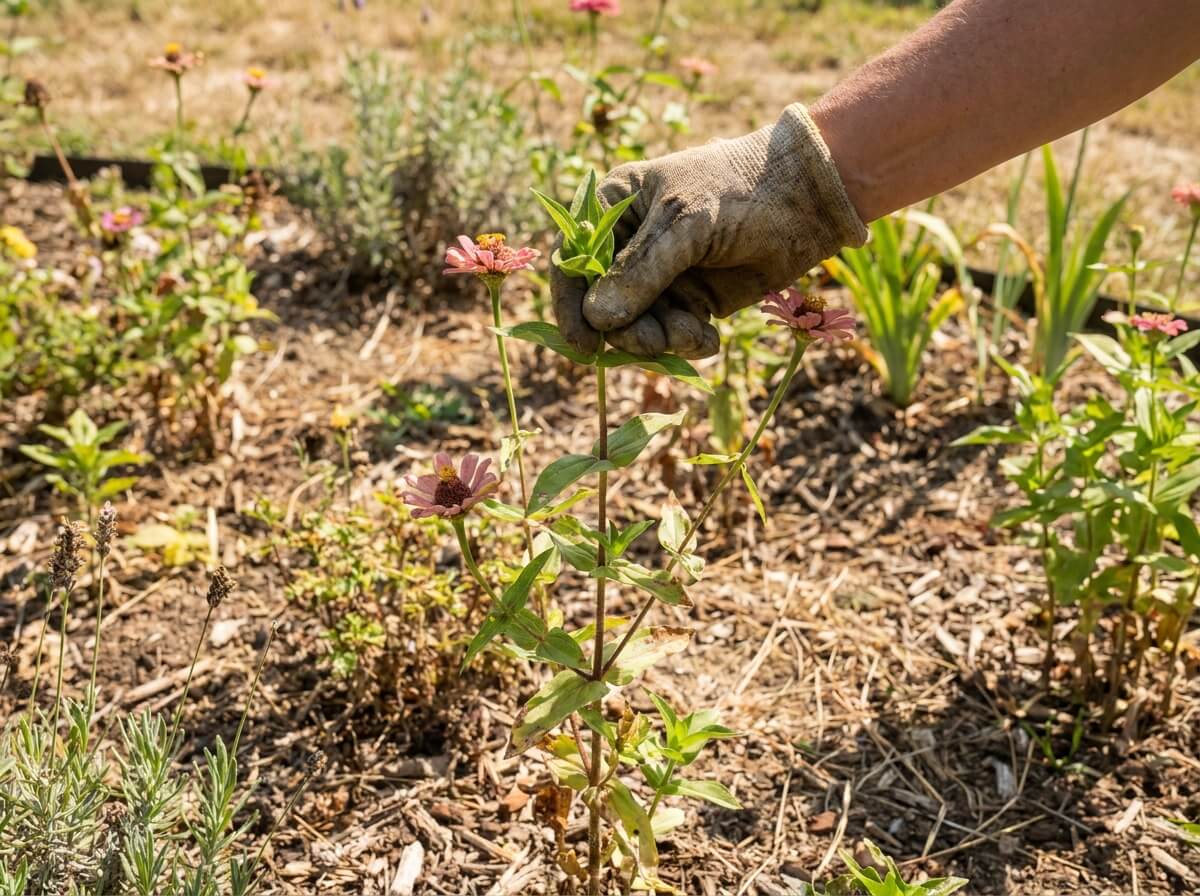
Phlox paniculata growing in a naturalistic garden border
Care through the seasons
Spring: Apply a balanced organic fertiliser or a generous mulch of compost as shoots emerge in March. When stems reach about 20 cm, thin each clump to five or six of the strongest shoots — this improves airflow and produces larger flower heads. Pinching the tips of half the stems in late May staggers flowering by a fortnight or so.
Summer: Water deeply once or twice weekly in dry spells, aiming the hose at the soil rather than the foliage. A 5 cm mulch of compost or bark keeps roots cool and conserves moisture, which is critical since drought-stressed phlox is far more prone to mildew. Deadhead spent heads promptly to encourage a lighter second flush from side shoots.
Autumn: Allow late flowers to run on, then cut stems back to about 10 cm once foliage yellows after the first frosts. Remove and bin all fallen leaves rather than composting them, as they harbour mildew spores. Autumn is also a good moment to lift and divide congested clumps in milder gardens.
Winter: Phlox dies back completely and needs no protection in most climates. In very cold or exposed gardens, a light mulch of leaf mould over the crown offers useful insulation.
Best varieties to grow
Choose mildew-resistant cultivars wherever possible — modern breeding has made a real difference.
‘Blue Paradise’ — violet-blue flowers that shift towards deep indigo at dusk, with excellent scent and good mildew resistance.
‘David’ — pure white, strongly perfumed heads on 100 cm stems; among the most mildew-resistant of all, and holder of an AGM.
‘Starfire’ — intense cherry-red flowers set against bronze-flushed young foliage, superb for hot colour schemes.
‘Bright Eyes’ — soft pink with a crimson eye, compact at around 75 cm and reliably free-flowering (AGM).
Pests, diseases and common problems
Powdery mildew: A white, dusty coating spreads over leaves from midsummer, especially on dry, crowded plants. Thin the stems in spring, water at the base, and spray weekly with diluted milk (one part milk to nine parts water) at the first signs.
Phlox eelworm (stem nematode): Causes narrow, distorted leaves and swollen, splitting stems that fail to flower. There is no cure — lift and destroy affected plants, and propagate replacements from root cuttings, which are nematode-free.
Slugs and snails: Young spring shoots can be grazed to the ground overnight. Protect emerging growth with wool pellets, crushed grit or beer traps, and clear debris where they shelter.
🌿 Nature & Garden Newsletter
Gardening tips, recipes & seasonal advice, twice a week.