Grab those secateurs and your hydrangeas might never forgive you. The single most common reason hydrangeas fail to flower is summer pruning done at the wrong time, on the wrong stems, or cut to the wrong height. The fix is straightforward once you understand how these plants actually build their blooms. And it saves you twelve months of waiting for flowers that simply will not come.
Most garden hydrangeas — the classic mopheads (Hydrangea macrophylla) and lacecaps (H. serrata) — are what botanists call “old wood bloomers.” Every flower you see this summer was initiated on stems that shot up last summer. The plant sets those buds in late July and August, then holds them dormant through winter before opening them the following year.
Cut into that old wood hard — say, down to 30cm or lower — and you pull off every bud that was already forming. The plant looks completely healthy.
Green, leafy, apparently fine. But come next June, nothing.
Just foliage. That hollow disappointment arrives a full year after the mistake, which is why most gardeners never connect the two.
And the timing trap is brutal. By mid-summer, those buds are already forming invisibly just beneath the spent flowerheads — sometimes as little as 6 to 8 weeks after the first blooms open. The window for safe cutting is much narrower than most people realise.
One hard summer prune on a mophead costs you the next full season. Not a reduced display.
Nothing.
The plant will not die. That is the trap — it looks vigorous and healthy all through the following spring, pushing out lush new growth. Then June arrives and there are no flowers on it because all the bud-bearing wood is gone. The RHS confirms that incorrect pruning is the leading cause of non-flowering in established hydrangeas — plants that were blooming perfectly well the previous year. That is a dodgy result after so much effort.
Repeated hard summer pruning over several years progressively weakens the plant’s ability to store energy. Stems become thinner.
The flowering eventually recovers, but only after you stop cutting at the wrong time.
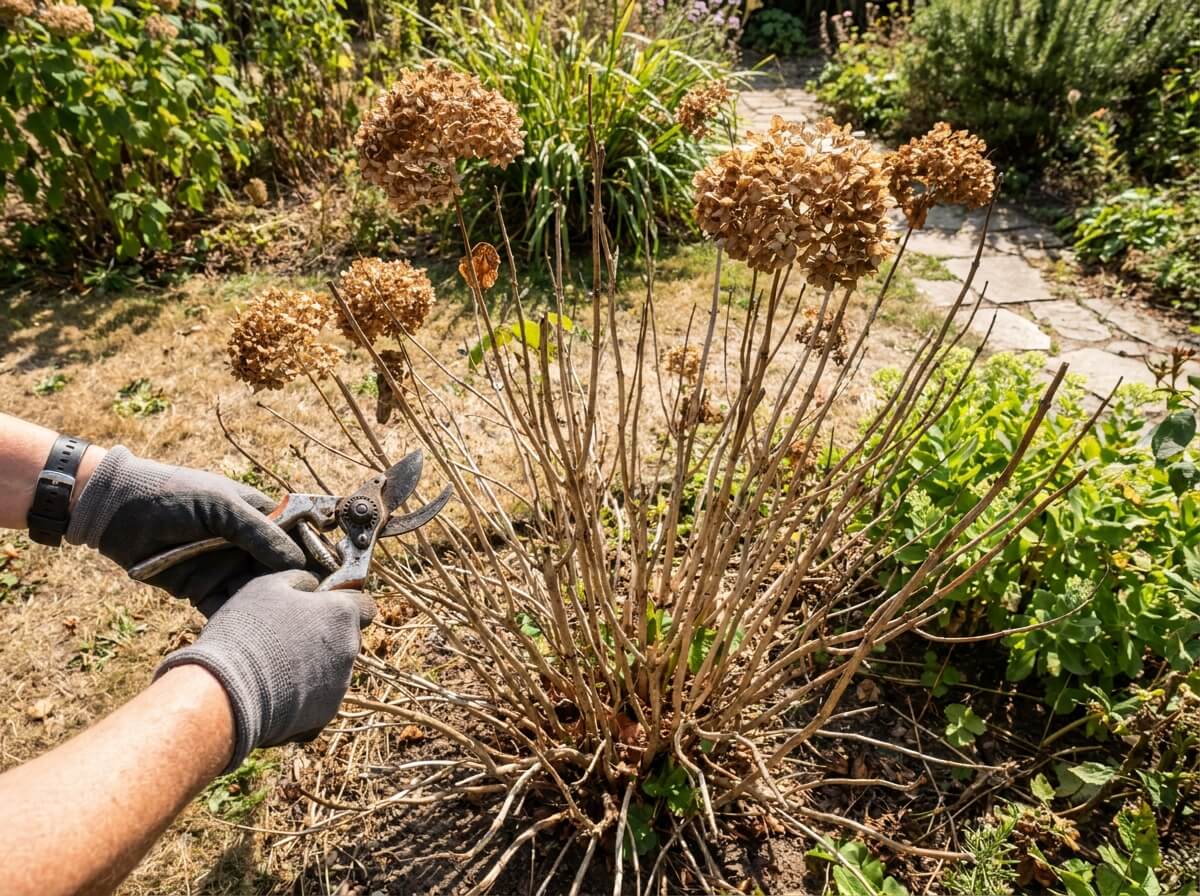
The rule for mopheads and lacecaps is almost embarrassingly simple: deadhead, do not prune. Pull off the spent flowerhead down to the first pair of healthy leaves below it. That is it. This advice is proper. Do this in early summer, right after the flowers begin to fade — not in August, not in September. Do not waver from this.
The thing is, do it in the early morning, when stems snap cleanly and the smell of cut hydrangea wood is faintly green and watery. Use sharp, clean secateurs — the RHS recommends wiping blades with methylated spirits between plants to prevent disease spread.
Any structural pruning — pulling off dead, crossing or genuinely old stems — belongs in late winter, around February or early March in the Northern Hemisphere, before new growth begins.
So, Panicle hydrangeas (H. paniculata) play by entirely different rules. They bloom on new wood and tolerate a hard cut back to around 30–45cm in late winter or early spring without complaint. Climbing hydrangeas (H. anomala petiolaris) need almost no pruning at all — just trim wayward stems immediately after flowering.
Yes, it is fiddly knowing which type you have. The thing is, this identification is non-negotiable. Do it anyway — the difference is night and day.
If your hydrangea flowered well two summers ago but barely at all last year, think back — was there a late summer tidy-up? A well-meaning neighbour with secateurs?
That is usually the culprit.
Watch also for these patterns that signal something beyond pruning is at work:
A hard summer is also worth considering. During heatwaves, hydrangeas may fail to set buds properly even without any pruning — heat stress disrupts the same process.
Keeping the root zone cool with a thick mulch layer (8–10cm of bark or wood chips) does wonders for protecting the plant when temperatures spike.
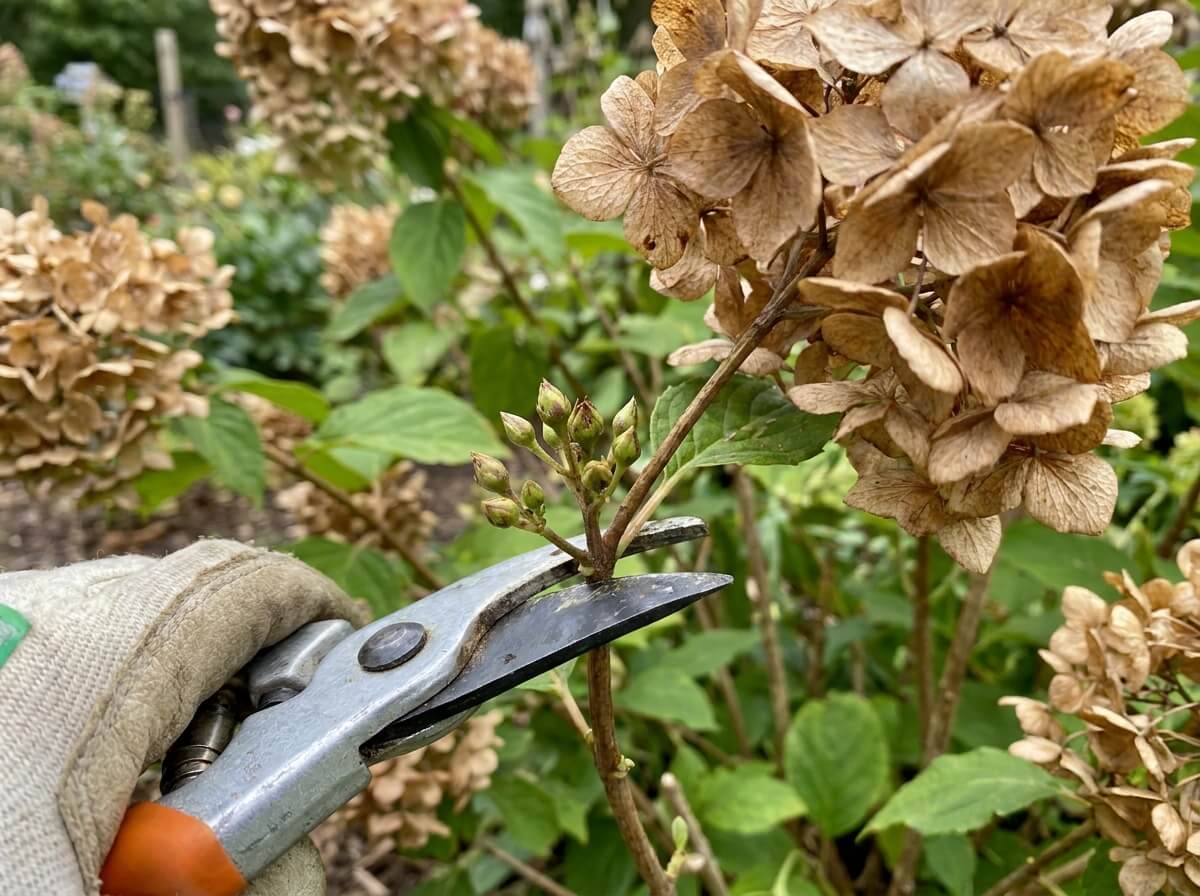
Smart tip: If in doubt, put the secateurs down — hydrangeas almost always suffer more from over-pruning than under-pruning.
Only to deadhead spent flowers down to the first pair of leaves — nothing lower. Any deeper cut on mopheads or lacecaps in June risks pulling off buds already forming for next year.
The most likely cause is a hard prune made the previous summer or autumn. That is the usual issue. Mopheads set next year’s buds on this year’s stems — pull off those stems and there is nothing to flower from.
For most garden hydrangeas, late winter — February or March in the Northern Hemisphere — is the safe window for any structural work. Always identify your variety first, since panicle and smooth types have different needs. To get it bang on, identification is crucial.
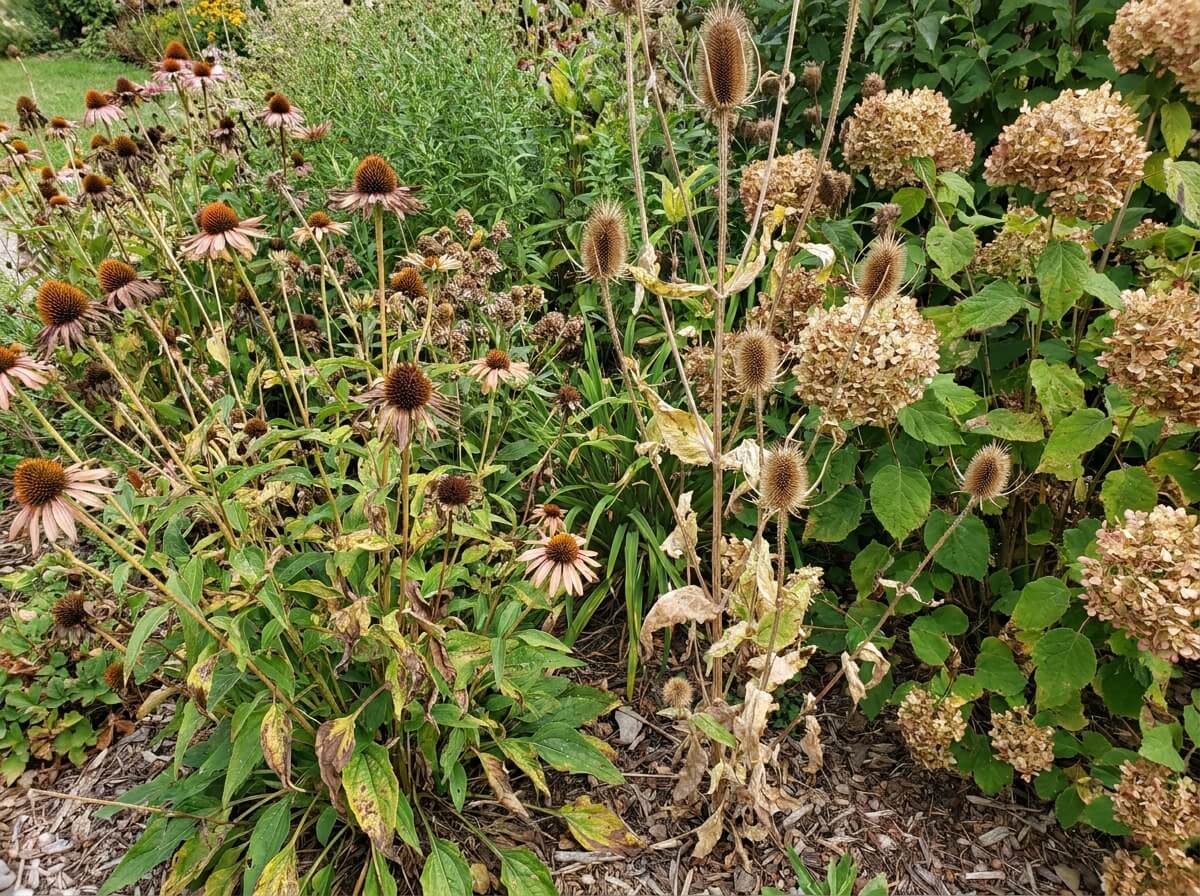
Yes — dried flowerheads act as a natural frost shield for the dormant buds directly below them. Pull them off in late winter, not autumn.
Southern Hemisphere gardeners: your equivalent pruning window falls in August–September. Avoid any hard cuts now in June/July — your buds are dormant but intact.