Fragrant sumac: varieties, planting and garden uses
0
Fragrant sumac is one of those quietly brilliant shrubs that earns its keep without ever demanding attention. Its glossy trifoliate leaves release a sweet, resinous scent when crushed, and in autumn the whole plant ignites in shades of orange, scarlet and plum. Tough, drought-tolerant and happy to knit together on a dry bank, it is among the finest ground-covering shrubs for difficult sites.
Growing conditions
Full sun produces the densest growth and by far the best autumn colour, which can be disappointingly muted in shade. That said, fragrant sumac copes well with partial shade and is one of the better shrubs for the dry, root-filled ground beneath established trees. Exposure is rarely an issue — it shrugs off wind, coastal salt spray and reflected heat from walls and paving.
Sharp drainage matters more than fertility. Sandy, gravelly, chalky and thin stony soils all suit it, and it performs happily on alkaline ground where many shrubs sulk. Aim for a pH anywhere between 5.5 and 7.8; the one condition it will not forgive is waterlogging, particularly in winter.
It is reliably hardy throughout the British Isles and northern Europe, and across USDA zones 3 to 9. In high-rainfall western gardens, plant on a slope or raised bed to keep the roots dry in winter.
How to plant Rhus
Autumn is the ideal planting season, giving roots several months to establish before summer drought. Early spring planting works equally well on heavy or cold soils where winter wet is a risk.
Space ground-cover plantings 1–1.2 m apart; they will knit into continuous cover within three to four seasons, whilst wider spacing leaves bare soil for weeds.
Set the plant with the top of the rootball flush with the surrounding soil — never deeper, as buried stems are prone to rot.
Fork over compacted ground and add grit rather than rich compost; excessive feeding produces soft, floppy growth.
Water in thoroughly at planting, then once a week for the first summer only. After that it needs almost nothing.
Propagate by lifting rooted suckers in late autumn, by layering a low branch pinned into the soil, or from semi-ripe cuttings taken in July.
Rhus aromatica growing in a naturalistic garden border
Care through the seasons
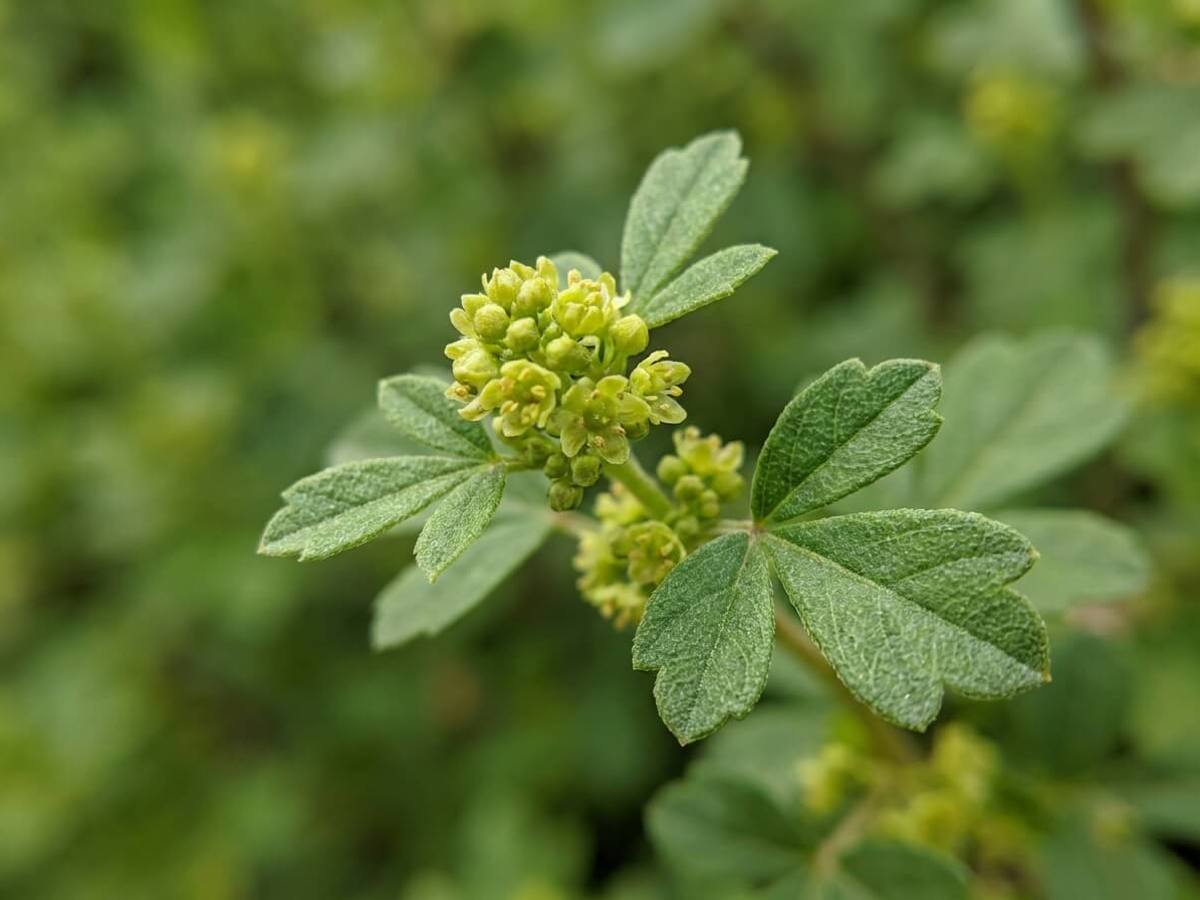
Spring: The small yellow catkin-like flowers open on bare wood in March and April, before the leaves unfurl. Resist feeding — a generous mulch of leaf mould or composted bark around (not over) the crown is all that is required. This is the moment to cut out any dead or winter-damaged shoots.
Summer: Established plants are strongly drought-tolerant and should be left to their own devices in all but the most prolonged dry spells. On female plants, fuzzy red drupes ripen in clusters through July and August. Trim back any suckers straying beyond their allotted space, slicing them off below soil level with a sharp spade.
Autumn: This is the season fragrant sumac is grown for, with foliage turning orange, scarlet and deep burgundy from late September. Carry out any renovation pruning immediately after leaf fall only if you are prepared to sacrifice the following spring’s flowers. Lift and replant rooted suckers for new plants whilst the soil is still warm.
Winter: The bare, arching stems need no protection whatsoever, and the overwintering catkins give useful close-up interest. Avoid heavy mulching right against the stems, which encourages rot in mild, wet winters.
Best varieties to grow
A handful of selections offer far better garden manners than the wild species.
‘Gro-Low’ — the standard ground-cover form, reaching just 60 cm high but spreading to 2.4 m, with outstanding orange-red autumn colour.
‘Konza’ — a Kansas prairie selection, more compact and upright than the species, with exceptionally rich red autumn tints and good cold tolerance.
‘Green Globe’ — a neat, rounded, mounded form around 1.5–1.8 m tall, useful as an informal low hedge or specimen.
‘Autumn Amber’ — a prostrate, fine-textured selection of the closely allied Rhus trilobata (sometimes treated as a variety of R. aromatica), turning soft amber-orange.
Pests, diseases and common problems
Root rot and dieback: Yellowing leaves, sparse growth and dying stems on heavy or poorly drained soil. There is no cure once advanced — replant on a raised bed or slope and incorporate coarse grit.
Verticillium wilt: Sudden wilting of individual branches with brown staining inside the stem. Prune out affected growth well below the damage, disinfect tools between cuts, and avoid replanting Anacardiaceae in the same spot.
Leaf spot and powdery mildew: Brown blotches or a grey bloom on foliage in humid, still conditions. Thin congested stems to improve airflow, clear fallen leaves in autumn, and water the soil rather than the foliage.
🌿 Nature & Garden Newsletter
Gardening tips, recipes & seasonal advice, twice a week.