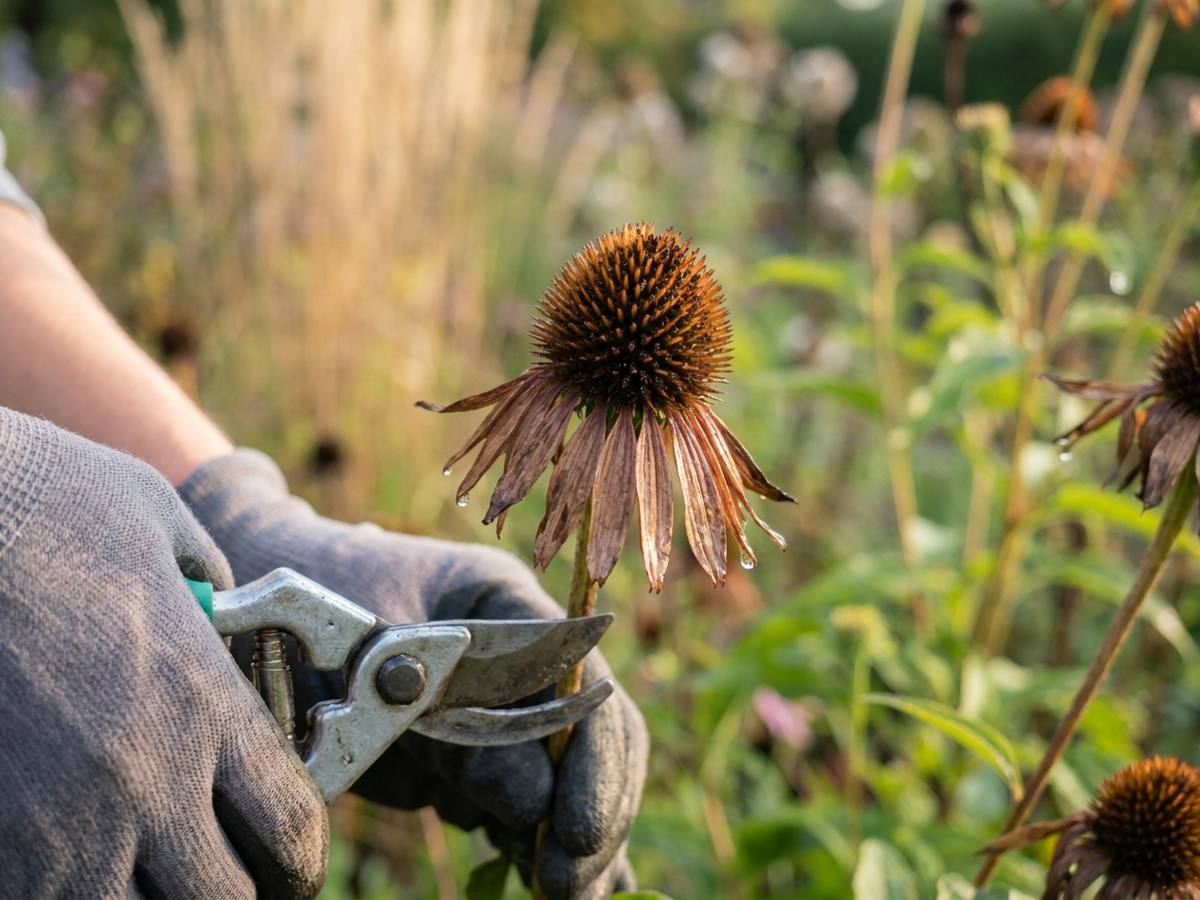
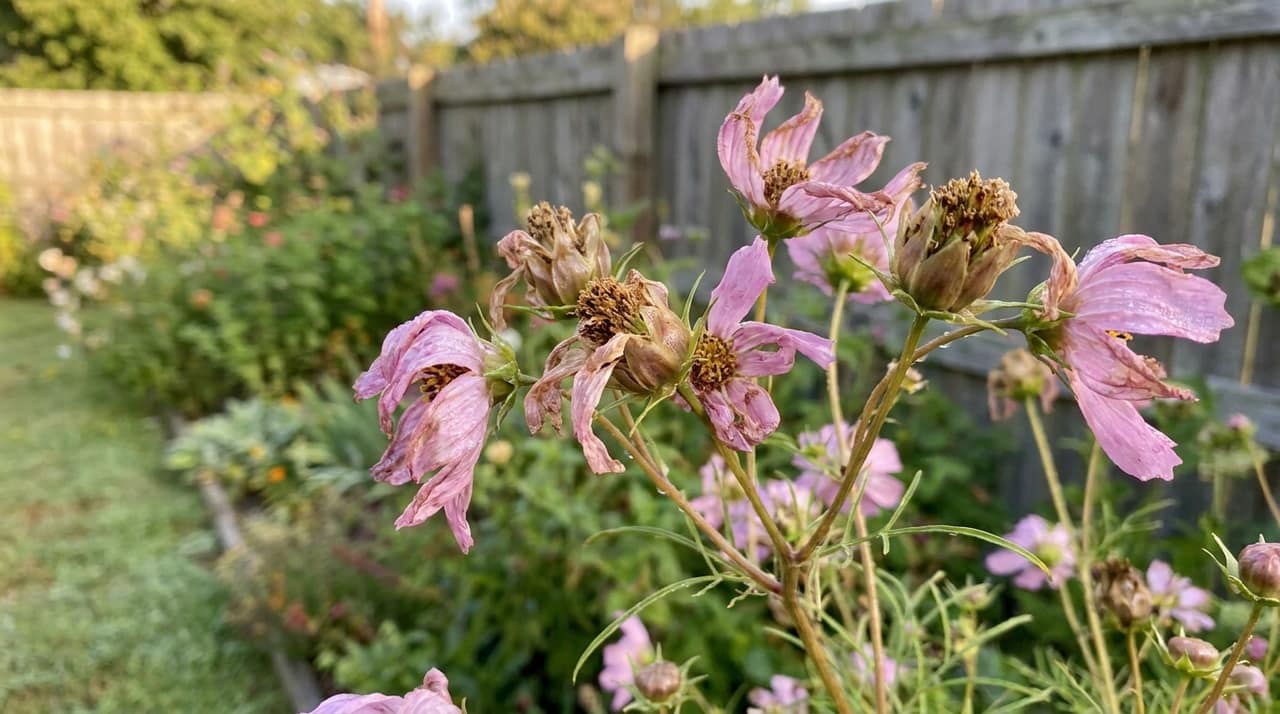
Resist the urge to deadhead your wildflowers this July. Most gardeners snip faded blooms to encourage more flowers, but leaving seed heads is exactly what your garden needs right now. Wildlife depends on them, next year’s display will be stronger, and you’ll spend far less time weeding and fussing.
Right now, across the UK and US, wildflower gardens are at peak seed production. Cornflowers, cosmos, foxgloves, and rudbeckias are transitioning from showy blooms to nutrient-rich seed heads. This is precisely when gardeners reach for their secateurs, assuming they’re tidying up. In reality, they’re removing the very thing that fuels autumn wildlife and creates next season’s garden magic.
Conventional wisdom says deadheading extends bloom time and prevents unwanted self-seeding. There is some truth to the first claim, but it comes with a hidden cost. Yes, you might squeeze another week or two of flowers from a handful of plants, but you’ll sacrifice seed production at the exact moment the garden ecosystem depends on it most. Finches, sparrows, and other seed-eating birds rely on wildflower heads throughout late summer and autumn. Remove them, and you remove a crucial food source during the season when natural food becomes scarce.
The second concern, about self-seeding chaos, reflects a control-focused approach to gardening that modern gardeners are beginning to challenge. Wildflowers evolved to spread themselves. Letting them do so creates denser, more resilient displays the following year, with minimal labour on your part. Yes, some seedlings will appear in unexpected places, but you can easily pull those you don’t want whilst they’re still small.
Here’s what to do instead of deadheading this month:
Over the next eight weeks, monitor how your seed heads develop. You’ll notice finches and other birds arriving as other food sources dwindle. By late September, your garden will look wilder and more alive than any manicured border. Next spring, you’ll see seedlings emerging in clusters, creating fuller, more natural displays with virtually no sowing effort from you.