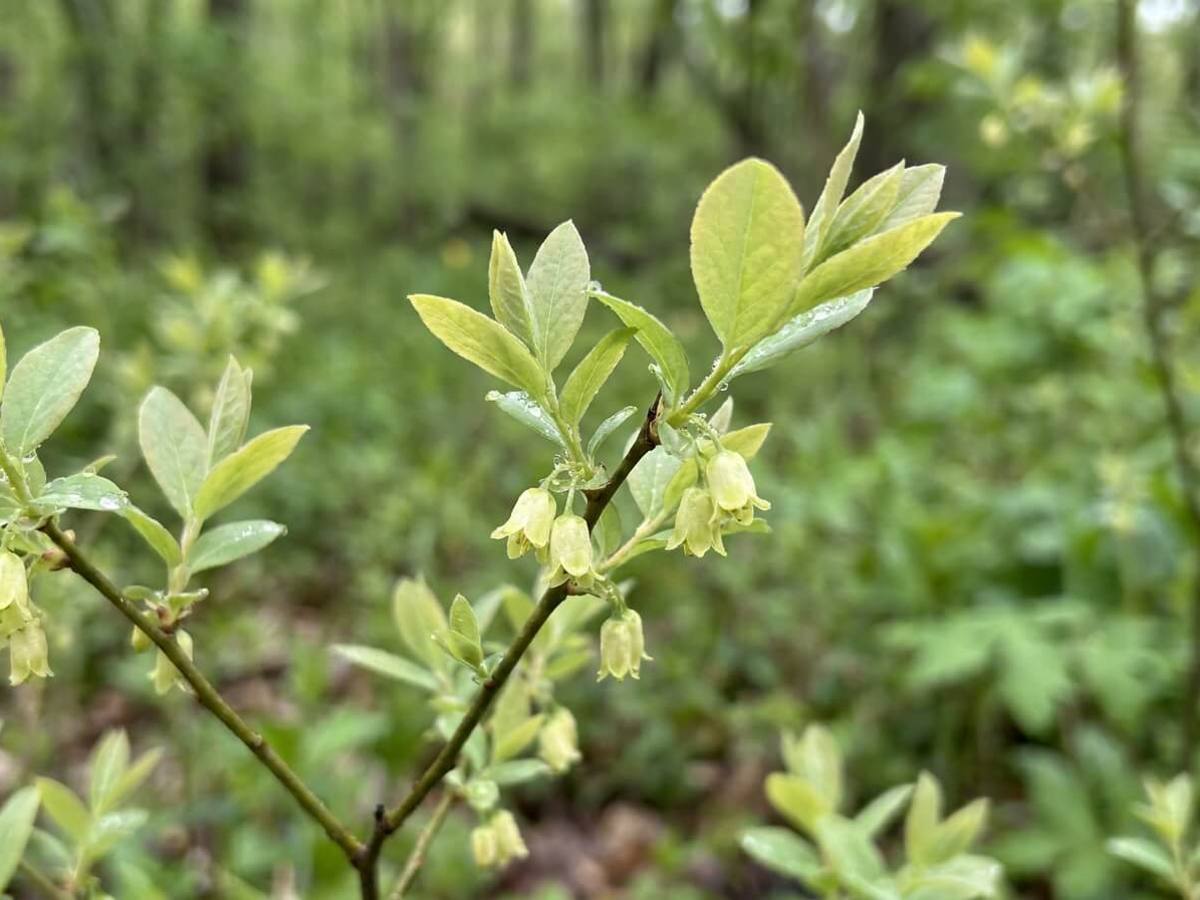
Eastern leatherwood is one of the quiet aristocrats of the woodland garden: a slow, elegant deciduous shrub that hangs small, pale yellow bells from bare twigs in earliest spring, long before most shade plants have stirred. Its smooth, olive-grey bark and curiously jointed, rubbery branches give it year-round character, and the foliage turns a clear butter-yellow in autumn. Plant it where you can see it from a path, because at close quarters its flowers and swollen branch joints are far more interesting than any photograph suggests.
Growing conditions
Leatherwood is an understorey shrub and behaves like one. Dappled shade beneath deciduous trees suits it best, with bright light in early spring when it flowers and cool shade through summer. Full, baking sun scorches the thin leaves and stunts growth.
Give it a deep, moist, humus-rich loam that never dries out completely but never waterlogs either. It is surprisingly adaptable on pH, thriving on mildly acid woodland soils and on soils derived from limestone. A thick leaf-mould layer matters far more than the underlying geology.
It is exceptionally cold hardy, shrugging off temperatures well below −30 °C, so winter is never the limiting factor in Britain or northern Europe. Hot, dry summers and drying winds are the real enemies: in warmer regions, plant on a north- or east-facing slope.
How to plant Dirca
Plant container-grown specimens in autumn or early spring, while the soil is moist and the plant is dormant or only just waking. Autumn planting gives the roots months to settle before the first summer’s heat.
Space plants 1.5 m apart, or 1.2 m if you want an informal shaded thicket — they are slow, so crowding is a long-term risk rather than an immediate one.
Set the plant with the top of the root ball flush with the surrounding soil; burying the base of the stems encourages rot.
Fork a generous barrowload of leaf mould or well-rotted bark into the planting area rather than a single enriched hole, which can create a sump in heavy ground.
Water in thoroughly, then mulch 5–8 cm deep with leaf litter, keeping it clear of the stems.
Propagate from fresh seed: it has double dormancy and needs roughly 90 days warm (20–25 °C) followed by 90–120 days cold (around 4 °C). Simple layering of a low branch in spring is far easier.
Dirca palustris growing in a naturalistic garden border
Care through the seasons
Spring: The small yellow bells open in March or April on naked twigs, so clear away heavy leaf litter from around the base to show them off. Top up the mulch once flowering ends, and water young plants in any dry spell. No feeding is needed beyond organic mulch.
Summer: Keep the root zone cool and evenly moist — this is when established plants are lost, not in winter. Water deeply once a week during drought rather than sprinkling daily. Pale, crisping leaf margins are a signal that the plant is too exposed or too dry.
Autumn: Enjoy the clear yellow foliage, then let the fallen leaves of surrounding trees lie as natural mulch. Autumn is the ideal moment to plant or to separate a rooted layer. Avoid digging near the roots, which are shallow and resent disturbance.
Winter: The bare, jointed, olive-grey framework is genuinely ornamental and needs no protection. Prune only to remove damage, and wear gloves — the sap and bark of all Thymelaeaceae can blister sensitive skin.
Best varieties to grow
Named cultivars are essentially unknown in the trade, so choose a reputable nursery-raised seedling and consider the related species if you can source them.
Dirca palustris — the straight species, and the only form widely offered; buy container-grown plants of known provenance rather than wild-collected stock.
Dirca decipiens — Ozark leatherwood, described as recently as 2009, with a tidier, more upright habit and slightly larger flowers.
Dirca occidentalis — western leatherwood, a rare endemic of the San Francisco Bay area; beautiful, earlier flowering, but far less cold tolerant and best left to specialists.
Dirca mexicana — Mexican leatherwood, a collector’s curiosity from Tamaulipas that needs a mild, sheltered, frost-light garden.
Pests, diseases and common problems
Leaf scorch and summer leaf drop: Brown margins and early defoliation follow drought or too much sun. Deepen the mulch, water weekly in dry spells and, if the site is simply too bright, move the plant in autumn while it is small.
Rabbit and vole bark damage: The fibrous bark is gnawed on young stems over winter, which can ring-bark and kill a shoot. A loose wire guard around the base from late autumn to early spring solves it without chemicals.
Failure to establish or to germinate: Root disturbance and dried-out seed are the usual culprits. Handle the root ball intact when planting, and sow seed fresh in early summer the moment the pale green fruits drop, never storing it dry.
🌿 Nature & Garden Newsletter
Gardening tips, recipes & seasonal advice, twice a week.