Siberian Iris: expert tips for growing this elegant perennial
·
0
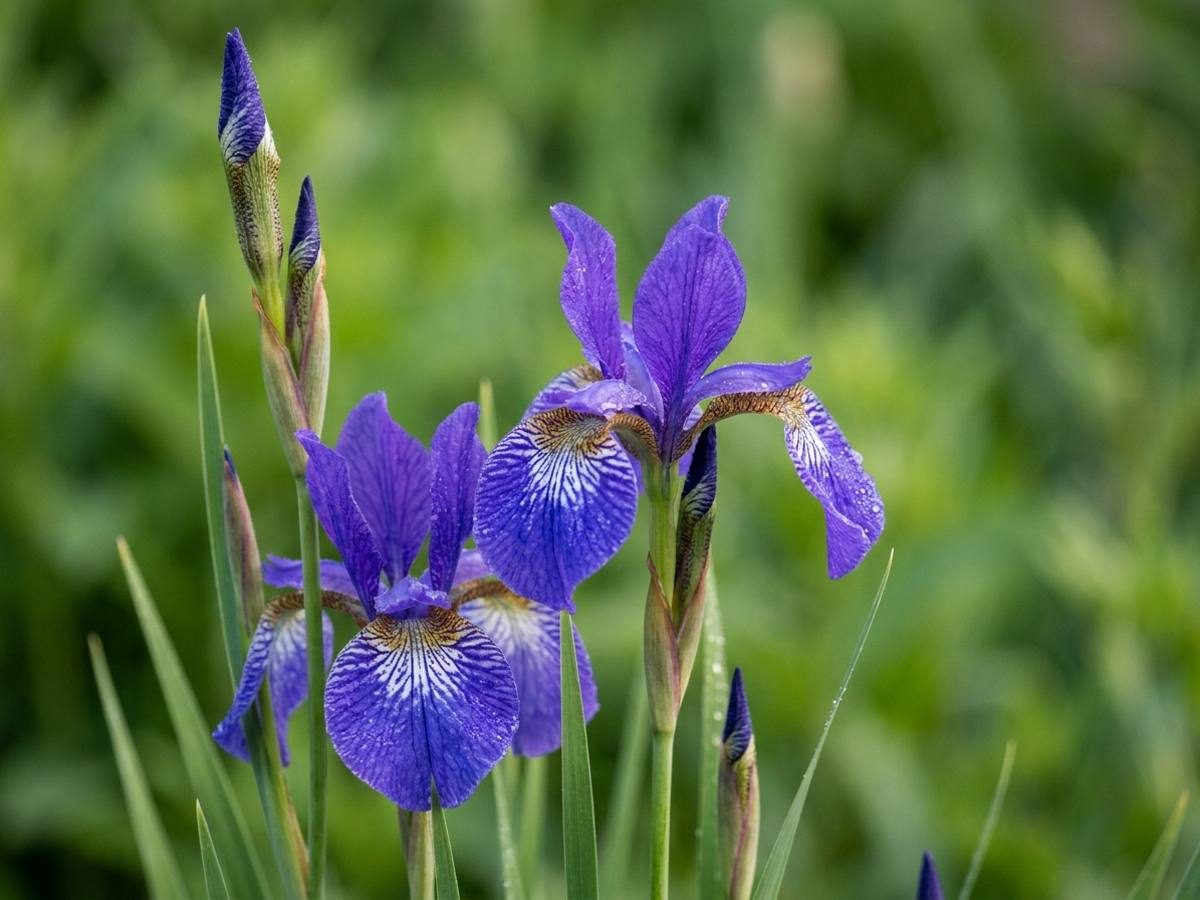
Siberian iris is one of the most graceful of all hardy perennials, sending up slender, grassy foliage topped by delicately veined flowers in shades of violet, blue, white and wine-red. It is a superb choice for damp borders, pond margins and naturalistic planting schemes, where its upright leaves stay handsome long after the blooms have faded. Unlike bearded irises, it forms tight fibrous clumps rather than fat surface rhizomes, so it needs far less fussing and rarely suffers from rot.
Growing conditions
Siberian iris flowers most freely in full sun, ideally with at least six hours of direct light a day. It copes well with dappled or partial shade, particularly in hotter regions, though plants in deep shade grow leafy and shy of bloom. The stems are strong enough to stand without staking in exposed sites, which makes it valuable in windy gardens.
Give it a fertile, moisture-retentive soil enriched with garden compost or well-rotted manure. It thrives on heavy clay that stays damp in spring, yet dislikes standing water in winter, so avoid stagnant hollows. A slightly acid to neutral pH of around 5.5–7 suits it best; on very chalky soils the leaves may look pale and growth slows, so improve the ground generously with organic matter.
This is an exceptionally cold-hardy plant, unfazed by hard frosts and happy in the coldest parts of Britain, Scandinavia and continental Europe. In Mediterranean or hot-summer climates, plant it where it receives afternoon shade and never dries out completely.
How to plant Iris
Early autumn, from September to mid-October, is the ideal planting time: the soil is still warm, autumn rains settle the roots, and clumps establish before winter. Spring planting from March to April also works well, particularly in cold, wet gardens.
Spacing: Set plants 45–60 cm apart so each clump has room to fan out; closer spacing of 30 cm gives a quicker mass effect but needs dividing sooner.
Depth: Plant so the rhizome sits 2–5 cm below the soil surface — unlike bearded irises, Siberian types must be covered, never baked in the sun.
Soil preparation: Fork a bucketful of compost or leaf mould into each planting hole and remove perennial weeds, which are miserable to extract from established clumps.
Watering in: Water thoroughly at planting and keep the soil consistently moist for the first full growing season — dryness is the main cause of failure in year one.
Propagation: Divide congested clumps in early autumn or just after flowering, slicing the tough root mass with a sharp spade into pieces with at least three fans of leaves.
Iris sibirica growing in a naturalistic garden border
Care through the seasons
Spring: As new fans push through in March, clear away any remaining dead foliage and top-dress with compost or a balanced general fertiliser. Keep the ground moist while flower buds form, since drought at this stage causes buds to abort. Deadhead spent blooms if you dislike the look of seed pods, though the pods themselves are attractive in autumn arrangements.
Summer: Water deeply during dry spells, especially in the six weeks after flowering when next year’s buds are being laid down. Mulch with 5 cm of compost or bark to lock in moisture and suppress weeds. Siberian iris spreads slowly by short rhizomes and is not invasive, so no containment is needed — simply lift and split if a clump outgrows its space.
Autumn: Leave the foliage standing until it yellows, then cut it back to about 10 cm in late autumn to tidy the crown and reduce hiding places for slugs. September and October are the best months for dividing and replanting, giving roots six weeks to settle. Apply a mulch of leaf mould around, but not over, the crowns.
Winter: Plants die back completely and pass the winter as dormant rhizomes, needing no protection whatsoever in temperate gardens. Simply ensure the site does not become a waterlogged puddle for months on end.
Best varieties to grow
Modern cultivars offer flatter, wider flowers and a broader colour range than the wild species.
‘Perry’s Blue’ — a classic, vigorous mid-blue with pale veining, reaching 100 cm and holding an RHS Award of Garden Merit.
‘Butter and Sugar’ — creamy-white standards above soft butter-yellow falls, compact at around 70 cm and lovely in a pastel border.
‘Caesar’s Brother’ — deep velvety violet-purple, exceptionally robust and reliable, an excellent choice for pond margins.
‘Silver Edge’ — mid-blue falls finely rimmed with silver, an AGM cultivar with a long, generous flowering season.
Pests, diseases and common problems
Slugs and snails: They rasp the emerging spring fans and chew flower buds, leaving ragged holes. Clear debris from around the crowns, water in the morning rather than evening, and use beer traps or wildlife-safe ferric phosphate pellets.
Iris leaf spot (Mycosphaerella): Brown, water-soaked spots with yellow halos appear on the leaves in humid weather. Remove and bin affected foliage, improve air circulation by dividing crowded clumps, and avoid overhead watering.
Failure to flower: Usually caused by too much shade, an overcrowded clump, dry soil at bud formation, or planting the rhizome too deeply. Lift and divide every four to five years, move plants into brighter light, and mulch to conserve moisture.
🌿 Nature & Garden Newsletter
Gardening tips, recipes & seasonal advice, twice a week.