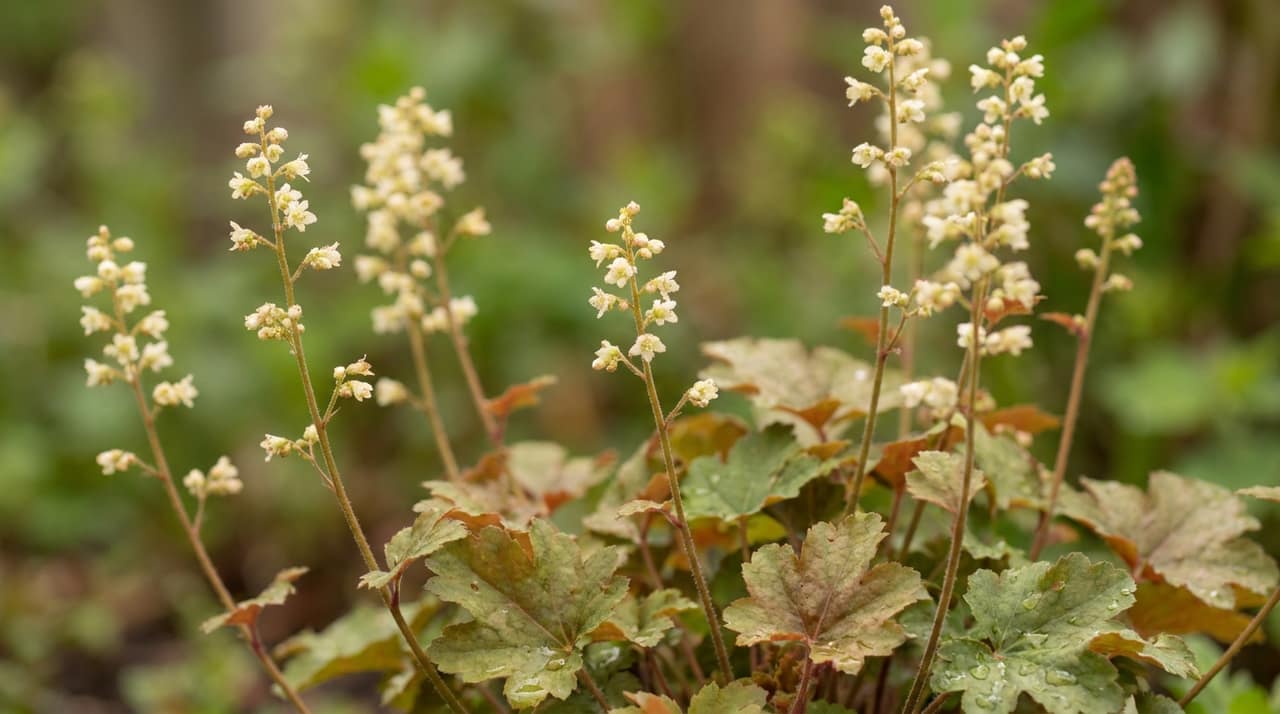
Heuchera micrantha, commonly known as small-flowered aluminium plant or littleleaf coralbells, is a delightful woodland perennial prized for its delicate, airy flower spikes and attractive, deeply lobed foliage. Gardeners love it for adding texture and movement to shaded borders, rock gardens, and containers, where its subtle charm brightens even the gloomiest corners. This North American native is particularly valued for its ability to thrive in partial shade and its low-maintenance nature once established.
Heuchera micrantha thrives in partial to full shade, making it an ideal choice for those awkward, sunless corners of the garden. Whilst it can tolerate some morning sun, it performs best when protected from hot afternoon rays, particularly in southern regions. In deeply shaded areas, it still produces plenty of foliage, though flowering may be slightly reduced.
This plant prefers well-drained, humus-rich soil with a slightly acidic to neutral pH between 6.0 and 7.0. Heavy clay soils should be amended with compost or leaf mould to improve drainage and prevent root rot during wet winters. Avoid waterlogged conditions at all costs, as the fleshy roots are prone to decay in poorly draining soil.
Hardy across most of Britain and northern Europe, Heuchera micrantha withstands winter temperatures down to −15 °C without protection. In very exposed locations or in consistently wet winter conditions, a light mulch of leaf mould or bark will offer extra insulation and reduce heaving of the crown during frost and thaw cycles.
Plant Heuchera micrantha in autumn or early spring when the soil is moist and the plant can establish roots before summer stress. Spring planting is ideal in heavy soils, whilst autumn suits well-drained sites.
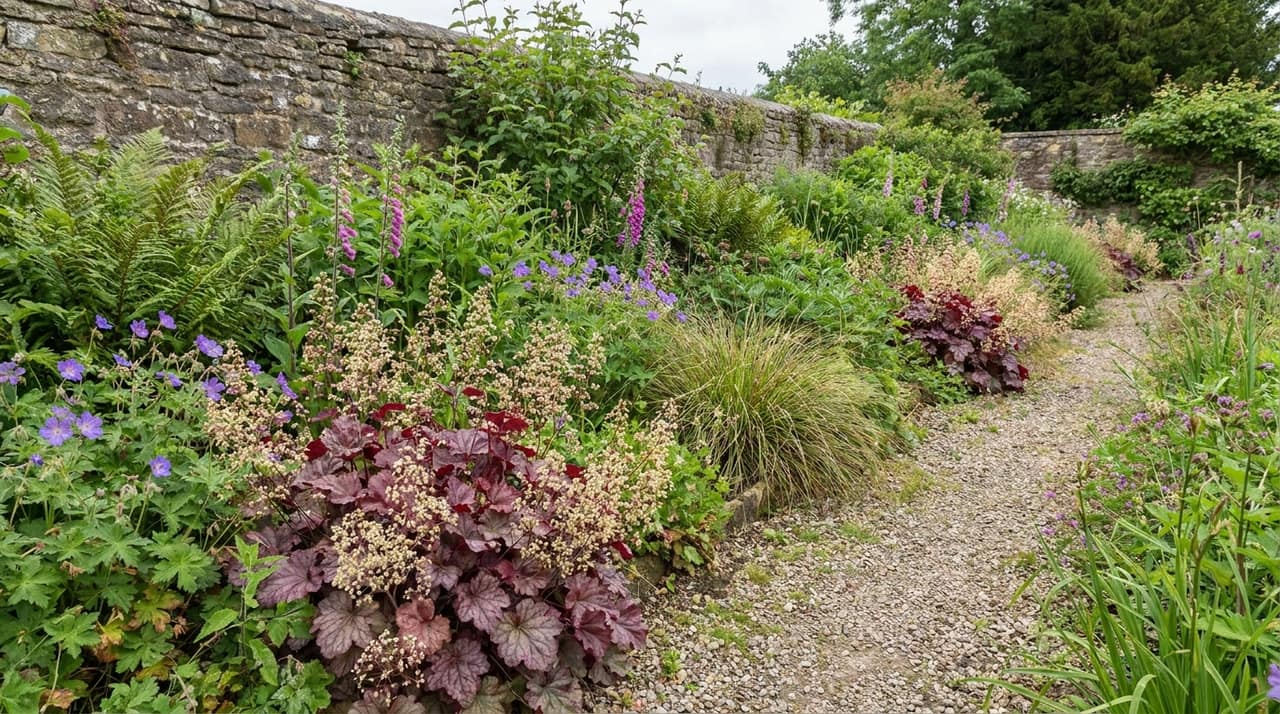
Spring: Remove any winter-damaged foliage and tidy up the crown as new growth emerges. Apply a balanced, slow-release fertiliser or a light dressing of compost around the base. Watch for fresh flower spikes appearing in late spring, and deadhead spent flowers if tidiness is a priority, though the dried seed heads provide ornamental interest.
Summer: Water regularly during extended dry spells, especially in containers, as shallow-rooted plants dry out quickly. Heuchera micrantha rarely needs summer feeding if the soil was well-prepared at planting. Check foliage occasionally for aphids or spider mite, particularly in hot, dry conditions.
Autumn: Cut back faded flower stems in September or October. Divide congested clumps if needed, ensuring each division has a healthy crown and roots. Apply a light mulch of leaf mould or composted bark around the base to insulate the crown and improve soil structure over winter.
Winter: Heuchera micrantha remains semi-evergreen in most regions, with rosettes of foliage persisting through mild winters. In prolonged snow or ice, a light layer of horticultural fleece protects vulnerable new growth; remove it as soon as weather improves to prevent fungal issues.
The work this perennial asks for is spread thinly across the year. Use the table below to see what matters in each season and what to keep an eye on.
| Season | Main tasks | Watch for |
|---|---|---|
| Spring | Remove winter-damaged foliage, tidy the crown, feed with a slow-release fertiliser or light compost dressing | Fresh flower spikes in late spring; deadhead spent flowers if tidiness matters |
| Summer | Water regularly in extended dry spells, especially in containers; no summer feed needed if soil was well prepared | Aphids or spider mite in hot, dry conditions |
| Autumn | Cut back faded flower stems in September or October, divide congested clumps, mulch with leaf mould or composted bark | Each division needs a healthy crown and roots |
| Winter | Leave the semi-evergreen rosettes in place; cover with horticultural fleece in prolonged snow or ice | Fungal issues if fleece is left on once the weather improves |
Beyond this, the clump only needs lifting and splitting every three to four years to keep its vigour.
Several attractive cultivars are available, each offering distinct foliage colour and flower characteristics.