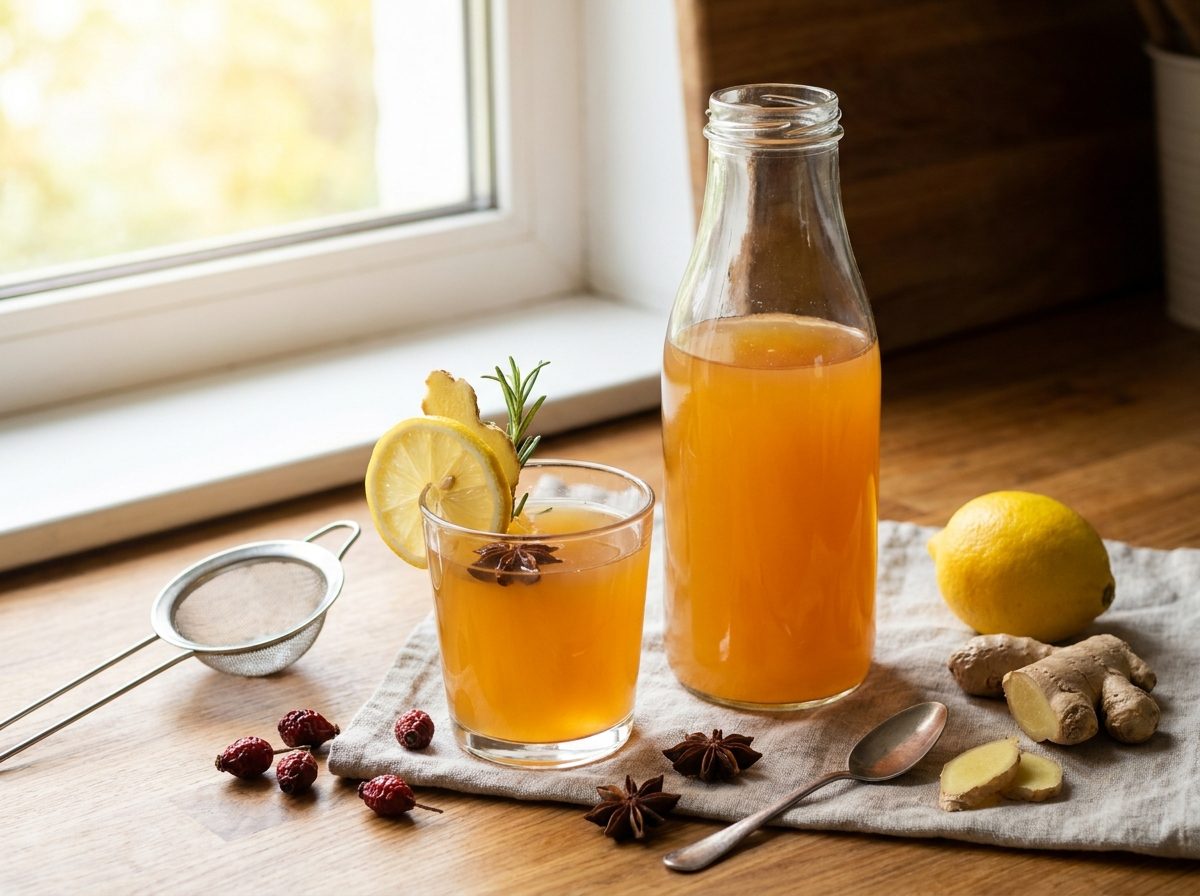
Dog rose and rugosa hips swell scarlet along hedgerows and garden fences once the flowers are long gone, and they turn properly fleshy only after the first frosts — October onward in most temperate gardens. Cooked gently and strained through cloth, they give a cordial the colour of amber-rose tea, tart as cranberry, with ginger heat behind it. One bottle covers sparkling long drinks, hot mugs after a cold morning’s digging, and a gin cocktail.
⏱ Prep 25 min🔥 Cook 50 min👥 Serves Makes about 4 cups (1 L), 16–20 drinks📊 Level Medium
Ingredients for 4 people
1 lb 2 oz (500 g) fresh rosehips, from unsprayed dog rose, rugosa or any garden rose
6¼ cups (1.5 L) water, divided
2 oz (60 g) fresh ginger, unpeeled, sliced into coins
2 whole star anise
1 cinnamon stick (optional)
2 wide strips lemon zest, pared with a peeler
2½ cups (500 g) granulated sugar
⅓ cup (80 ml) fresh lemon juice, from about 2 lemons
¼ tsp fine sea salt
To serve: sparkling or still water, ice, a sprig of rosemary or thyme
Optional: 1½ fl oz (45 ml) gin or vodka per cocktail
The Recipe
Pick the hips after the first frost has touched them, or freeze them overnight and work from frozen — freezing ruptures the cell walls, which both softens the flesh and converts starch to sugar, so the cordial tastes rounded rather than green and astringent. Pull off any blackened flower remnants and stalks; small blemishes don’t matter, as everything is strained.
Crush the hips coarsely: a few pulses in a food processor, or a rolling pin and a sturdy bag. You want them broken open, not puréed — intact hips give up almost nothing to hot water, while total pulverisation releases so much seed hair that straining becomes slow and cloudy.
Bring 4¼ cups (1 L) of the water to a rolling boil, tip in the crushed hips, return to the boil, then cover and take the pan off the heat. Let it stand 20 minutes. The liquid should turn the shade of strong rooibos; prolonged hard boiling drives off the fresh, apple-and-hibiscus aroma and leaves only stewed flatness.
Strain through a sieve lined with a doubled layer of muslin, cheesecloth or a jelly bag set over a bowl, letting it drip without pressing. Return the pulp to the pan with the remaining 2 cups (500 ml) water, boil, stand 15 minutes, and strain again into the same bowl. This second extraction pulls out a third more flavour and colour that would otherwise go on the compost heap.
Strain the combined juice a final time through fresh, rinsed muslin. **Do not skip this step.** The hairs around the seeds are a genuine throat and gut irritant, and only a close-woven cloth catches them — a metal sieve alone will not.
Pour the clear juice into a clean pan with the ginger coins, star anise, cinnamon and lemon zest. Simmer uncovered, at a bare tremble, for 20–25 minutes until reduced to about 3 cups (700 ml) — the spices need hot liquid and time to release their oils, and the reduction concentrates the hips so the finished cordial stands up to dilution.
Add the sugar and stir over low heat until the grains have completely gone and the liquid runs glossy off the spoon. Keep it below a simmer: once sugar boils it begins to caramelise, and the bright red-fruit note drops away into something closer to marmalade.
Take the pan off the heat, let it sit 5 minutes, then stir in the lemon juice and salt and fish out the spices. Adding acid off the heat preserves both the vitamin C and the sharp top note; the salt sounds odd in a sweet syrup but it widens the fruit flavour and stops the sugar tasting one-dimensional.
Pour while still hot into sterilised bottles and seal immediately — hot filling drives out air and gives a sealed bottle months of life. To serve cold, use 1 part cordial to 5 parts sparkling water over ice with a bruised rosemary sprig; hot, use 1 part to 4 parts just-boiled water; as a cocktail, shake 1 fl oz (30 ml) cordial with 1½ fl oz (45 ml) gin and a squeeze of lemon, then top with soda.